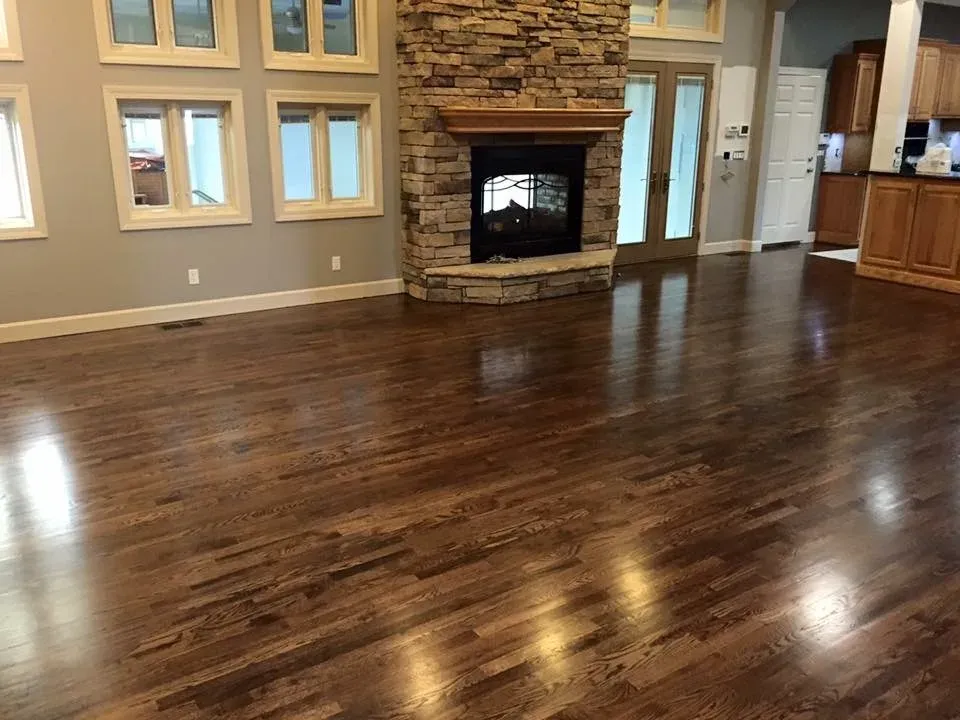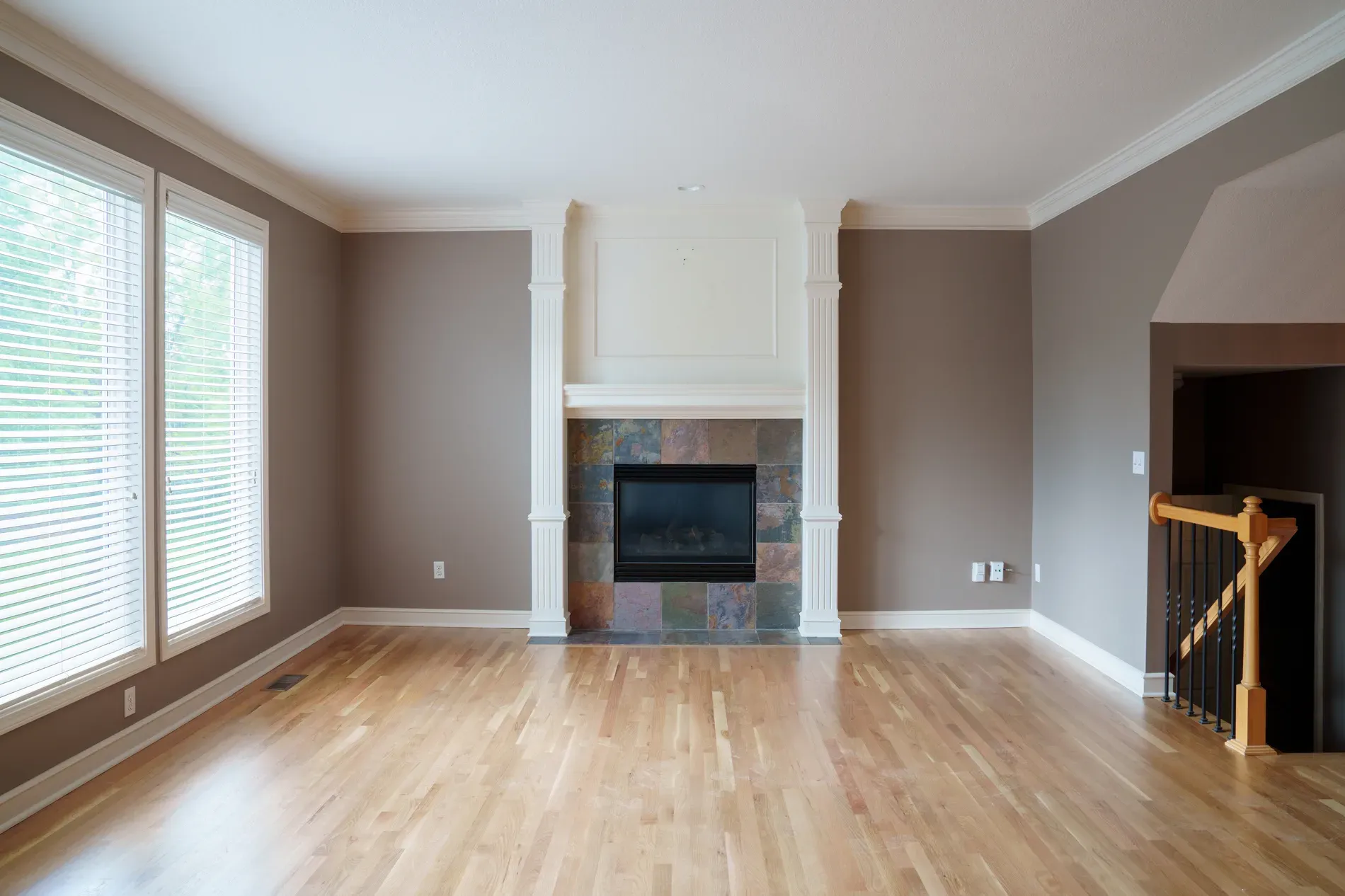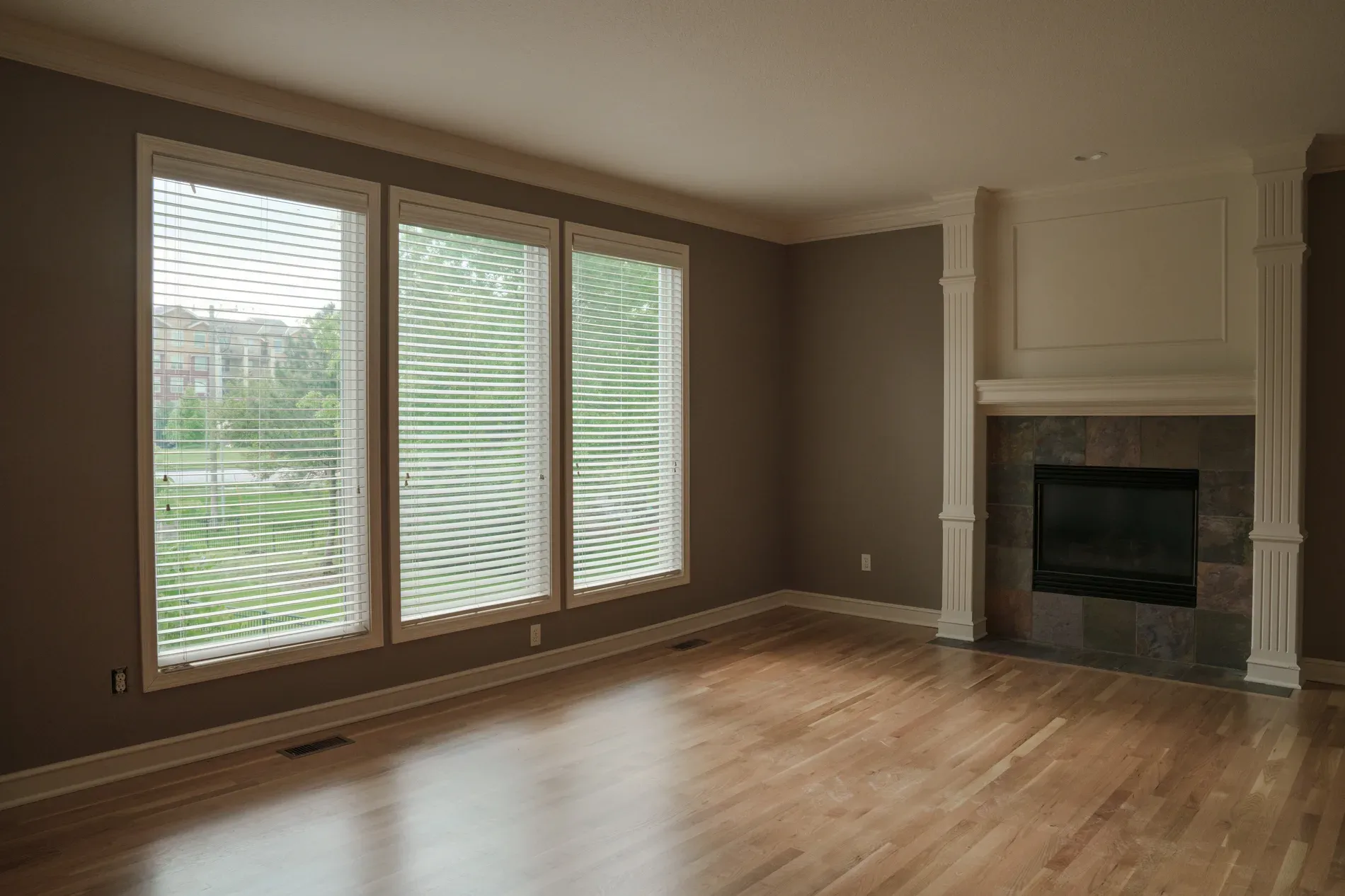
Choosing hardwood is mostly a matter of four decisions: what species, what grade, how wide the boards, and what finish. Get those right for how you actually live and the floor will look good for decades. This is a plain comparison of the options for hardwood flooring in Kansas City, without steering you toward whatever is most profitable to sell.
Species: The Three That Make Sense Here
Red oak
Red oak is the default hardwood across the Midwest for good reason. It is hard, widely available, affordable relative to alternatives, and its strong grain pattern hides scratches and dents better than smoother woods. It carries warm pink and red undertones, which is worth knowing when you pick a stain, because cool grays fight those undertones. If your Kansas City home was built with hardwood, there is a strong chance it is red oak.
White oak
White oak is slightly harder than red oak and more water resistant thanks to its closed grain structure. It reads more neutral and slightly brown, which is why it has become the go-to for modern light and gray finishes that look muddy on red oak. It generally costs more. Our oak floors page compares the two in detail.
Hickory
Hickory is the hardest of the common domestic species, which makes it excellent for busy households with dogs and kids. Its defining trait is dramatic color variation from board to board, ranging from near-white to deep brown within the same floor. People either love that or find it busy, and it is very hard to tone down with stain. See hickory floors, and hickory hardwood flooring for how it moves, sands and stains.
Walnut
Walnut is the luxury option, naturally deep chocolate brown with beautiful figure and no stain required. The tradeoff is that it is noticeably softer than oak and hickory, so it dents more easily. It belongs in formal spaces and primary bedrooms more than in mudrooms. See walnut floors, and walnut hardwood flooring for how it compares with dark-stained oak.
Hardness Is Real but Overrated
Species hardness gets quoted constantly in flooring showrooms, and it does matter for dent resistance. But almost every scratch a homeowner notices is in the finish, not the wood. A harder wood with a worn finish looks worse than a softer wood with an intact one. Finish quality and maintenance affect how your floor looks day to day far more than species hardness does, so do not choose a wood you dislike purely for a hardness number.
Grade Is About Looks, Not Quality
This confuses people constantly. Flooring grade describes appearance, specifically how much natural character the boards contain, not how well made they are. Higher grades are cleaner and more uniform with fewer knots and less color variation. Lower or rustic grades have more knots, mineral streaks, and color movement.
A rustic grade floor is not a worse floor. It is a different look, it usually costs less, and it hides life better. Uniform grades suit formal and modern spaces, rustic grades suit character homes and busy families.
Plank Width Changes the Room
Narrow strips, traditionally around two and a quarter inches, are the classic look in older Kansas City homes and are the most stable choice because each board moves less across its width. Wide planks read modern, show off grain, and make a room feel larger, but they also expand and contract more, which means seasonal gaps can be more visible. In our climate, wide plank works well when it is engineered or when acclimation and humidity control are handled properly.
Matching width to the age and style of the house is usually a safer instinct than following whatever is currently fashionable.
What Kansas City Humidity Means for Your Choice
We get humid summers and dry heated winters, and wood responds to both. Practical implications:
- Solid hardwood is fine at or above grade over wood subfloors, which covers most main and upper floors here.
- Basements and slabs call for engineered wood, which is far more dimensionally stable against moisture.
- Running a humidifier in winter and keeping the house within a normal comfort range year-round genuinely reduces seasonal gapping, no matter what species you choose.
- Acclimation before installation is not optional in this climate. It is the difference between tight boards and winter gaps.
The Cost Factors Nobody Mentions Up Front
Material price is the number people compare, but the total depends on more than that. Subfloor condition, whether old flooring has to come out, stairs, transitions, and whether the floor is prefinished or site-finished all move the final figure. A cheap material over a subfloor that needs leveling is not a cheap job. We would rather walk your house and give you a real number than quote a price per square foot that changes later.
Talk It Through Before You Buy
Plank width is also where the pattern question comes in. If you are considering a patterned floor, herringbone or chevron covers what each involves and why the subfloor has to be flatter.
Two decisions sit alongside species and grade and are worth reading before you buy. Solid or engineered decides how the floor handles our humidity and whether it can go on a slab, and prefinished or site-finished decides how the finished floor actually looks underfoot.
Two of these choices have their own guides. White oak flooring covers cuts, widths and finishes for the species most people ask for now, and what custom hardwood floors actually mean covers borders, patterns, rift and quartersawn and where the money goes.
The most useful thing you can do is get someone to look at your actual rooms, subfloor, and light before you commit to a species. We install and finish hardwood across the metro including Kansas City, Overland Park, Lenexa, and Liberty. Our installation page covers the work itself. Get a free estimate and we will help you choose with your own house in front of us.
Get a Free Estimate
Have a floor you want looked at? We give honest, no-pressure estimates across the Kansas City metro.