Ask for a new hardwood floor in Leawood or Overland Park today and there is a good chance the first thing you say is white oak. It has become the default for new installs in a way red oak was for the previous fifty years, and the reasons are mostly good ones. This is a straight look at white oak hardwood flooring in Kansas City: what it is, how it differs from the red oak already in most local houses, the cuts and widths that change the look and the price, and the few things about our climate worth knowing before you order it.
Our oak floors page covers both oaks as a species choice. This goes deeper on the white side.
White Oak and Red Oak Are Not the Same Wood
They are related, they are both oak, and they are both excellent floors. But they look different and behave a little differently, and the difference is why white oak is what people want now.
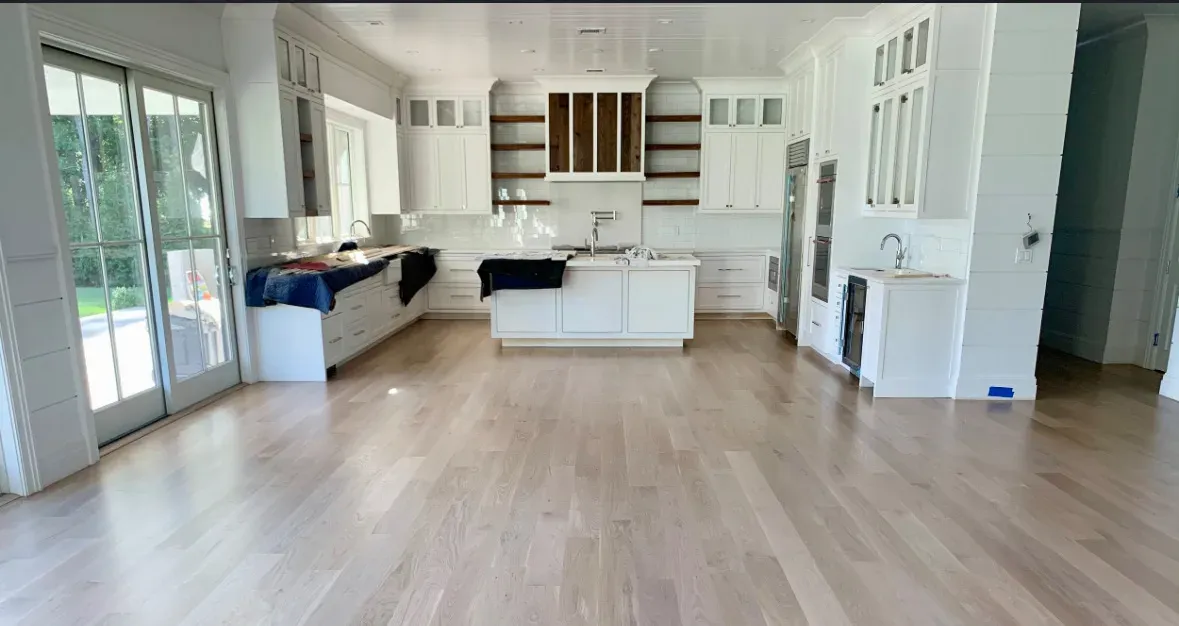
Color. Red oak carries a pink to salmon undertone that shows through clear finishes and light stains. White oak runs from tan to light brown with a gray or olive cast and no pink in it. That is the whole reason it dominates modern interiors: it takes a natural, light or gray finish and stays neutral, where red oak fights back with warmth.
Grain. Red oak has a wider, wavier, more open grain. White oak grain is tighter and straighter, with longer rays. Up close a white oak floor reads calmer.
Hardness and water. White oak is a little harder on the standard scale, and its pores are closed off by growths called tyloses, which is why it was the wood for barrels and boat building. It resists water penetration better than red oak. That does not make it waterproof, and it does not change how you treat a kitchen floor, but it is a real property, not marketing.
Cost. White oak has generally cost more than red oak, and demand has kept it that way. How much more depends on cut, width and grade, which is most of the rest of this article.
Plain-Sawn, Rift-Sawn and Quartersawn
Every white oak board is cut from the log one of three ways, and the cut decides how the floor looks and how it behaves more than almost anything else.
Plain-sawn is the standard cut and the standard price. The grain shows the arching cathedral pattern on the face of each board. It is what most white oak flooring is, and it is a good floor.
Quartersawn boards are cut with the growth rings running close to perpendicular to the face. The grain is straight and tight, and white oak in particular shows a dramatic fleck, sometimes called tiger or ray fleck, where the cut exposes the wood's medullary rays. It is the look of Arts and Crafts furniture and of the best floors in Kansas City's older houses. It is also the most dimensionally stable cut, moving noticeably less across the width of the board with humidity changes.
Rift-sawn boards are cut at an angle between the other two. The grain is dead straight with little or no fleck, which is the very clean, linear look a lot of modern interiors want. Stability is close to quartersawn.
Rift and quartered boards cost substantially more than plain-sawn because a log yields far fewer of them and the sawing wastes more. Rift and quartered is often sold as a mix, which gives a mostly straight-grain floor with fleck scattered through it. If you want the fully linear look, you are asking for rift only, and that is the most expensive white oak floor there is. We went through where the money goes in what custom hardwood floors actually mean.
Width, and the Solid Versus Engineered Line
The second half of the modern white oak look is width. Where the traditional Kansas City floor is two-and-a-quarter-inch strip, the floor in the pictures people bring us is five, six or seven inches wide, sometimes wider.
This is where Kansas City's climate gets a vote. Our summers are humid and our winters, with the furnace running, are dry. Solid wood takes on moisture in summer and gives it back in winter, and it moves across its width when it does. A narrow board moves a little. A seven-inch solid board moves a lot, and the gaps that open between wide solid planks every January are the single most common complaint we hear about floors other people installed.
The answer for wide plank is engineered white oak: a real white oak wear layer on a cross-laminated plywood or lumber core that holds the board flat. A well-made engineered plank with a thick wear layer sands and refinishes like solid, and it stays put at seven inches wide. We explained the thickness number that decides whether an engineered floor can be refinished in solid or engineered hardwood, and it matters more for white oak than for anything else because so much of it is sold wide.
Our rule of thumb: solid white oak up to about four inches wide on a wood subfloor, engineered above that or on any slab. Quartersawn and rift solid can go a little wider because they move less. If someone offers you a seven-inch solid plank floor without mentioning any of this, ask them about January.
European White Oak
You will see this on a lot of engineered flooring. It usually refers to oak species grown in Europe rather than the American white oak that grows in Missouri and across the eastern states. The two look similar in tone. European oak is generally sold in wider and longer boards with more character grading, because that is how the European mills cut and market it, and it is the source of a great deal of the wide plank engineered product in the market.
Neither is better. American white oak is the wood in the older floors around here and is what we use when matching or lacing into an existing floor. European oak is a good choice for a new wide plank engineered install. Judge the product on wear layer thickness, core construction and finish, not the continent.
Grade Is a Looks Decision
Select white oak is clean and consistent. Number one common has more color variation and small knots. Character or rustic grades show open knots, mineral streaks and wide color swings, and they are deliberately chosen for the wide plank farmhouse look. Grade does not change the durability of the wood. It changes the price, with lower grades costing less, and it changes how much of the floor's character comes from the wood versus the finish.
Finishing White Oak
White oak is the wood that made natural and light finishes possible, and most of what we finish it with is meant to keep it looking like white oak.
Water-based polyurethane stays clear and does not amber, which is what keeps a white oak floor looking pale and neutral for years. Oil-based polyurethane warms the wood toward honey over time. Both are durable. If you chose white oak for its color, water-based is usually the finish that protects that choice. The full comparison is in water-based or oil-based polyurethane.
Hardwax oils penetrate rather than film over the wood and give the flattest, most natural look. They need more regular maintenance and they can be spot-repaired in a way polyurethane cannot. They suit white oak particularly well.
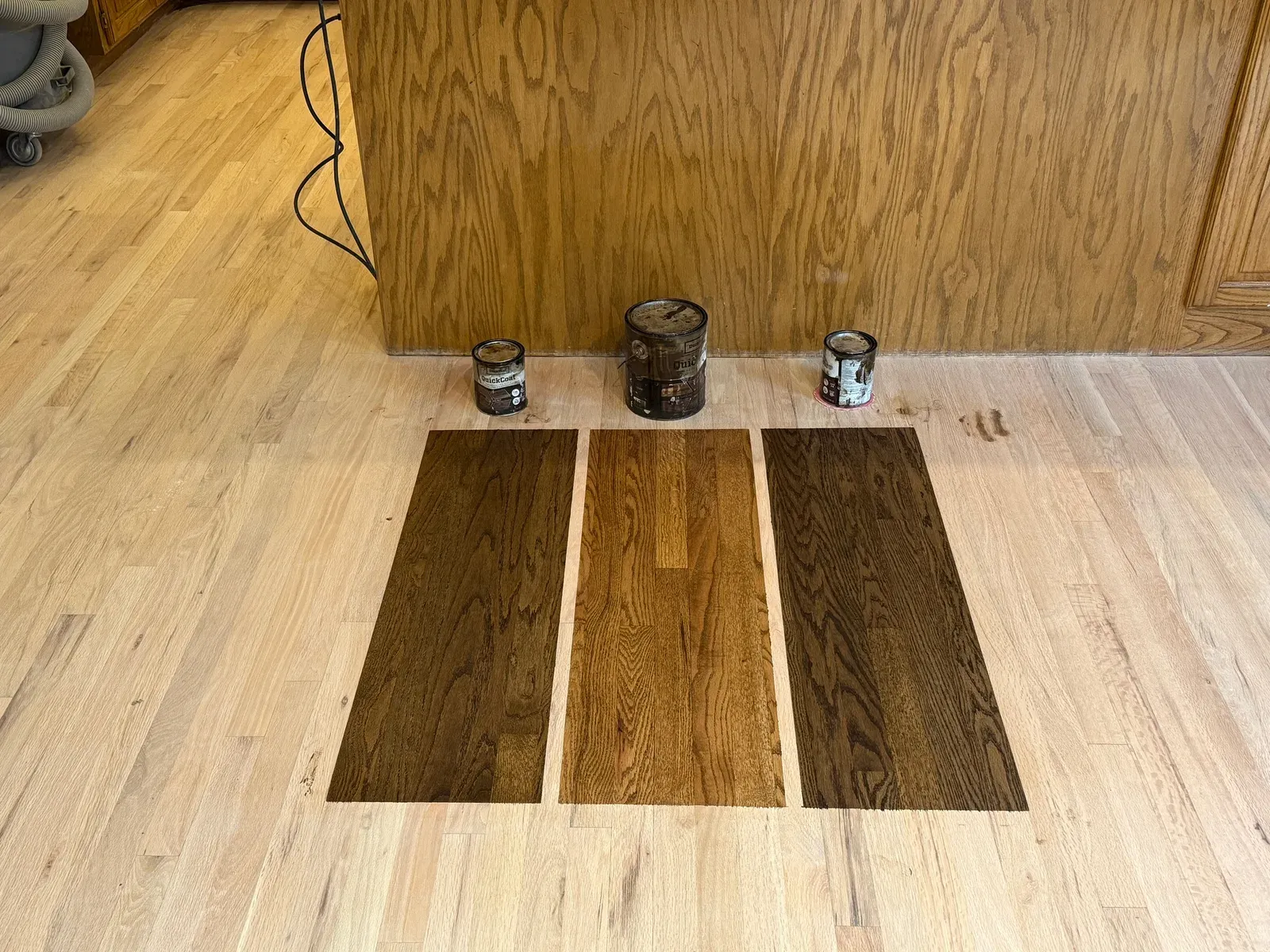
Stain and reactive finishes. White oak takes stain evenly, and its tannin content means it also responds to reactive products that change the wood's color chemically rather than by pigment. That is how the deep grays and fumed looks are done. It is skilled work and it is tested on your floor first, as the staining guide explains.
One thing to know: white oak sometimes shows a slight green or gray cast under certain light and certain finishes. It is the wood, not a defect, and it can be warmed slightly with a tinted sealer if it bothers you. We show you the sample on the sanded floor before deciding.
Prefinished or Site-Finished
Most engineered white oak is sold prefinished, which is convenient and gives a very durable factory coating but leaves a small bevel at every board edge and limits you to the manufacturer's colors. Unfinished white oak, solid or engineered, is sanded flat and finished in your house, which gives a seamless surface and any color you can test. The trade-offs are laid out in prefinished or site-finished. For a plain-sawn floor in a stock color, prefinished is fine. For rift, quartersawn, a border or a matched stair, site-finished is the way it gets done right.
Matching White Oak to a Red Oak House
A lot of Kansas City homes already have red oak, and people want to add white oak in a new room or replace a section with it. The honest answer is that the two can be stained to a similar tone but they will never look identical side by side, because the grain and undertone differ. Where a floor is continuous, we match species. Where a doorway or a stair separates two rooms, mixing them can work well, and the installation conversation is where we sort out which you have.
Getting It Right Here
White oak is a superb floor and it is the right choice for most new installs we are asked about. The mistakes come from width and finish, not from the wood. We install and finish white oak across the metro, from new builds in Leawood and Overland Park to matched additions in older Kansas City homes. A free estimate is where we bring the samples and talk through cut, width and finish for your actual rooms.
Get a Free Estimate
Have a floor you want looked at? We give honest, no-pressure estimates across the Kansas City metro.