There are two ways to end up with a finished wood floor. Either the boards arrive already finished from a factory and get installed, or raw wood gets installed and then sanded and finished in place.
Both are legitimate. Both are common in Kansas City. They produce noticeably different floors, and the difference has almost nothing to do with quality and everything to do with what you are optimizing for.
The Surface Is the Giveaway
Look at the edge where two boards meet.
Prefinished boards are finished individually before they are joined, so the manufacturer puts a small bevel on each edge. That is not a defect, it is necessary, because tiny differences in board height would otherwise leave sharp lips. The result is a floor with a visible groove between every plank. Some people like it and specify it deliberately. Some people dislike it and did not know it was coming.
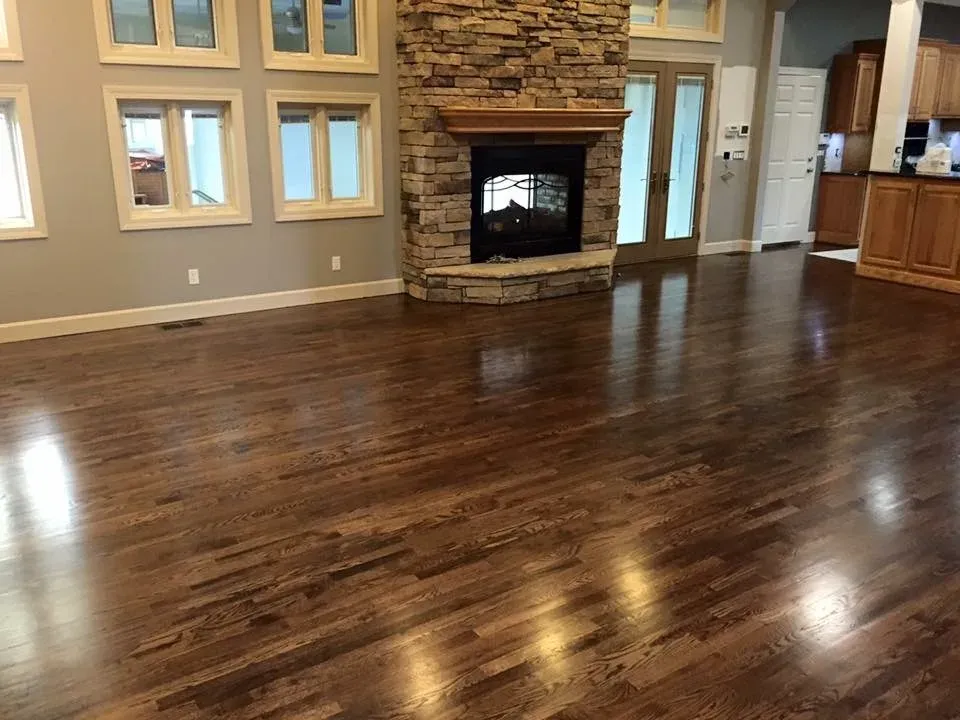
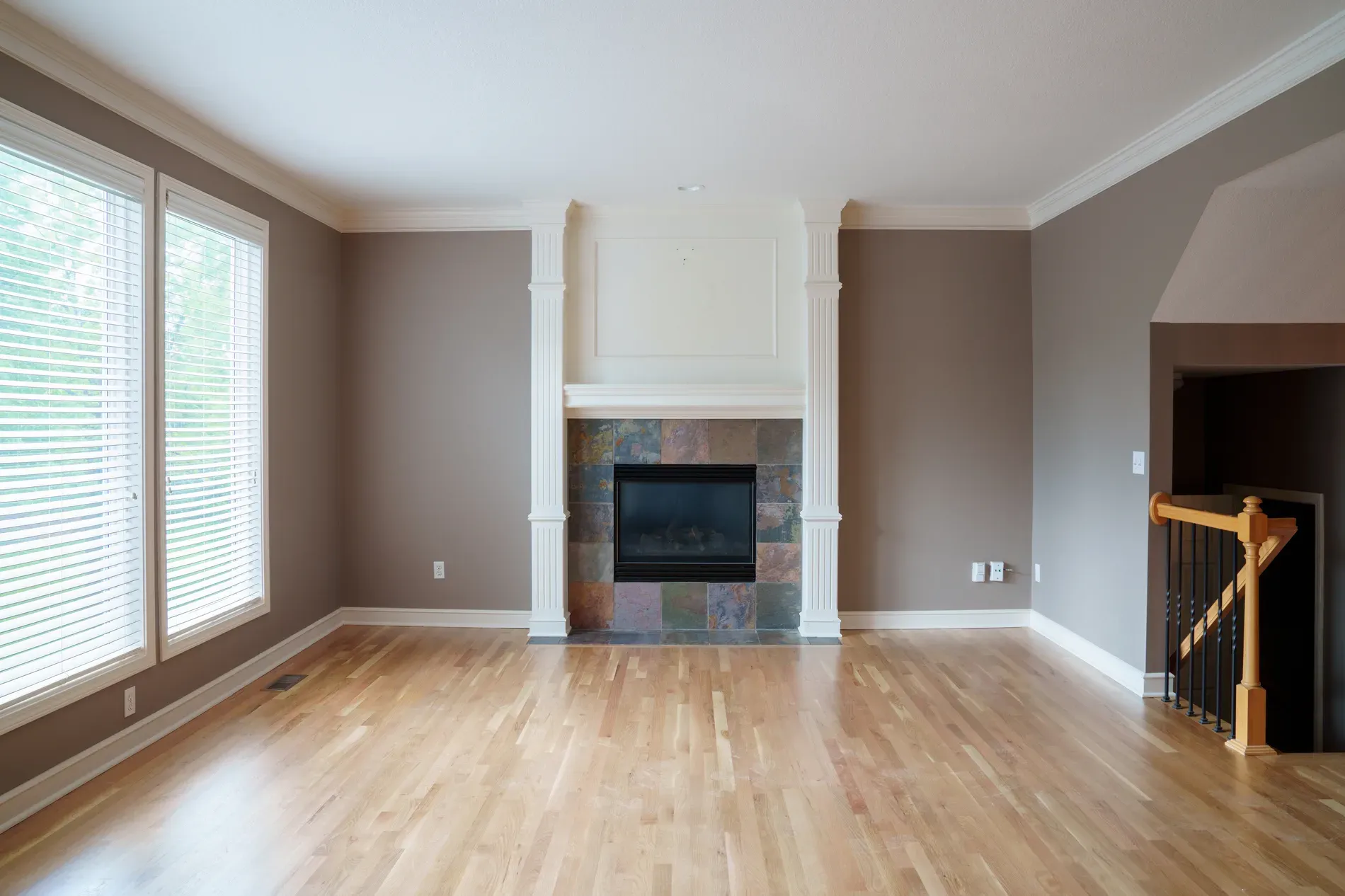
A site-finished floor is sanded flat after installation, so the finish flows across the joints as one continuous surface. Flat, seamless, no grooves. That is the look most people picture when they picture a hardwood floor, and it is the reason people who have compared the two in person often choose it.
Practically, those bevels also collect. Not badly, but a groove at every board edge in a kitchen holds crumbs and grit that a flat floor does not.
Durability: The Factory Has a Real Advantage
Factory finishes are applied in controlled conditions and cured with ultraviolet light, and most carry aluminum oxide in the coating. Nothing applied in an occupied house matches that for raw scratch resistance, and the manufacturer warranties reflect it.
Site finishes have closed a lot of that gap. Modern commercial-grade water-based finishes are hard-wearing and cure to a genuinely tough surface. But if pure surface hardness is the single thing you care about, the factory wins.
There is a counterpoint that matters more than most people expect. A site-finished floor has no seams in the finish, so liquid on the surface has nowhere to go. On a prefinished floor, the finish stops at every bevel, and spills that sit in those grooves reach the board edge. In a kitchen or a mudroom that is a real distinction.
Time, Dust and Living in the House
This is where prefinished wins outright.
Prefinished is installed and done. Furniture can go back once the install is complete. No sanding, no dust, no finish odour, no waiting for cure, no rooms sealed off. For an occupied home, a rental turnover on a schedule, or anyone who cannot move out for a week, that is decisive.
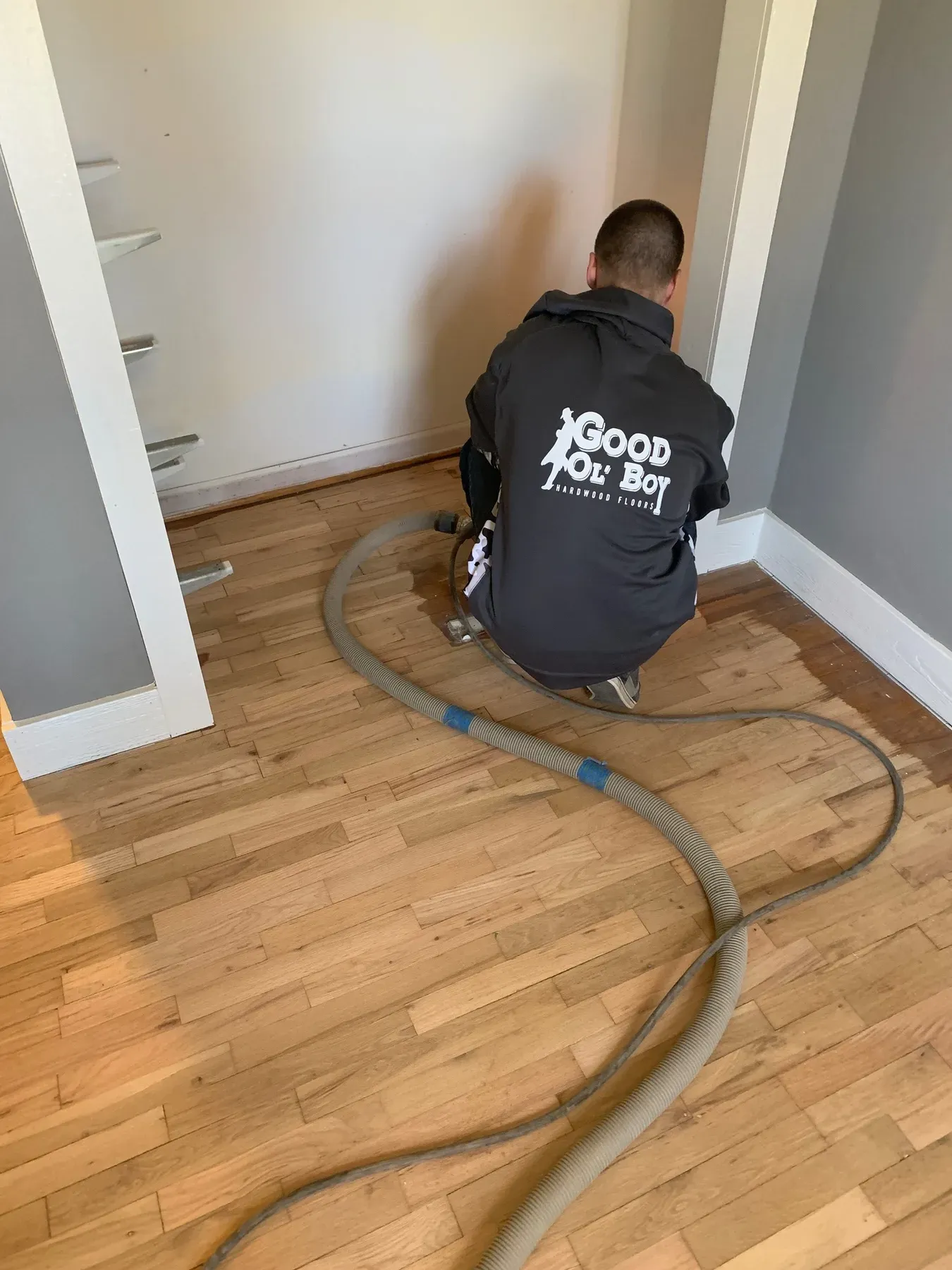
Site-finished means installation, then sanding, then coats with drying time between them, then cure time before furniture and rugs return. We run dust containment on every sanding job and it makes an enormous difference, but the timeline is the timeline and there is no compressing the cure.
Where Site-Finished Wins Outright
Matching an existing floor. If new wood has to meet an old floor in a doorway, site finishing is close to essential. The whole area gets sanded and finished together, so the transition disappears. Prefinished boards next to an aged floor will not match on day one and cannot be made to.
Custom color. Prefinished means choosing from what a manufacturer makes. Site finishing means any stain you want, sampled on your actual wood in your actual light. Our post on choosing a stain color that lasts covers why the wood underneath changes how a color reads.
Stairs. Treads, risers and a landing meeting a floor is exactly where a seamless finish shows its value, and where bevels look wrong. Our hardwood stairs work is nearly all site finished for this reason.
Patterns. Herringbone, chevron and borders want a continuous surface. Bevels across a pattern fight the geometry.
Older Kansas City homes. A hundred-year-old house rarely has flat subfloors or square rooms. Sanding after installation absorbs a lot of that, and a flat monolithic finish suits the period far better than a modern beveled plank does.
The Long Game: Repairs and Refinishing
Fifteen years out, the two floors behave differently.
A site-finished floor can be screened and recoated straightforwardly, because the surface is flat and continuous. That is the cheap maintenance job that keeps a floor going for decades, and we cover it in screen and recoat versus full refinish.
A prefinished floor can be recoated, but it is fussier. The factory finish is hard and slick, adhesion has to be earned, and abrading into each bevel is awkward. Many prefinished floors get fully sanded when they wear, which flattens the bevels off and turns it into a site-finished floor from then on.
Board replacement runs the other way. Swapping a damaged board in a prefinished floor is easy if the line is still made, since the replacement arrives finished and matching. In a site-finished floor the new board needs finishing in place, which our repair service handles by blending the area.
How To Choose
Choose prefinished if you are living in the house and cannot vacate, the schedule is tight, you like or do not mind the bevel, the room is self-contained rather than meeting an existing floor, or maximum factory scratch resistance is the priority.
Choose site-finished if you want a flat seamless floor, you are matching existing hardwood, you want a specific color, the job includes stairs or a pattern, the house is older, or you plan to keep the floor for decades and want the easiest long-term maintenance.
Species, grade and plank width are the next decisions and they apply either way. Our guide to choosing hardwood flooring in Kansas City covers those, and the oak page covers the species most of this city's floors are made from.
We do both. What we will not do is push you toward one because it suits our schedule. Tell us how you live in the room and how long you are staying, and the answer is usually obvious. See how we install, or get a free estimate and we will bring samples of both so you can see the edge difference in your own light.
Get a Free Estimate
Have a floor you want looked at? We give honest, no-pressure estimates across the Kansas City metro.