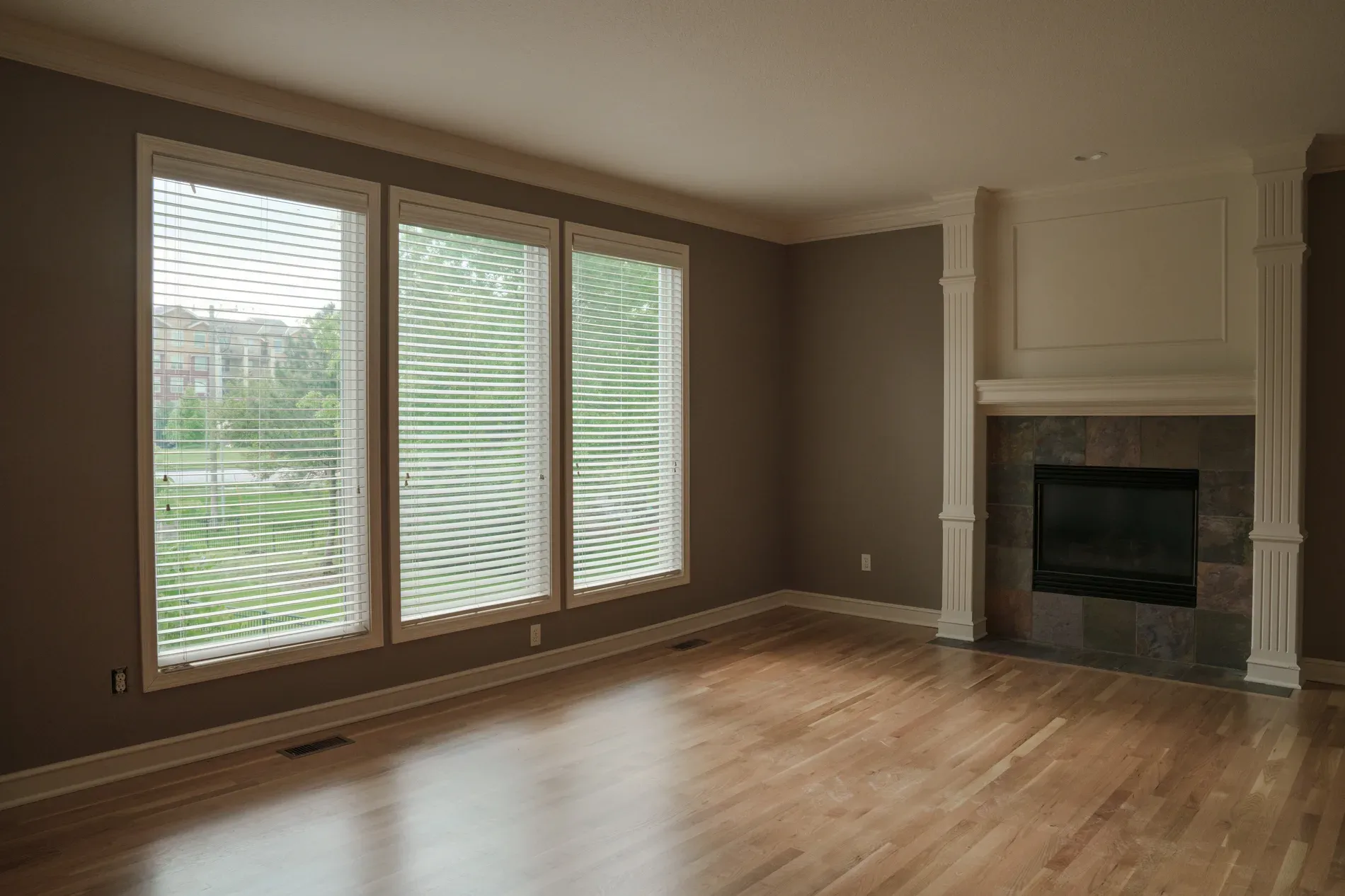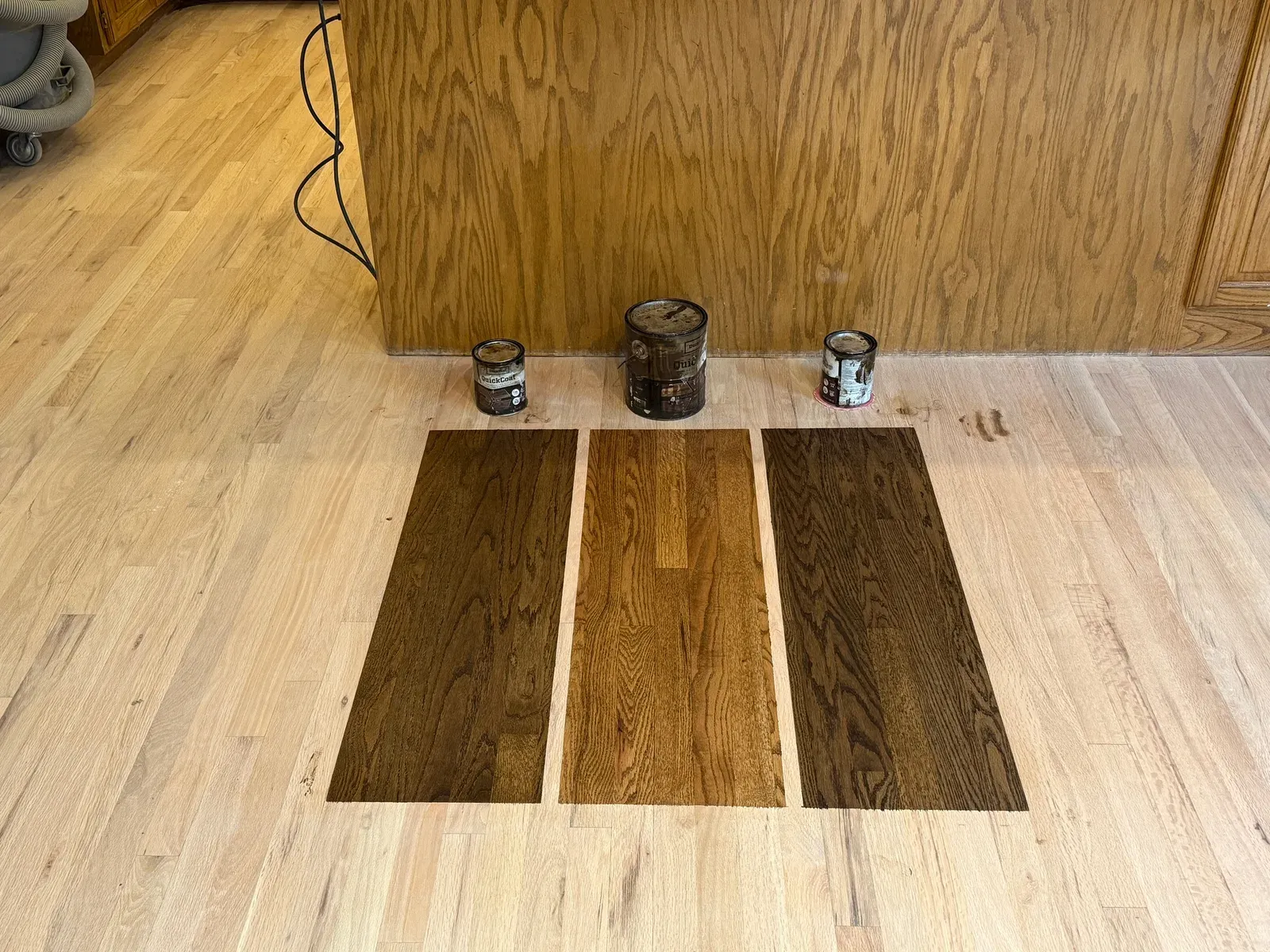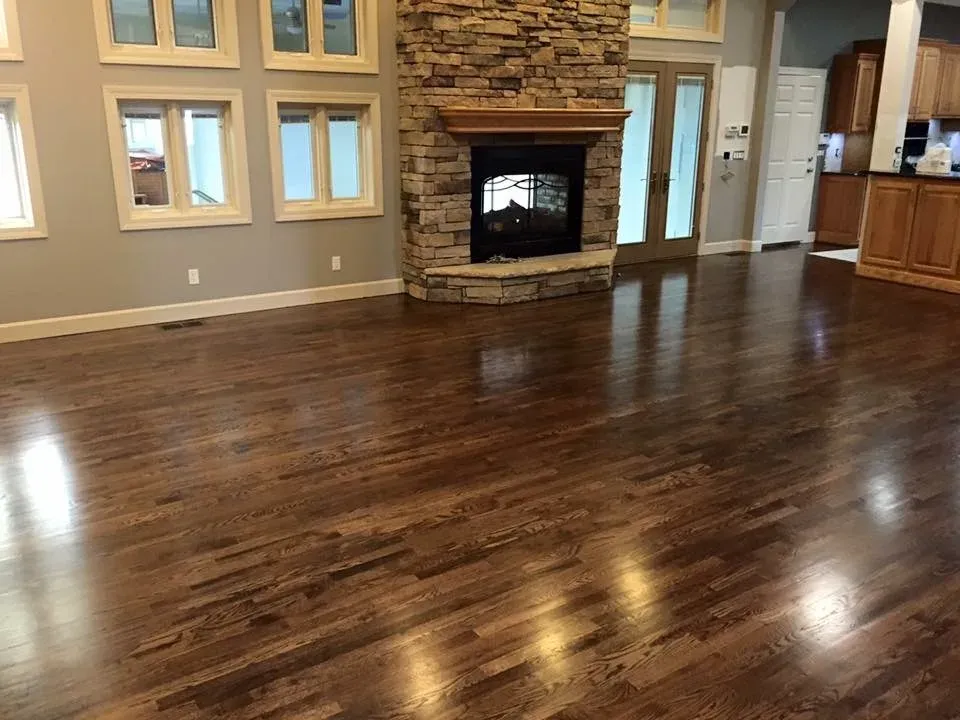
The floor in the photo at the top of this page is not walnut. It is oak, stained a deep brown, and it is exactly the look a lot of people have in mind when they ask us about walnut. That comparison is the heart of the decision. You can get a dark floor two ways: stain a hard, affordable wood dark, or buy a wood that is dark all the way through and live with the fact that it is softer.
Here is what walnut flooring is really like to choose, install and live with in Kansas City.
What Walnut Flooring Is
When flooring is sold as walnut in this country, it almost always means American black walnut, a tree native to Missouri and eastern Kansas. Its heartwood runs from a medium chocolate to a deep brown, sometimes with gray or purple tones, and its grain is mostly straight and calm. It is a wood that looks expensive without trying, which is why it shows up in libraries, dining rooms and furniture as much as on floors.
One name to watch for: Brazilian walnut is not walnut at all. It is ipe, a tropical wood that is several times harder and behaves completely differently. If a product is labeled Brazilian walnut, judge it as ipe, not as the walnut described here.
How Soft Is Walnut?
On the Janka hardness scale, black walnut sits around 1010, against roughly 1290 for red oak, 1360 for white oak and about 1820 for hickory. That is a real difference. A walnut floor will take dents from dropped pans, high heels, chair legs and big dogs that an oak floor would shrug off.
Two things soften that news. First, most everyday scratches happen in the finish, not the wood, and finish wears the same on any species. Second, when something does go through the finish on walnut, the wood underneath is brown. On stained oak, a deep scratch shows pale wood under the dark stain and jumps out. On walnut, it blends. Our guide to dogs and hardwood floors covers what actually keeps marks down on any floor.
Sapwood, Grade and Steamed Walnut
The outer part of a walnut log, the sapwood, is pale, close to cream. How much of it ends up in your floor is mostly a question of grade:
- Clear or select grades keep the boards mostly heartwood, for a floor that reads as one even brown.
- Natural and character grades leave in the cream sapwood, knots and color swings. The contrast is striking and costs less, and it looks more like a rustic floor than a formal one.
- Steamed walnut is lumber that was steamed before drying, which darkens the sapwood so it blends with the heartwood. It evens the color out, and some people feel it flattens the depth of the heartwood a little in the process.
As with any species, look at a full box of the actual product laid out on the floor, not a single sample board. Grade changes the look of walnut more than almost anything else.
Walnut Gets Lighter, Not Darker
Most woods darken or yellow with age. Walnut goes the other way. With light exposure, its deep brown slowly mellows toward a warmer, more golden brown over the years, and the purple and gray tones fade out. A walnut floor in a sunny room will look different in five years than the day it was finished.
It does not happen evenly, either. A rug or a sofa that sits in one spot shades the wood underneath, and when it moves you can see its outline as a darker patch. Our post on why hardwood floors change color explains how that happens on every species and what can be done about it.
Dark Floors Show Everything
This is true of any dark floor, stained or natural. Dust, pet hair, grit, footprints and light surface scratches all show up more on a dark floor than on a mid-tone oak. A walnut floor in a kitchen with a sliding door to the yard will look dusty within an hour of being cleaned.
Sheen is the best tool you have. A matte or satin finish hides far more than semi-gloss or gloss, which turn every scuff into a highlight when the light comes across the room.
How Walnut Behaves Through a Kansas City Year
Walnut is generally considered a stable wood. It moves with humidity like every hardwood, but noticeably less than hickory. Kansas City still puts any floor through humid summers and furnace-dry winters, so the usual rules apply: the flooring is acclimated and its moisture checked against the subfloor before it goes down, and the house is kept in a reasonable humidity range all year. Why gaps open every winter covers what is normal.
Much of the walnut sold today is engineered, often in wide planks, with a walnut wear layer over a stable core. That is the safer choice for wide boards, over concrete, or in a basement. Solid or engineered walks through that decision.
Finishing Walnut
Walnut almost never gets stained. The color is the reason you bought it. The clear finish still changes the look, though:
- Oil-based polyurethane deepens and warms walnut, bringing out a rich, slightly amber brown.
- Water-based polyurethane keeps the color cooler and closer to the raw wood, with more of the gray and purple tones showing.
- Hardwax oils give the most natural, low-sheen look and can be spot repaired, at the cost of more regular maintenance.
We lay samples on your own boards so you can see the difference in your light. Water-based or oil-based polyurethane goes deeper into the finish families.
Refinishing a Walnut Floor
Solid walnut, and engineered walnut with a thick enough wear layer, can be sanded and refinished like oak. Because it is softer, it sands faster, which means it also takes less to sand too much, and any sander marks left behind show clearly on a dark, even floor. That is careful work, not a rental-machine weekend. A screen and recoat before the finish wears through puts off the full sanding for years.
After sanding, freshly exposed walnut is darker than the aged floor was, and it will start lightening again from there.
Walnut or Dark-Stained Oak?
For many houses, this is the real question. A fair comparison:
- Choose walnut if you want a natural dark color with depth that stain does not quite reproduce, the room sees moderate traffic, and you are comfortable with some dents becoming part of the floor over time. Primary bedrooms, studies, dining rooms and formal living rooms suit it well.
- Choose dark-stained oak if the floor runs through a busy main level, there are large dogs in the house, or you want a dark look at a lower cost. Oak is harder, easier to match later, and it can be sanded back to a lighter color if your taste changes. Walnut cannot be sanded lighter than walnut.
Walnut also works well in small doses with oak: a border around a room, a feature strip at an entry or a walnut inlay in an oak field. Our staining guide covers how dark stains on oak are tested, and choosing hardwood flooring compares walnut, oak and hickory side by side.
Getting It Right
Our walnut floors page covers the species at a glance. We install walnut across the metro, including hardwood floor installation in Leawood, Overland Park and Kansas City, and our installation service explains how the work runs. Get a free estimate and bring the sample you are considering. We will tell you straight whether walnut suits the room, or whether a dark oak would serve you better.
Get a Free Estimate
Have a floor you want looked at? We give honest, no-pressure estimates across the Kansas City metro.