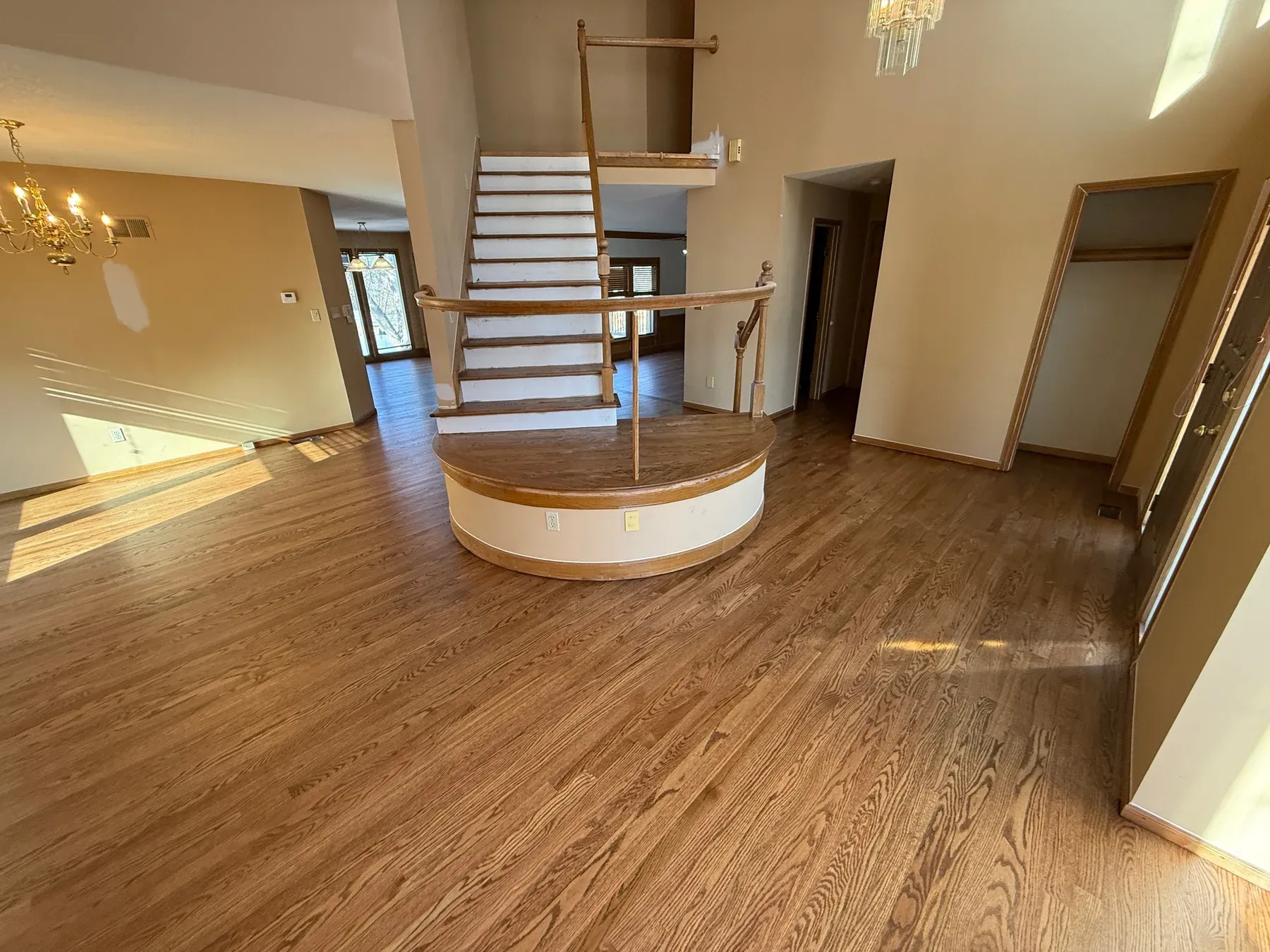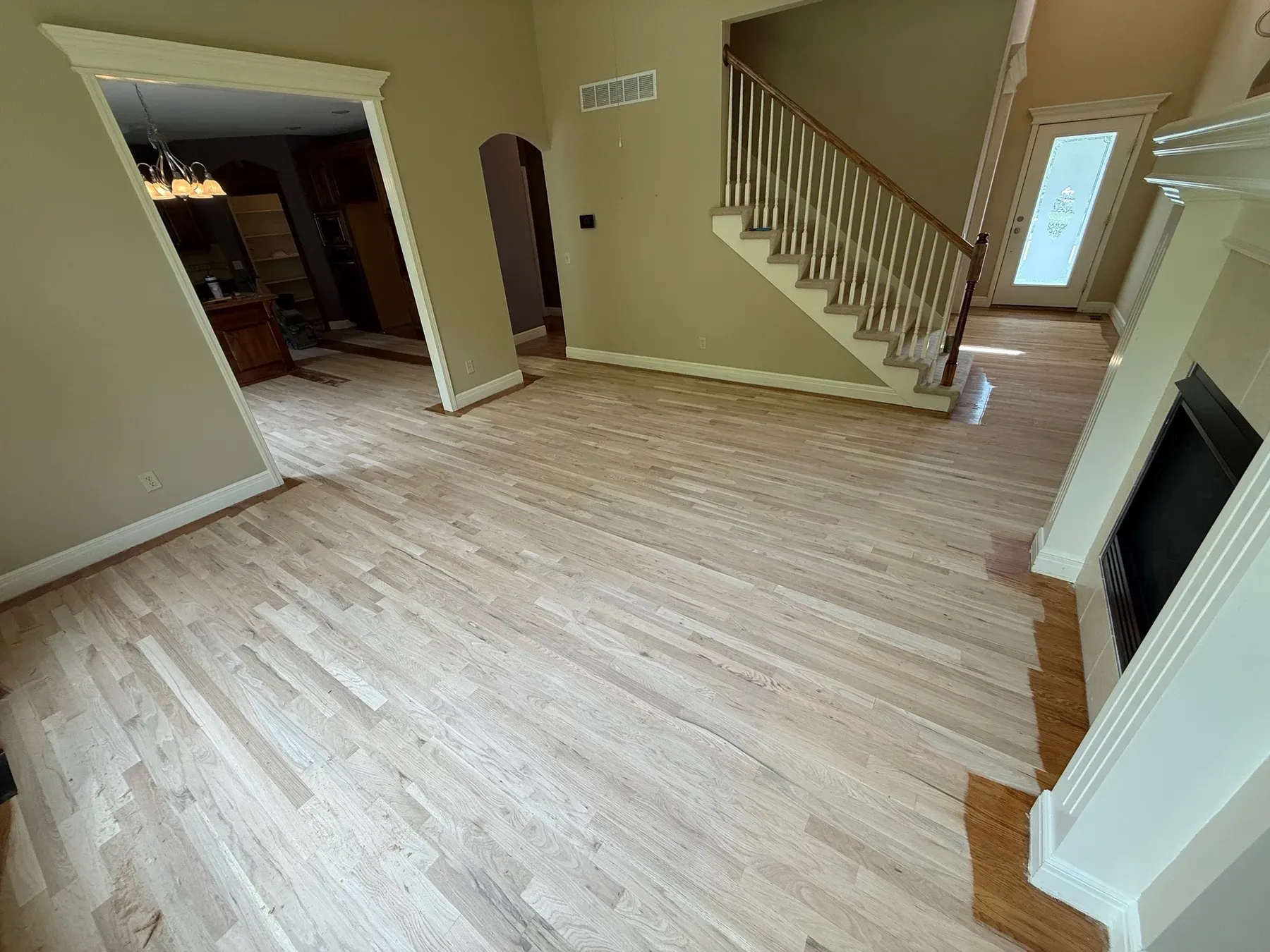
Brookside and Waldo are where Kansas City's original hardwood lives. The streets south of the Plaza were laid out as part of the Country Club District, which J.C. Nichols developed in stages from 1906 into the 1940s, and Waldo, which the city annexed in 1909, grew up alongside it. The houses are shirtwaists, foursquares, bungalows, Tudors and Colonial Revivals, and nearly every one of them was floored in solid oak strip when it was built.
That is why hardwood floor refinishing in Brookside is a different job from refinishing a floor in a 1990s subdivision. The wood is better. It is also a century old, and in most of these houses it has already been sanded more than once. The question that decides everything is how much of it is left.
Why These Floors Are Worth the Trouble
The oak that went into a 1920s Kansas City house came from slower-grown timber than what is milled today. The grain is tighter and the boards are more stable. A hundred years indoors has also taken all the movement out of it. The floor has expanded and contracted through a hundred Kansas City summers and winters and it has settled into what it is going to be.
You cannot buy that. New oak is good wood, but it is not that wood, and the floor you already have runs continuously through the whole house in a way that a replacement only matches at real expense. Our default position on a Brookside floor is that it gets saved unless the measurement says otherwise.
What Has Usually Been Done to It Already
A floor this age has a history. The typical sequence in these houses runs something like this: original finish, probably shellac or varnish, then a sanding and new finish sometime mid-century, then a period under carpet from the 1960s through the 1980s, then another sanding when the carpet came up, and possibly a third when the house changed hands in the 2000s.
Every one of those sandings took wood off the top. A full sanding with a drum machine removes a noticeable fraction of the wood above the tongue, more if the floor was cupped or the operator was rough. Three sandings on a floor that started with a quarter inch above the tongue can leave very little, and the tongue is where the story ends. Sand into it and the boards crack, the nails show, and the floor is done.
So the floor that looks fine to walk on may or may not have another full refinish in it. There is no way to tell from the surface.
How We Measure What Is Left
We check before we quote. The places to see a board in cross section without cutting anything are a floor register, a threshold where the floor meets a lower surface, a radiator pipe penetration, or the edge of a closet where a board end is exposed. Lift the register cover and you can see the edge of the boards and measure the wood above the tongue with a ruler.
Where there is no register in a room, the edge of the floor at the base shoe can be checked by pulling the shoe molding. It is a few minutes of work and it is the single most important thing that happens before a Brookside refinish.
Three results come out of that check.
- Plenty of wood. The floor takes a normal full sanding. This is more common than the age would suggest, because a lot of these floors were never actually sanded during their carpet years.
- Enough for one careful sanding. We can refinish, but the sanding has to be as light as the floor allows, which means the deepest scratches and stains may not come all the way out. We tell you that up front.
- Not enough. A full sanding would expose the tongue in the thinnest areas. The options at that point are covered below, and none of them is throwing the floor away.
When the Floor Can Take One More
If the wood is there, the refinish itself follows the same sequence as any other, and the complete refinishing guide covers it. A few things are specific to this housing.
Old finish contamination. Floors that were waxed for decades, and many of these were, carry wax into the wood pores. It has to be fully sanded out or the new finish will fish-eye and peel. A screen and recoat is not an option on a waxed floor, however good it looks.
Face nails and old repairs. Boards that were face-nailed during a past repair have nail heads that will tear a sanding belt. They get set below the surface before the machine goes over them. Old patches from radiator moves or removed walls get cut out and laced in with matching strip rather than sanded around.
Pine somewhere. Bedrooms, closets and second floors in these houses were sometimes floored in pine rather than oak, because it was cheaper and nobody was going to see it. Pine sands and finishes fine but it is softer, it takes stain very differently, and it should not be color-matched to the oak by stain alone. We handle it as its own floor.
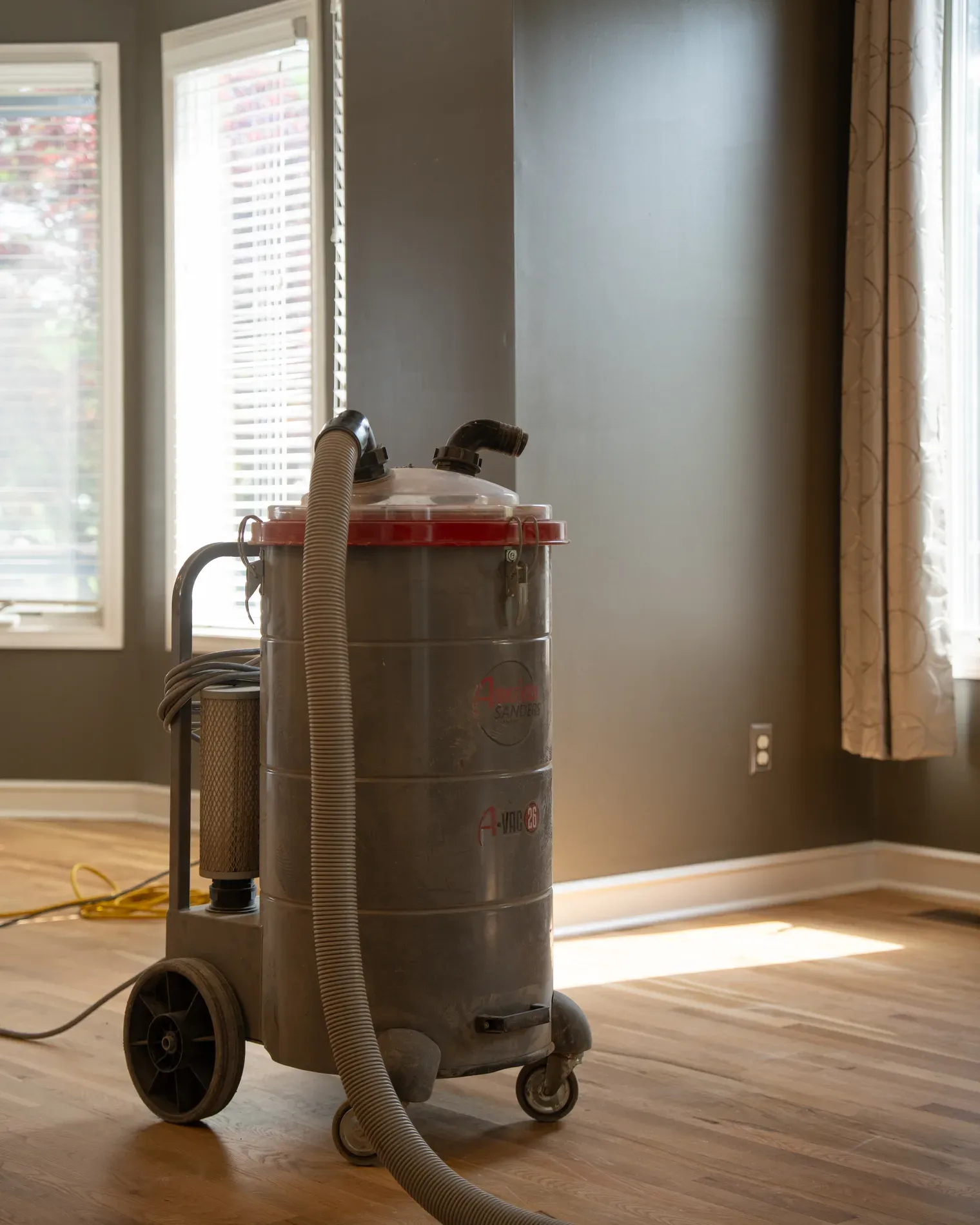
Lath and plaster dust. Old houses shed dust from every wall when a machine runs in them, on top of what the sanding makes. Containment matters more here than in a drywall house, which is one reason we run our dustless system on every job.
When It Cannot Take a Full Sanding
This is the conversation nobody wants, but it has more good outcomes than people expect.
Buff and recoat instead. If the finish is worn but the wood underneath is sound and the floor was never waxed, the top coat can be abraded and a new coat applied without taking any real wood off. The scratches in the finish go away. The stains in the wood do not. The screen and recoat guide explains what it can and cannot fix, and on a thin floor it is often the right call for the next several years.
Replace the thin boards, keep the rest. Floors rarely wear evenly. The hall and the doorway between the living and dining room are thin because they took every sanding at full pressure. The bedrooms are usually thicker. Replacing the worn section with new oak of the same width, laced into the sound boards, then sanding the whole floor lightly, keeps most of the original and puts fresh wood where it is needed. It is a repair job first and a refinish second.
Install over the top. A new floor, solid or engineered, can go down over the old one. It raises the floor height, which means doors get trimmed and base gets reset, and it means the original floor is gone from view. It is the last resort in a Brookside house, not the first, but it is a legitimate answer when the old floor is finished.
Replace it. Tearing out a century-old oak floor is a real job and it removes the subfloor question from the equation. We would only recommend it where the floor has structural problems, water damage that has spread, or so many past repairs that there is not enough original left to justify saving.
Stairs and the Second Floor
The staircase in these houses is almost always original oak treads with painted risers, and it is worth doing with the floor. Treads take the most wear of anything in the house and they have usually been sanded as often as the hall. The same thickness check applies, and a tread that is too thin to sand gets replaced with a new oak tread rather than sanded through. That is standard stair refinishing work.
The second floor is often in better shape than the first because it saw less traffic and, in a lot of these houses, was never sanded at all. It is common to do a full sanding upstairs and a light one down.
Color on Old Oak
A century-old red oak floor has patina that new oak does not, and a clear or lightly tinted finish shows it well. Very light modern stains and whitewash looks fight the natural warmth of old red oak and usually disappoint. Medium browns and the natural tone are what these floors do best. If you want to go lighter, we will test it on the sanded floor first, and the staining guide explains why that test matters more than any sample chip.
Getting a Straight Answer
We refinish floors across the Brookside, Waldo, Sunset Hill and Armour Hills streets as a regular part of our week, and the same measurement-first approach applies in Mission Hills, Hyde Park and the rest of Kansas City. If you have an old floor and you want to know whether it has one more refinish in it, get a free estimate. We will lift a register cover, measure the wood, and tell you what the floor can take before anyone talks about price.
Get a Free Estimate
Have a floor you want looked at? We give honest, no-pressure estimates across the Kansas City metro.