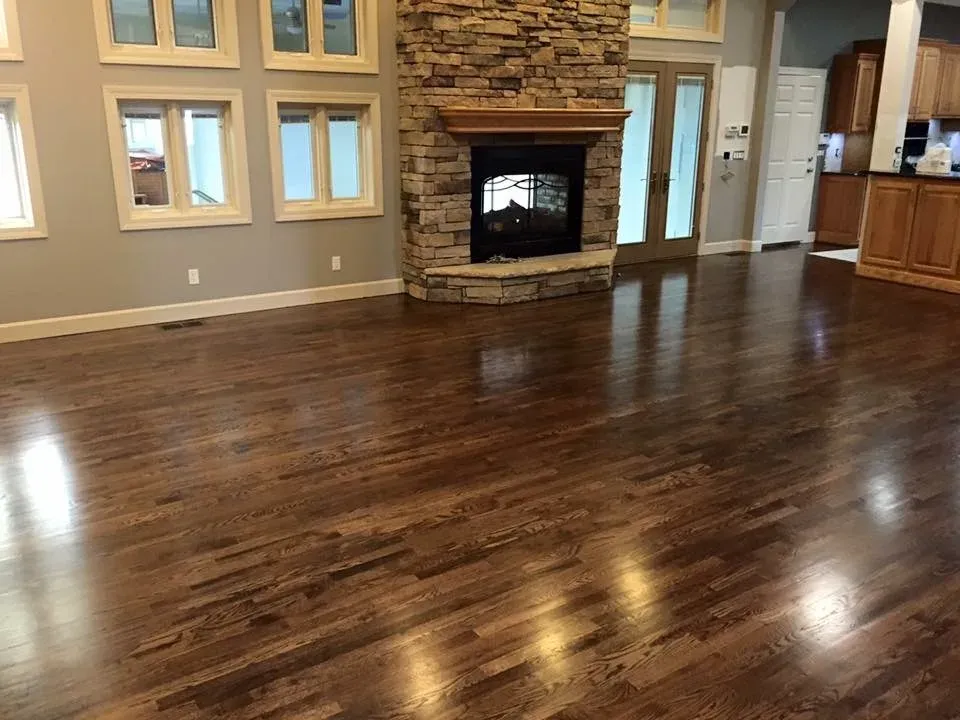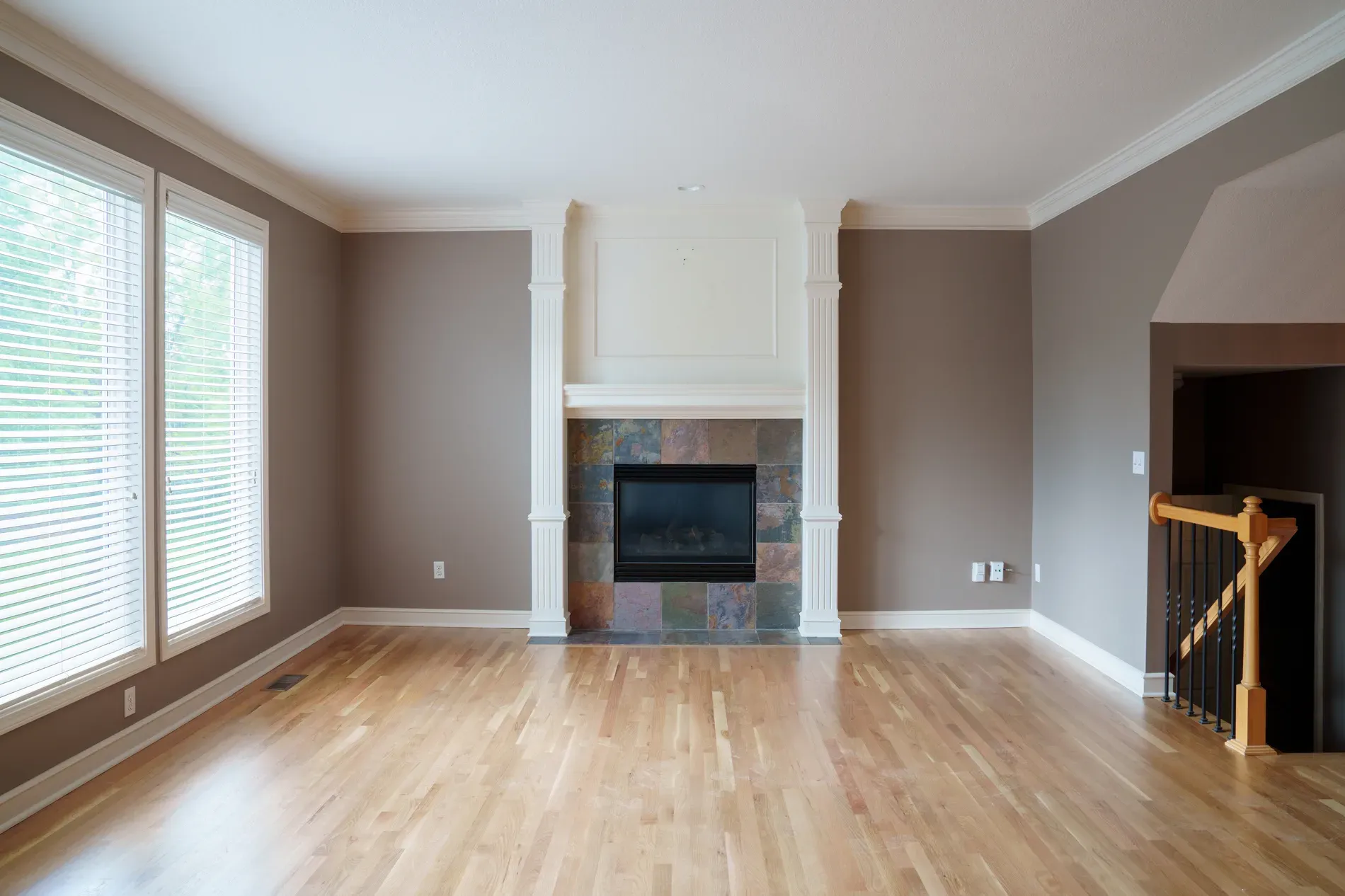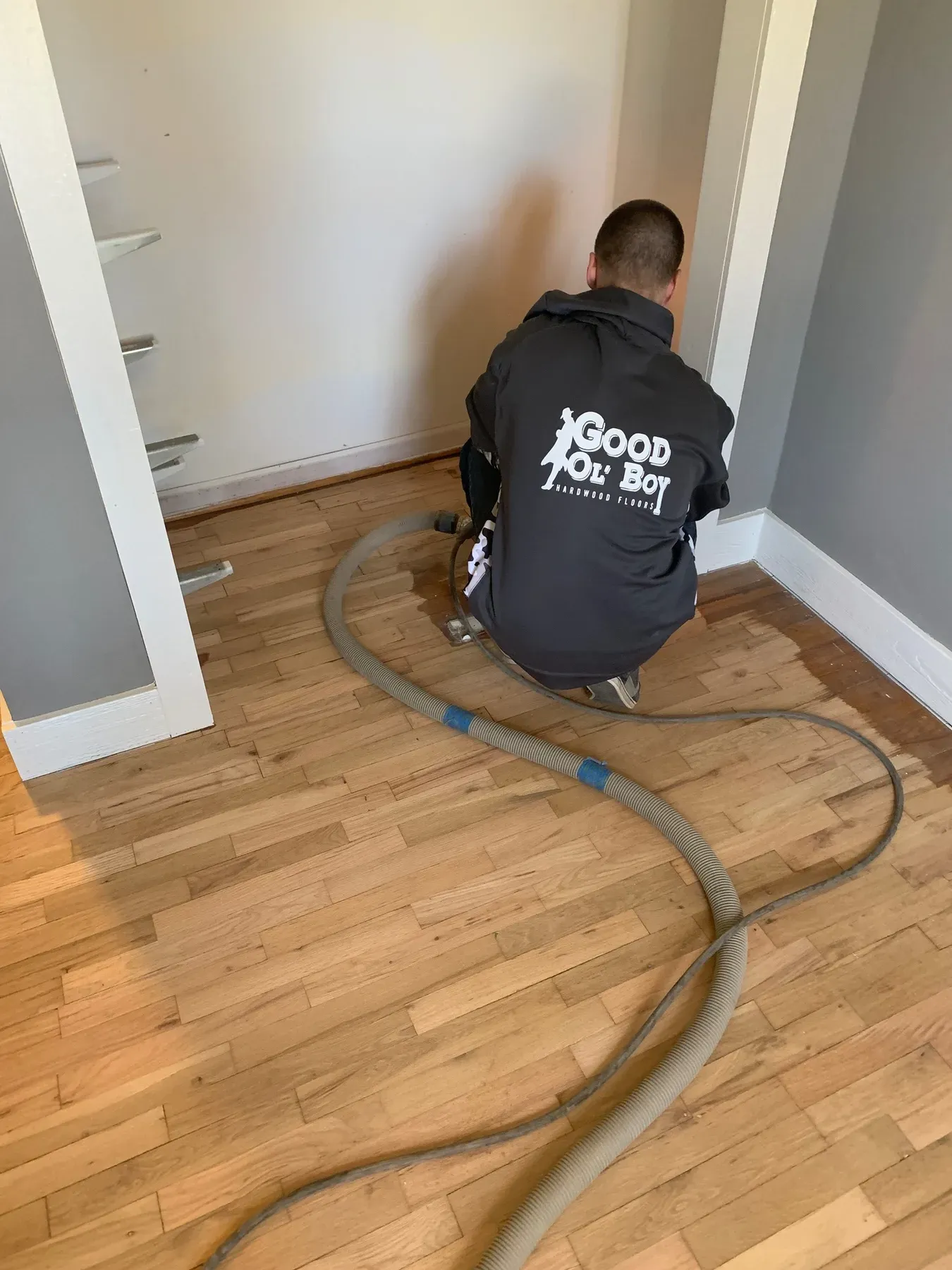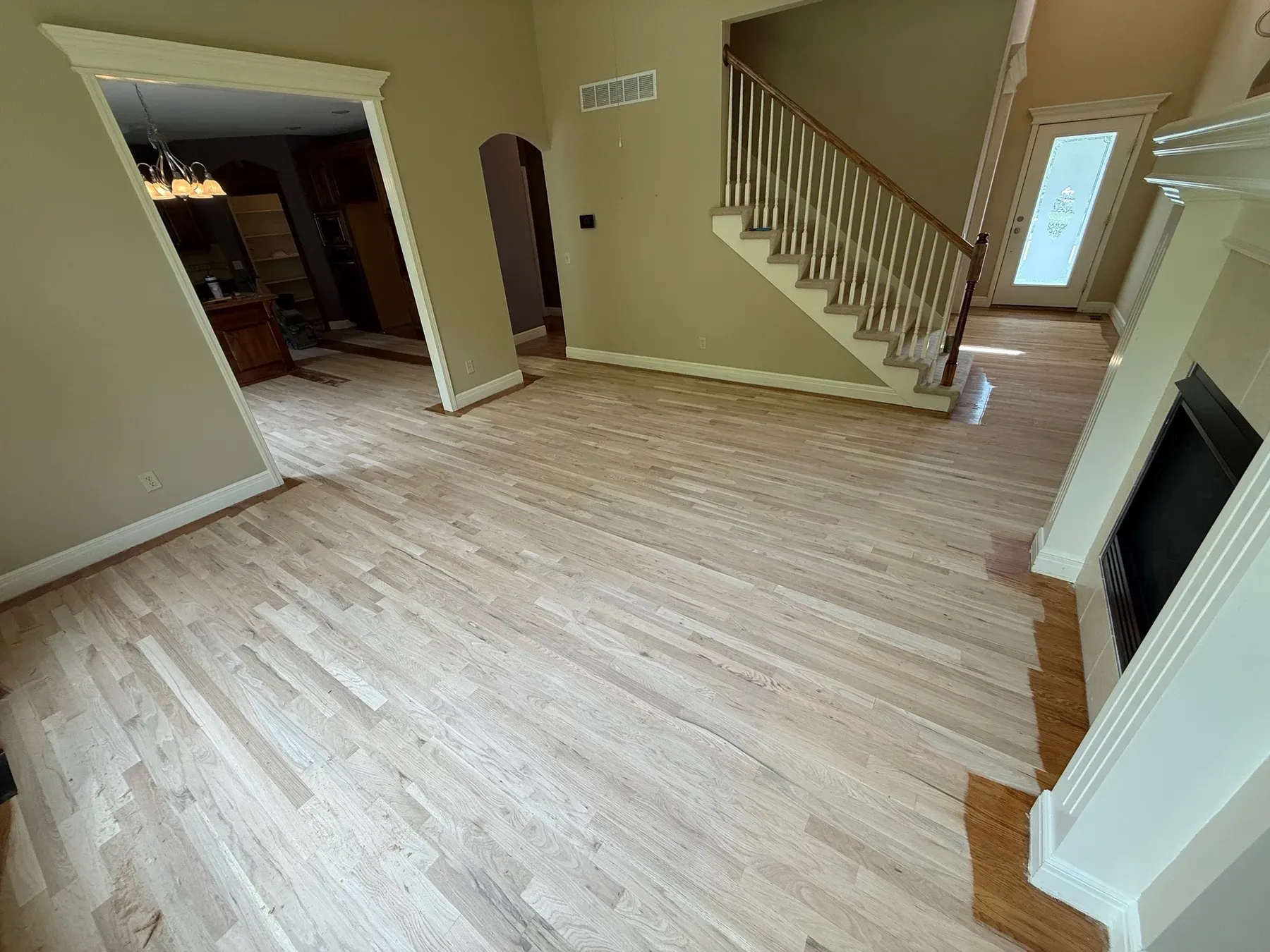
Some of the best floors in Kansas City are hiding under carpet, dulled by decades of wear, or written off as too far gone. More often than not, they are not. Wood floor restoration in Kansas City is about reading what a tired floor actually needs and doing the least invasive thing that brings it back, whether that is a deep clean, spot repairs, or a full sand and refinish.
What Restoration Covers
Restoration is a broader idea than refinishing. It can mean any combination of the following, matched to the floor in front of us:
- Deep cleaning. Sometimes a floor is not worn out, it is buried under old wax, grime, and haze. A proper clean and re-coat can transform it without a full sand. Our floor restoration and cleaning service covers exactly this.
- Board repairs. Cracked, split, or missing boards get replaced and woven in so the fix disappears into the surrounding floor. That is the focus of our hardwood floor repair service.
- Water damage recovery. Cupped, stained, or lifted boards from a leak or flood often can be saved. See our water damage repair page for what is recoverable.
- Full refinish. When the surface is beyond a clean, sanding to bare wood and refinishing resets the whole floor.
Uncovering Floors Under Carpet
In older Kansas City homes, it is common to pull up worn carpet and find solid oak underneath, often in better shape than you would expect because the carpet protected it. There may be tack-strip holes around the edges and some discoloration, but those are exactly the kinds of things restoration handles. Before you assume a covered floor is ruined, it is worth having someone look at it. You may already own a floor most people pay to install.
Can Water-Damaged and Gray Floors Be Saved?
Often, yes. Gray or black patches are usually surface issues in the finish and top layer of wood, which sanding removes. Cupping from moisture can settle back down once the wood dries and is sanded flat. What cannot always be saved is wood that has actually rotted or been wet so long it lost structure. The honest test is to look at the specific boards. We will tell you which ones can be sanded and refinished and which need to come out and be replaced, rather than promising a miracle or writing off a floor too quickly.
When Restoration Is the Right Call
Restoration makes sense when the wood is fundamentally sound and there is enough of it left to work with. That covers the large majority of older solid hardwood floors. It is almost always cheaper than replacement, and it keeps the original wood, grain, and character that a new floor simply cannot copy. If the floor is engineered with a paper-thin wear layer, or so much wood has already been sanded away over the years that there is nothing left, then replacement may be the smarter long-term move. We would rather tell you that up front than sand a floor that has nothing left to give.
What Drives the Cost of Restoration
Because restoration can be anything from a clean-and-recoat to a full sand with board replacement, the cost depends entirely on what your floor needs. The main factors are the square footage, how many boards need repair or replacement, whether there is water damage to address, and whether you want a color change. A floor that just needs cleaning and a fresh coat is a small job. A floor that needs repairs, sanding, staining, and finishing is a bigger one. We scope it honestly after we see it.
Bringing Kansas City Floors Back
If the old covering has to come off first, flooring removal and demolition covers what that involves by material. Once a floor is back, keeping it that way is mostly a cleaning question, and our cleaning guide covers what to use and what quietly destroys a finish.
Where you live changes what we expect to find. We wrote separate guides for the two places we uncover the most original wood: the 1950s ranches of Prairie Village, Fairway and Westwood and the century-old floors of Brookside and Waldo.
We restore floors across the metro, from century-old homes near the city core to mid-century houses in the suburbs. The reward of restoration is a floor with history that also looks cared for, something you cannot buy off a shelf. If you have a floor you are not sure is worth saving, get a free estimate and we will give you a straight answer on what it needs and whether it is worth it.
Get a Free Estimate
Have a floor you want looked at? We give honest, no-pressure estimates across the Kansas City metro.