The finish is what you see on a hardwood floor. The sanding is what you are actually looking at. A polyurethane coat is thin and clear, and every scratch, dish, wave and swirl left in the wood underneath comes straight through it, magnified by the light. That is why hardwood floor sanding in Kansas City is the part of a refinish we spend the most time on and the part a rushed contractor cuts first.
This is how the job actually goes, so you know what you are paying for and can tell when it was done right.
What Sanding Is For
Sanding does three separate things, and a good sanding does all three.
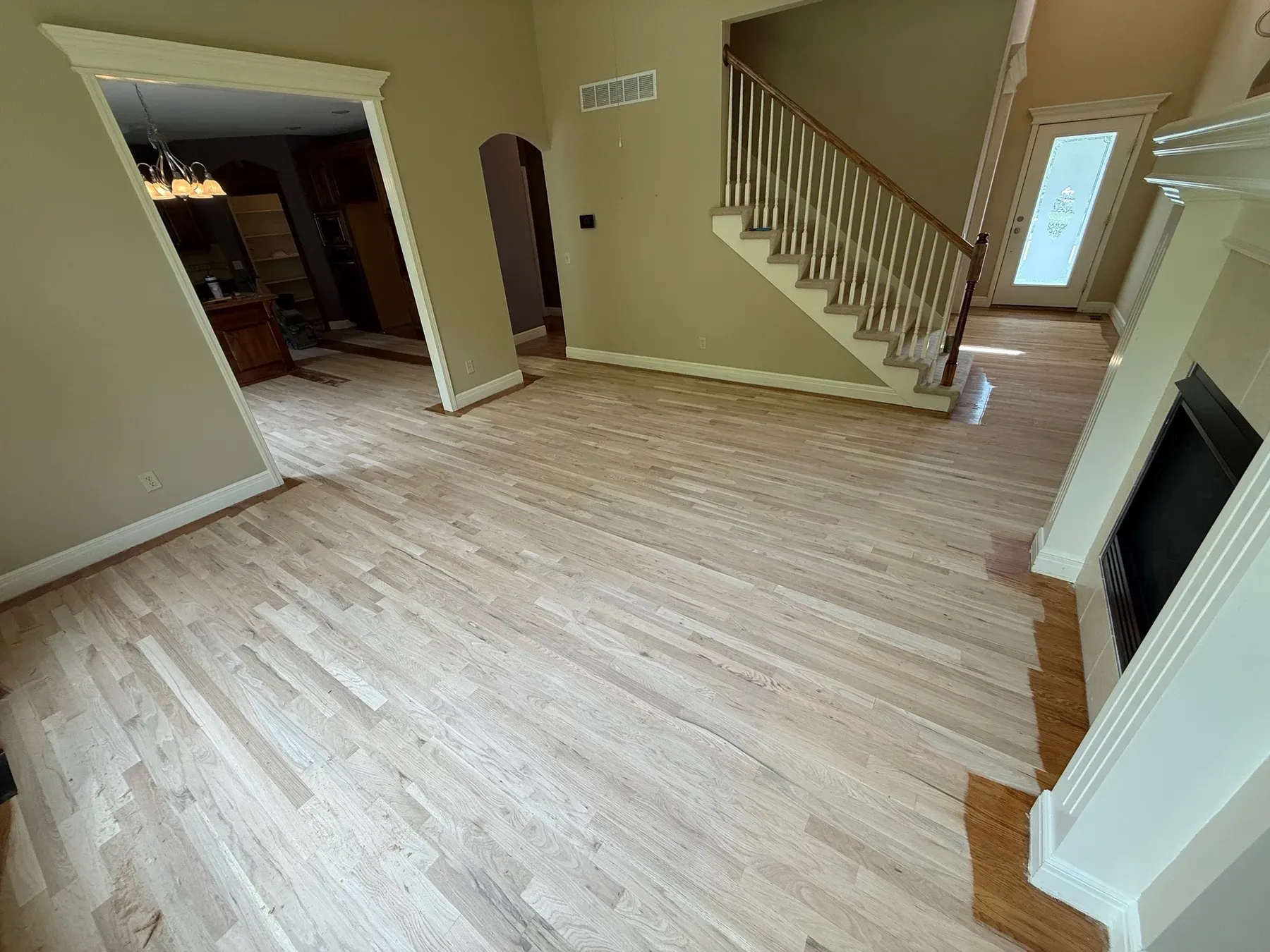
- Removes the old finish and the top layer of worn, stained or oxidized wood, down to clean, bare wood that will take stain and finish evenly.
- Flattens the floor, so that boards that have cupped, crowned or worn unevenly end up in one plane. This is the part people forget, and it is why a light hand sanding is not a refinish.
- Leaves a controlled scratch pattern, fine and uniform, that the finish can bond to without showing through.
A floor that has only had the first thing done to it looks fine on the day and disappoints under the first coat.
The Machines
A floor gets sanded by several machines, each doing a job the others cannot.
The big machine. A drum or belt sander, heavy, walked in straight passes with the grain across the open field of the room. It does the flattening and most of the material removal. It is also the machine that leaves the worst marks in inexperienced hands: a stop mark where it paused, a dip where it was set down too hard, a wave from an uneven pace.
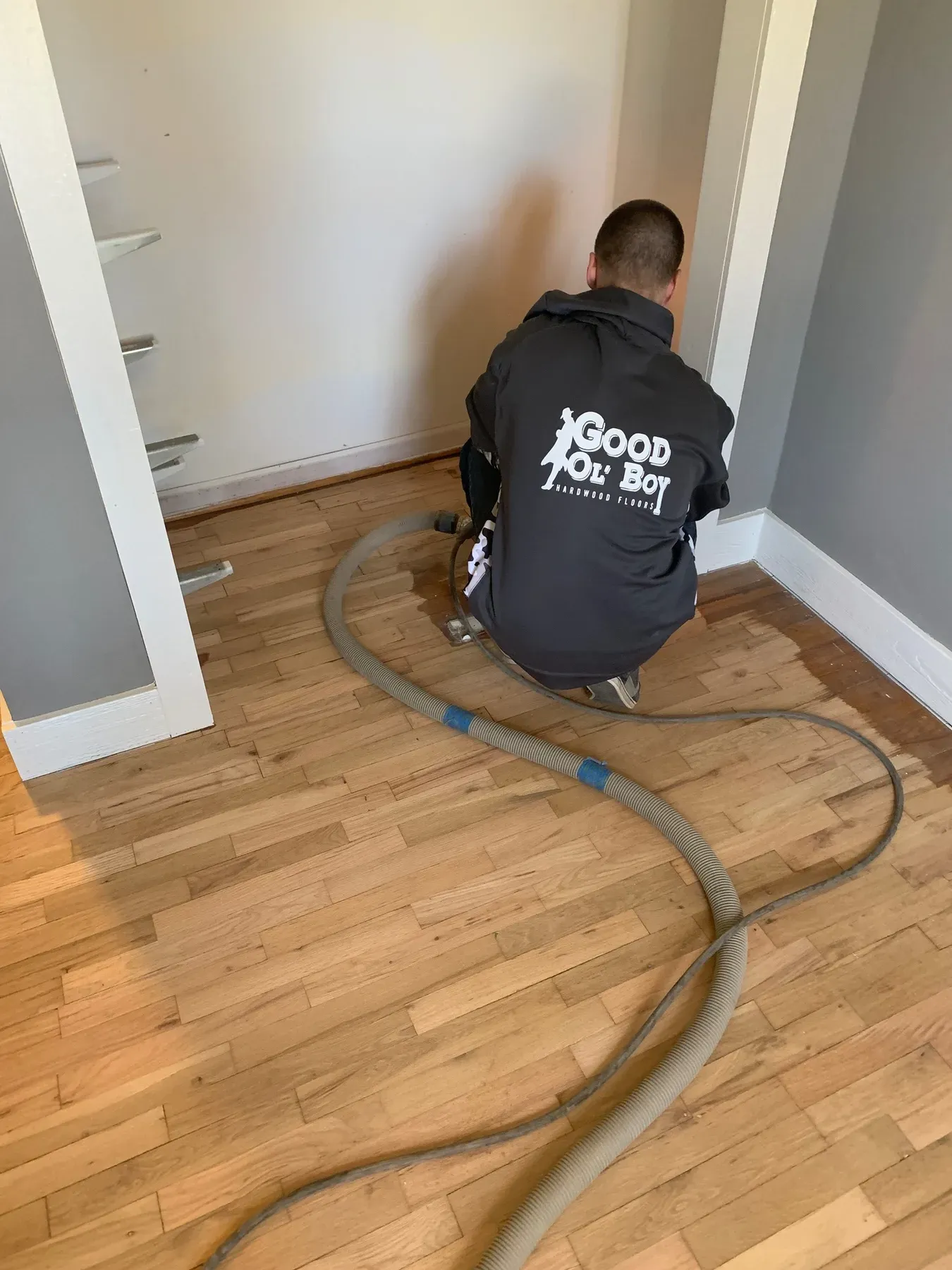
The edger. A disc sander that reaches the perimeter the big machine cannot, along walls, under radiators, into closets. It cuts fast and it cuts in a circular pattern, and blending its work into the field so the edge does not read as a slightly different band around the room is a skill. Edger swirls and picture-framing, where the perimeter shows a different scratch direction from the field, are the two most common flaws we see in floors other people sanded.
The buffer. A slow, heavy rotary machine used with screens and abrasive pads for the fine grits and for blending the field and edge work together. With a hard plate attachment it also does the flattening pass that takes out the drum marks the big machine left.
Hand work. Corners, the last inch beside a stair nose, around door casings and pipe penetrations. Scrapers and hand sanding. There is no substitute and it takes time.
Multi-head planetary machines, which run several small discs on a rotating head, are increasingly used for the fine passes in place of the buffer because they leave a very even random pattern. We use what the floor calls for.
The Grit Sequence
Abrasive is graded by number, coarse to fine. The order of a typical refinish runs from a coarse grit to strip and flatten, through one or two medium grits, to a fine grit before stain or finish. The exact numbers depend on the floor: a badly cupped or heavily finished floor starts coarser, a floor in good condition can start finer and save wood.
The rule that matters is that you cannot skip a step. Each grit exists to remove the scratches of the one before it. Jump from coarse to fine and the coarse scratches stay in the wood, invisible on bare oak and glaring the moment stain hits them. A floor that looks striped or swirled under a dark stain was almost always sanded out of sequence.
The last grit is a judgment call. Too coarse and the finish shows scratches. Too fine and the wood is burnished, the pores close, and stain will not penetrate evenly. It also depends on whether the floor is being stained or finished clear, and on the species. This is one of the places where experience shows.
Flattening: The Pass Most Floors Never Get
The big machine flattens along the length of the boards but leaves faint waves and drum marks across them, and the edger leaves its own pattern around the perimeter. A hard-plate pass on the buffer, at an intermediate grit, cuts the whole floor to one true plane and erases the transition between machines. It is the step that separates a floor that looks good from across the room from a floor that looks good in low afternoon light, when every wave shows.
It is also the step most often skipped, because the floor already looks sanded and it costs an hour or two. We do it on every job.
Water-Popping Before Stain
If the floor is being stained, there is one more step after the final sanding. Wiping the floor with water raises the grain and opens the pores that sanding closed, so the stain penetrates deeper and more evenly. The floor is then left to dry completely before stain goes on. It produces a darker, richer, more uniform color than staining a dry-sanded floor, and it is what makes dark and gray stains possible on oak. The staining guide covers what happens after.
How Much Wood Comes Off
A full sanding removes a fraction of an inch. It varies with how much flattening the floor needed and how coarse the starting grit was, and it is more than people expect on a cupped or heavily coated floor. A three-quarter-inch solid strip floor has roughly a quarter inch of wood above the tongue, which is the sanding budget for the life of the floor.
That is why we measure before we sand, and why on a floor that has been refinished before, the sanding is planned to remove as little as possible. Our guide to refinishing century-old floors in Brookside and Waldo goes into what happens when a floor has been sanded to its limit. On an engineered floor the wear layer thickness is the budget, and it is smaller, as can engineered hardwood be refinished explains.
What Sanding Cannot Fix
Sanding takes off the surface. It does not fix what is under it.
- Deep gouges and burns that go below the depth a reasonable sanding reaches. They get filled or the board gets replaced.
- Black pet or water stains that have soaked through the board. Some lighten, most do not. Board replacement, covered on the repair page.
- Active cupping from a moisture problem that is still going on. Sanding a cupped floor flat while it is wet produces a floor that crowns when it dries. The moisture source gets fixed first and the floor gets time to settle.
- Structural movement, loose boards, squeaks and gaps. Those are fastened and filled before the machines start, not sanded over.
Dust
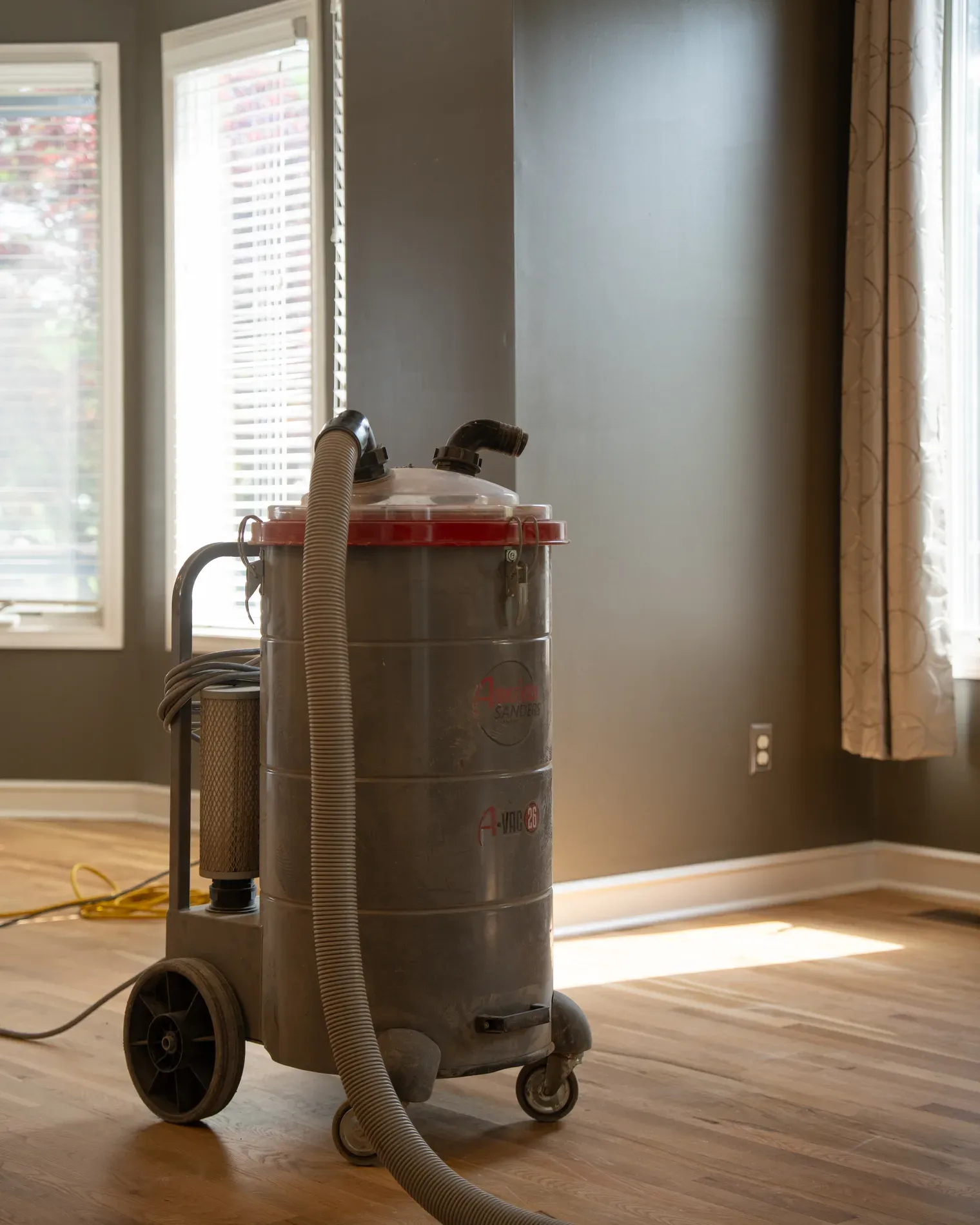
Sanding a floor produces a great deal of fine wood dust, and older finishes add their own. Every machine we run is connected to a containment vacuum system that captures dust at the cutting head rather than blowing it into the room, and the work area is sealed from the rest of the house. It is not perfectly dust-free, nothing is, but it is the difference between wiping down a few surfaces and cleaning every shelf in the house. The dustless refinishing guide covers how it works and what it does not do.
Stairs
Stair treads are sanded almost entirely by edger and hand, because no field machine fits on a tread. They take longer per square foot than any floor in the house and they are where corners get cut on cheap quotes. If the stairs are in the job, ask how they are being sanded. The stair refinishing guide walks through it.
Is There Such a Thing as Sanding Only?
People ask whether they can have a floor sanded and finish it themselves, or leave it bare for a while. Sanded oak that is left unfinished picks up dirt, moisture and stains within days and will need re-sanding before it can be coated. We sand and finish as one job, and the sanding service is described as part of that sequence rather than as something you would buy alone. What you can choose is how much of the sequence you need: a floor whose finish is worn but whose wood is sound may only need a screen and recoat, which abrades the finish rather than sanding the wood.
How to Tell It Was Done Right
Look at the finished floor from a low angle with a window behind you. A properly sanded floor is flat, the perimeter matches the field, and there are no swirls, waves or lines under the finish. Look at the corners: hand-worked corners match the rest. Look under a dark stain if there is one: an out-of-sequence sanding cannot hide there.
We sand and refinish floors across the metro, from Overland Park and Leawood to Kansas City, and the full picture of the job around the sanding is in the complete refinishing guide. If you want a floor sanded properly, get a free estimate and ask us to walk you through the sequence for your floor.
Get a Free Estimate
Have a floor you want looked at? We give honest, no-pressure estimates across the Kansas City metro.