There is a job in this trade that homeowners rarely ask for by name, mostly because nobody told them it exists. It goes by screen and recoat, buff and coat, or just a recoat, and all three mean the same thing.
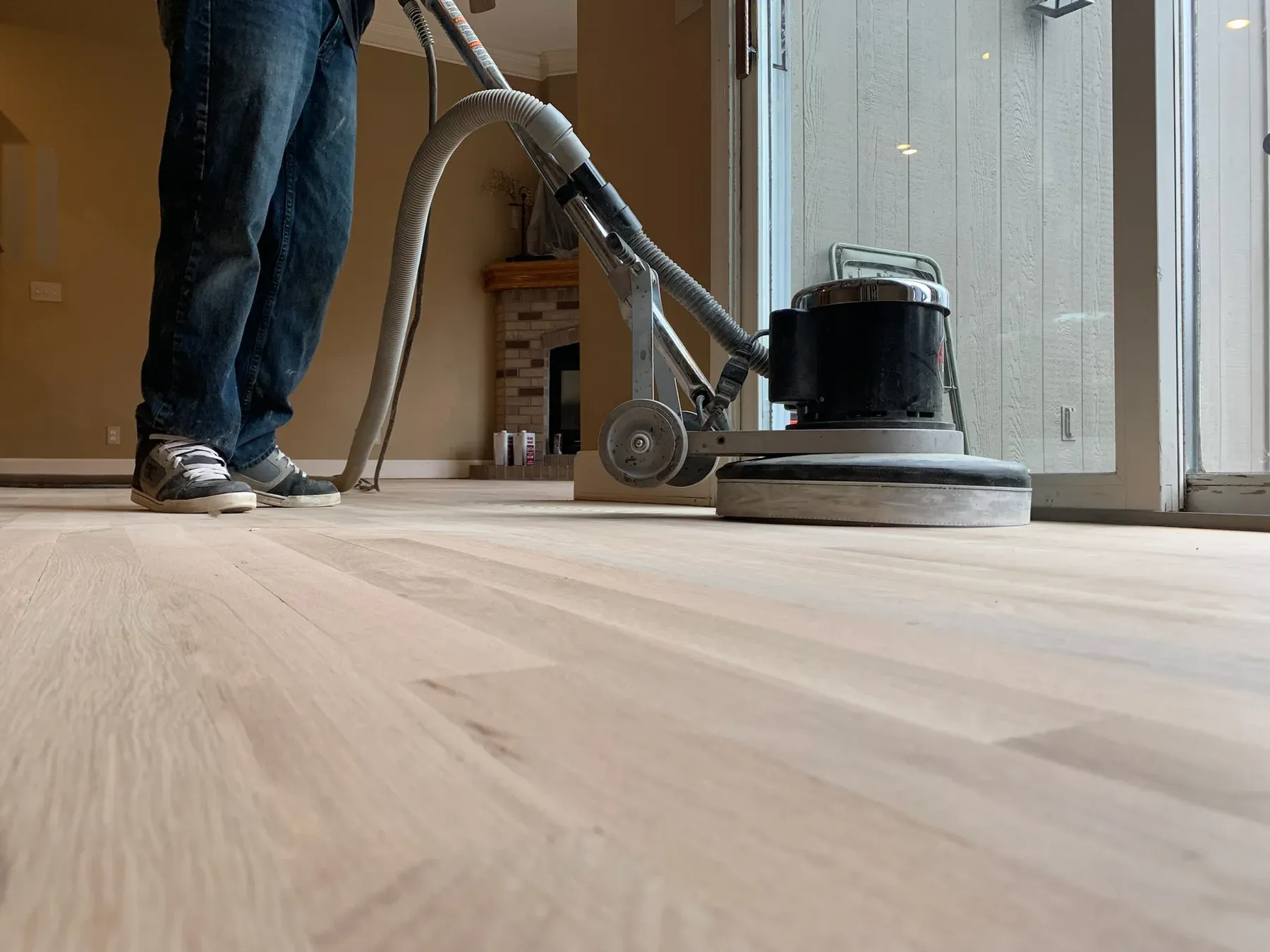
The floor gets abraded with a buffer and a fine screen, just enough to scuff the existing finish and give a new coat something to grip. The old finish stays. The wood is never touched. Then a fresh coat of finish goes down over the top.
That is the whole job, and for a large share of the tired floors in Kansas City it is the right one.
Recoat Versus Refinish, Plainly
A full refinish sands the floor down to bare wood, removes everything on it, and rebuilds the finish from nothing. It fixes anything short of structural damage, and it costs the most and takes the longest because it is the biggest possible intervention.
A recoat leaves the existing finish in place and adds to it. Much less dust, much less time, much less money, and no wood removed. Since a solid floor has a finite number of sandings in it across its life, a recoat also buys you a future refinish you did not spend.
The difference matters most in the timing. A recoat is a maintenance job you do before the finish fails. Once the finish is worn through and you are into the wood, the window has closed and you are sanding.
The Test That Decides It
Put a few drops of water on the worst traffic path in the house. Wait ten minutes.
Beads and sits on top: the finish is still doing its job. You are a recoat candidate.
Soaks in and darkens the wood: the finish is gone at that spot. Water is reaching bare wood every time the floor gets mopped, and a recoat over that will not look right or hold. That floor needs sanding.
Do it in three or four places, because a floor can be sealed in the dining room and worn through at the kitchen doorway. Recoating everything except the worn area is a real option in some houses.
What a Recoat Fixes
- Overall dullness where the sheen has flattened out
- Fine surface scratching, including most pet claw marks
- Traffic paths that look gray against the rest of the floor
- A floor that cleans up nicely and still looks tired
- Micro-scratching from grit that has been ground in over the years
All of those live in the finish, not the wood, which is exactly why abrading and recoating resolves them.
What a Recoat Will Not Fix
- Bare or worn-through spots. New finish over bare wood next to old finish reads as a patch, because it is one.
- Scratches into the wood. Run a fingernail across. If it catches, a coat of finish will just make it a shinier scratch.
- Color changes. A recoat is clear. Going from a natural floor to a walnut stain means sanding to bare wood. That is staining work.
- Water staining, gray boards or pet urine damage. That discoloration is in the wood fibers and has to be sanded out, or the boards replaced.
- Cupping or crowning. A moisture problem, and the moisture problem comes first.
- Deep dents. Impact damage is below the finish.
The Contamination Problem Nobody Warns You About
This is the part of a recoat that goes wrong, and it has almost nothing to do with the floor's condition.
New finish has to chemically bond to the old finish. Anything sitting between them stops that from happening, and the failure does not show up on day one. It shows up weeks later as finish peeling off in sheets or flaking at the edges, and the fix at that point is a full sanding.
Three things cause it, and all three come from products sold to homeowners for floor care:
Oil soaps. The residue they leave is the classic adhesion killer.
Acrylic mop-on shine restorers. They lay a soft layer that nothing bonds to and that has to be stripped first.
Wax. A waxed floor cannot be recoated with polyurethane at all. Wax has to come off completely, and often the honest answer on a waxed floor is to sand it.
This is why we ask what has been used on a floor before we quote a recoat, and why the answer changes the price. It is also the strongest argument for the plain maintenance routine in our guide to cleaning hardwood floors. A floor cleaned with a pH-neutral cleaner for ten years is a floor that recoats cleanly.
What the Day Looks Like
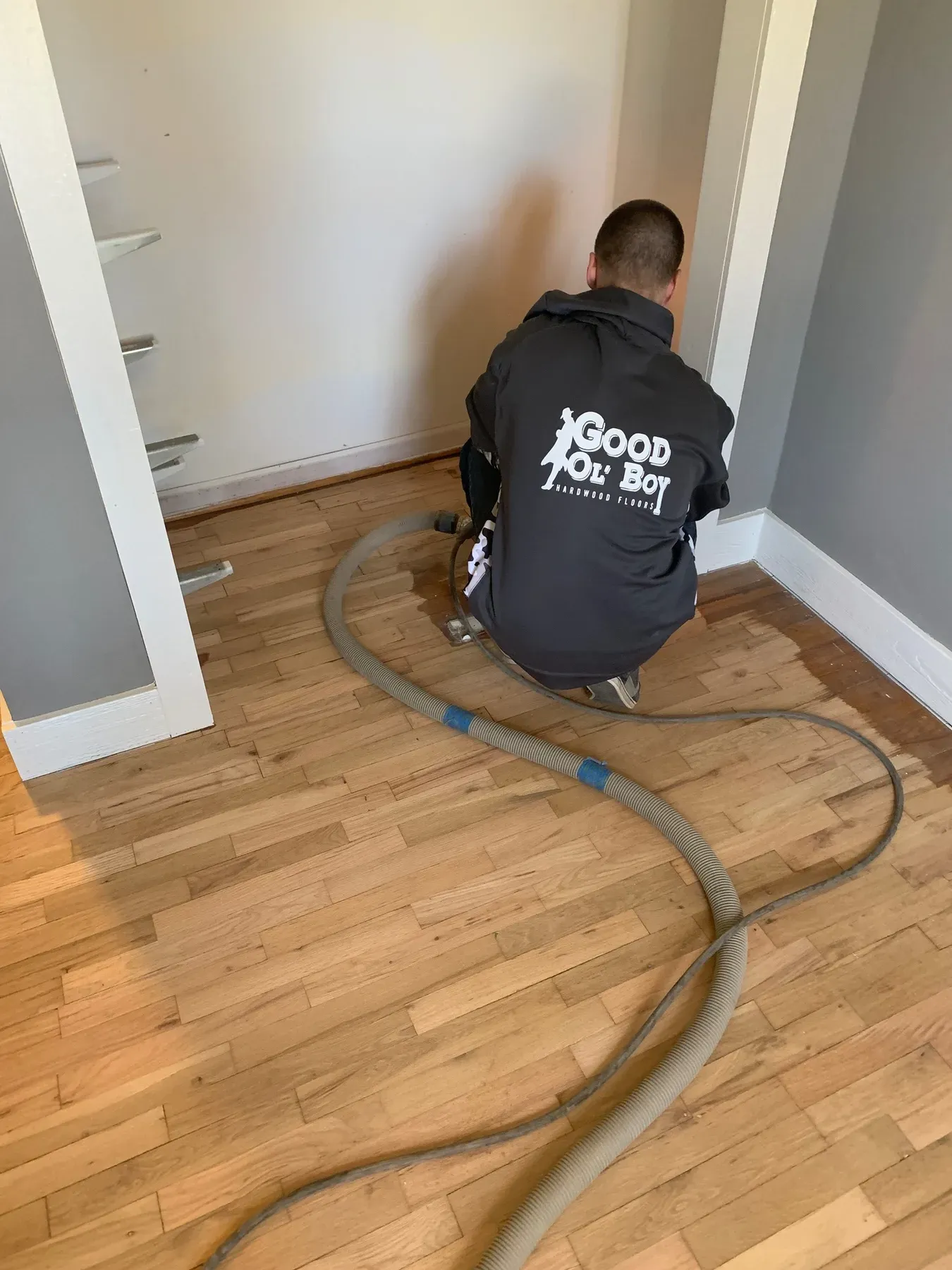
Furniture out. Floor cleaned thoroughly, which on a neglected floor is a real step rather than a formality. Buffer with a fine screen over the whole surface, edges done by hand. Full vacuum and tack. Finish applied.
Most Kansas City homes are a single day of work for a common area. The waiting is the finish curing, not the working, and that depends on the product. Water-based finishes let you walk on the floor sooner than oil-modified ones. Either way, furniture and rugs go back later than people want them to, and putting a rug down on finish that has not cured will mark it.
The dust is a fraction of a sanding, and we run the same dust containment equipment for a recoat that we do for a full refinish.
How Often, and Why It Pays
The floors that last generations in this city are not the ones that got sanded five times. They are the ones that got recoated regularly enough that they never needed sanding again.
The interval depends on traffic, pets, grit and how the floor is cleaned rather than on a calendar, and our piece on how often to refinish or recoat goes into the signs to watch for. The rule of thumb that matters: recoat while the finish still passes the water test, not after it fails.
If scratches are what sent you here, hardwood floor scratch repair explains how to tell which ones a recoat will fix and which ones it will only seal in.
If your floor looks tired and you have been quoted a full refinish, it is worth a second opinion. We will run the water test with you and tell you which job you actually need. A free estimate is the fastest way to find out, and we would rather do the smaller job today and the bigger one in fifteen years.
Get a Free Estimate
Have a floor you want looked at? We give honest, no-pressure estimates across the Kansas City metro.