Prairie Village, Fairway and Westwood sit shoulder to shoulder on the Kansas side of State Line Road, and from a flooring point of view they are one neighborhood. The three cities were laid out and mostly built between the late 1930s and the end of the 1950s, and the houses came out of that boom remarkably alike: brick and frame ranches, Cape Cods with a finished half-story upstairs, and the occasional split-level on the later streets. Prairie Village was a J.C. Nichols development that incorporated in 1951, and Fairway and Westwood both incorporated in 1949, which tells you the era of almost everything standing there today.
That era matters more than the city name. A builder putting up a house in Northeast Johnson County in 1952 used narrow solid oak strip flooring in the living room, the dining room, the hall and the bedrooms, because that was simply how a decent house was finished then. It was not a luxury choice. It was the standard. So when someone in Prairie Village calls about hardwood floor refinishing, the first thing we want to know is whether they have seen their floor yet, because a good share of them are still under carpet that went down in the 1970s or 1980s and has not moved since.
What the Builders Put Down
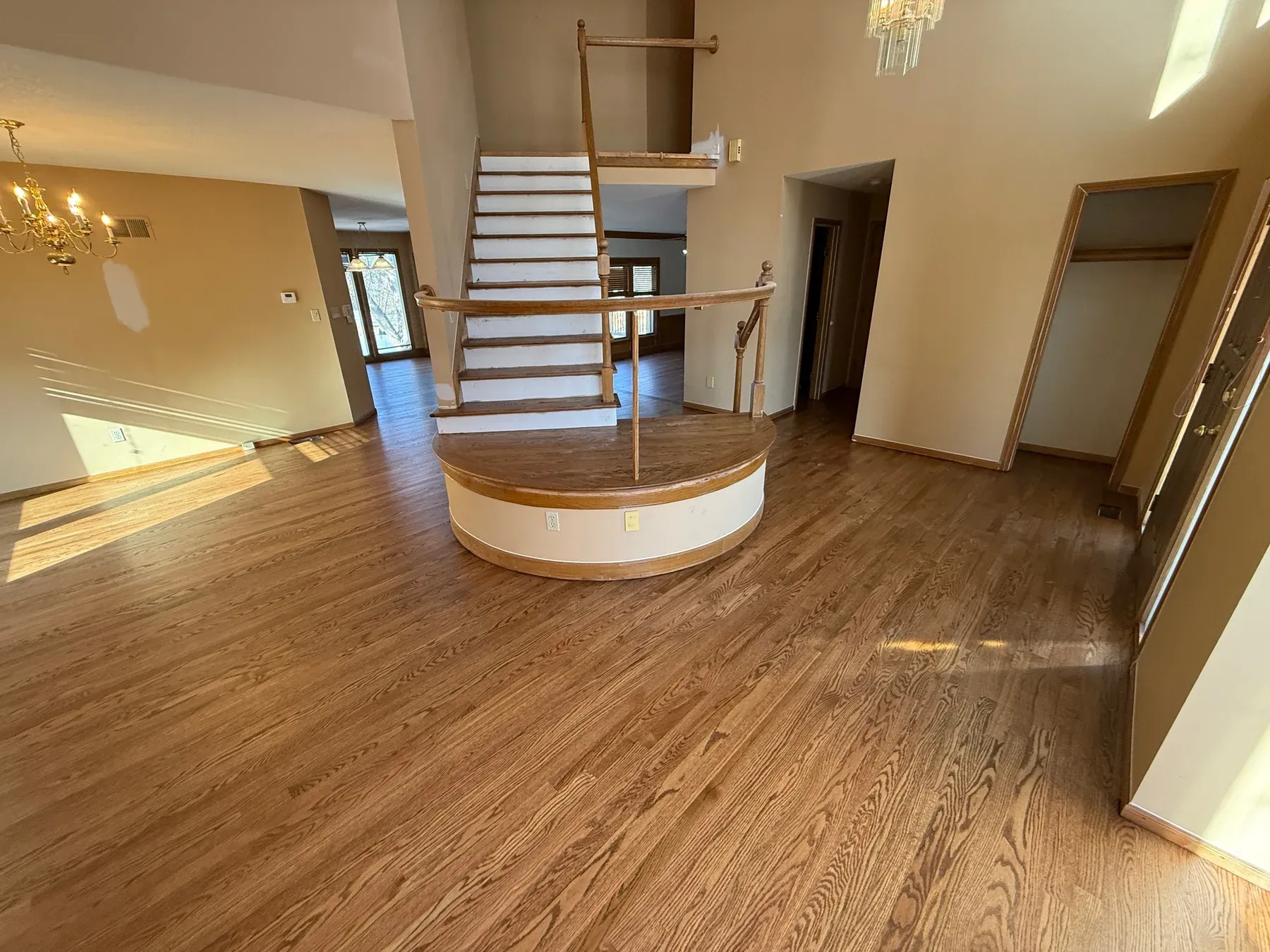
The typical floor in these houses is three-quarter-inch solid red oak strip, two and a quarter inches wide, blind-nailed over a subfloor of one-by boards laid on the diagonal. Some streets got white oak, and some of the earliest Fairway homes got wider boards, but the narrow red oak strip is what we find nine times out of ten.
Three things about that floor are good news.
- It is thick. A three-quarter-inch strip floor carries roughly a quarter inch of wood above the tongue. That is what gets sanded, and most of these floors have used almost none of it. A floor that has been under carpet since the Carter administration has often been sanded once, at most, and sometimes never.
- It is nailed, not glued. Loose boards, squeaks and the odd cracked strip can all be dealt with board by board. Nothing has to be ground off a slab.
- It runs through the house. Because the same crew laid the same product in every room, the floor is continuous from the front door to the back bedroom. That is the hardest thing to recreate with new flooring and the easiest thing to keep when you refinish.
The bad news is narrower. Kitchens and baths in these houses almost never got hardwood. They got linoleum or vinyl tile over a plywood or particleboard underlayment, and that is still what is there unless someone has already changed it. We come back to the kitchen below because it is the decision that shapes most of these projects.
Pull a Corner Before You Plan Anything
If you have carpet and you are not sure what is under it, take a closet. Pull the carpet back at a corner where nobody will notice and look. You are checking for three things: that the floor is wood and not particleboard, that the boards are wood all the way across rather than a wood veneer on plywood, and that there is no painted or heavily stained section suggesting an old repair.
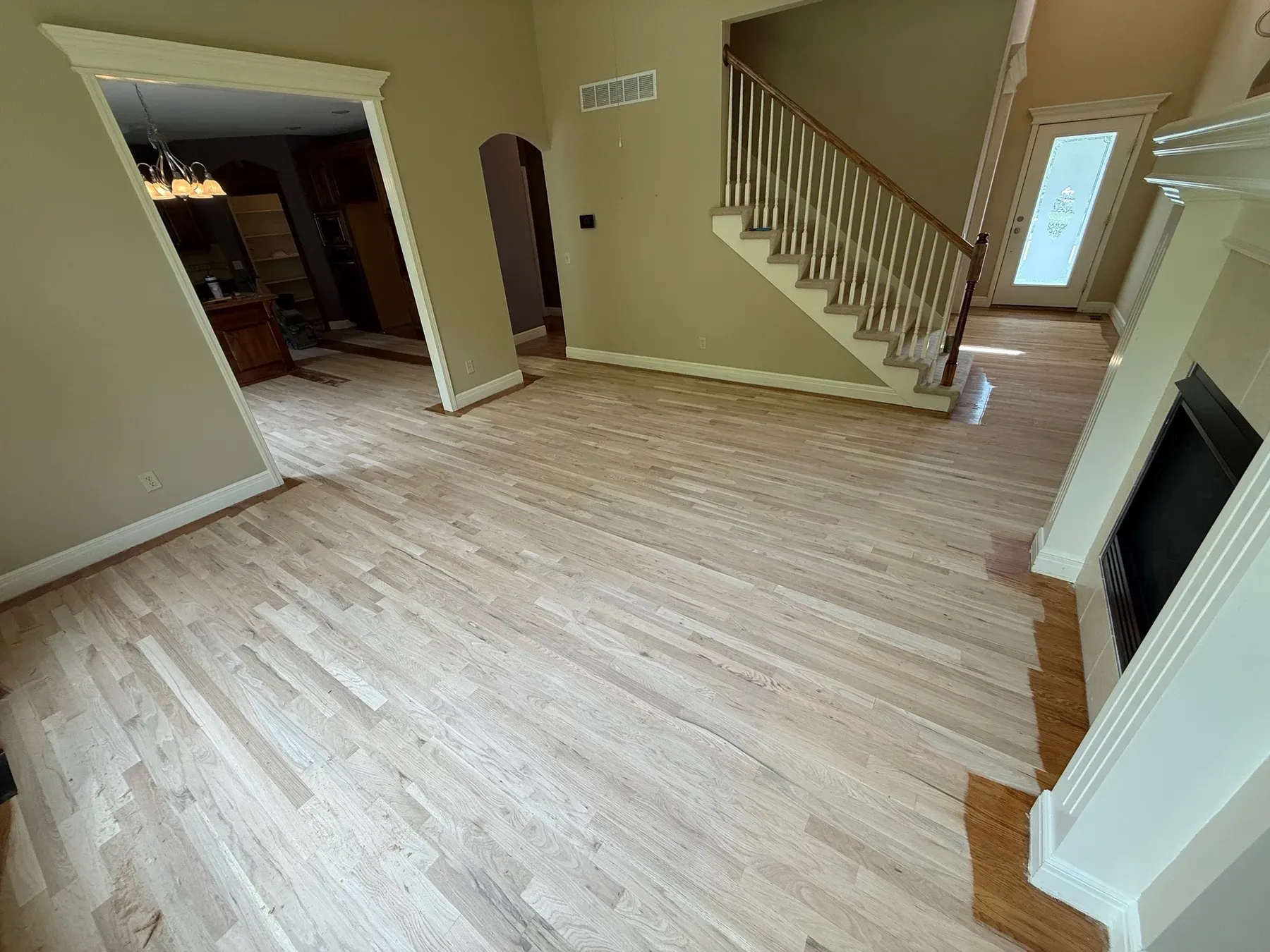
What you will usually see is dull, grayish oak with a few dark spots where the tack strip nails went in and maybe some pet staining near the door. None of that is a problem. The tack strip holes are a strip of tiny nail holes around the perimeter that fill and disappear under new finish. Gray oak is oak that has lost its finish, not oak that has gone bad. The restoring old and damaged hardwood floors guide walks through what actually comes back and what does not.
The floor you find under carpet in Prairie Village is very often a better floor than anything you could buy for the same house today. It is old-growth oak, it is tight-grained and it has been sitting in a stable indoor environment for seventy years, which means it has done all the moving it is ever going to do.
The Kitchen Is the Whole Project
Here is the decision that comes up in nearly every one of these houses. The oak stops at the kitchen door. The kitchen has a vinyl floor, or tile, or a laminate somebody put in during a 2000s update. And what most people want, once they see the oak in the living room, is for the wood to keep going.
There are three honest answers.
Lace new oak into the old. We tear out the kitchen floor down to the subfloor, install new red oak strip that matches the width and direction of the existing boards, and weave the new boards into the old at the doorway so there is no straight seam. Then the whole floor, old and new, gets sanded and finished together. Done right, you cannot find the joint. This is the best result and it is more work than the other two options, because the new wood has to be unfinished strip that matches the original milling, and the transition has to be cut board by board rather than run in a line. Our hardwood floor installation page covers the lace-in work, and it is exactly the job these houses were made for. The full process, from matching the boards to finishing old and new together, is in matching new hardwood to an existing floor.
Install new oak in the kitchen with a transition. Same tear-out, same new oak, but the new floor meets the old at a threshold strip in the doorway rather than being woven in. Cheaper, faster, and it still refinishes as one floor. The seam shows if you look for it. Some people are fine with that and some are not, and it is worth deciding which you are before the estimate.
Leave the kitchen as a different material. Refinish the oak, put a hard surface you like in the kitchen, and let the doorway be where one stops and the other starts. This is the right answer more often than people expect, particularly if the kitchen is due for a full remodel later and the floor will be opened up again anyway.
Whichever you choose, the sanding and finishing is one job. The kitchen extension is not a separate project bolted on later. It has to happen before the sanders come in so everything gets finished together.
Cape Cods and the Upstairs
A lot of the Prairie Village and Fairway housing stock is a story-and-a-half Cape Cod, with the upstairs finished into two bedrooms under the roof slope. Those upstairs rooms usually have the same oak as the main floor, and the stairs connecting them are usually oak treads and painted risers.
If the stairs are getting refinished with the floors, they are their own piece of work. Treads are sanded by edger and by hand, not by the big machine, and they take more time per square foot than any room in the house. The refinishing hardwood stairs guide goes into what that involves. If the upstairs is a later finish and got carpet or plywood instead of oak, it can be matched, but it is worth knowing before the quote which floors are original.
Ranches, Split-Levels and the Family Room Addition
The classic Prairie Village ranch has a rectangle of oak covering the front rooms and bedrooms, then a family room off the back that was added in the 1960s or 1970s. Those additions were frequently built on a concrete slab a step down from the main house, and they got carpet.
You cannot nail solid oak strip to a slab. If you want hardwood to continue into a slab addition, the choices are an engineered floor glued down, or a plywood sleeper system that raises the floor and lets solid wood be nailed. The engineered route keeps the floor low and is the usual answer. It will not be sanded together with the main floor, so the color match is done through finish selection instead. We covered how that decision is made in solid or engineered hardwood.
Split-levels on the later streets follow the same logic. The upper levels are usually oak on joists and the lowest level is slab.
Repairs You Should Expect
These are seventy-year-old floors, so a few things turn up on almost every job.
- Pet stains. Black marks in the wood near doors and under old carpet. Some sand out, some need boards replaced. We will tell you which before we start.
- Loose or squeaky boards. Refastened from above with trim-head screws before sanding, then filled. A floor that has been under carpet has often had nobody notice a squeak for decades.
- Old repairs. A patched section from a wall that came out, or a floor furnace that was removed and boarded over. A floor furnace grate in the hall is a signature of these houses, and the patch left when it was removed is usually rough. We cut it out and lace in matching strip so it disappears.
- Water at the back door. Decades of a wet mat by the door to the patio can gray and soften a few boards. Board replacement, then the floor finishes as one.
All of that is covered under hardwood floor repair and it is normal. A floor needing a dozen boards replaced is still a refinish, not a replacement.
Color: The Choice That Makes or Breaks It
Red oak in these houses has a warm, slightly pink cast that reads as very traditional under a clear finish. Plenty of Prairie Village homeowners love that. Plenty of others want the floor to read lighter and more neutral, and that is a stain decision made on your floor, in your light, not from a chip in a store. The wood floor staining guide explains why we test colors on the actual sanded floor before committing.
One warning specific to these houses: if you lace new oak into the old, the new boards will take stain slightly differently until the floor has aged a few years. A medium stain hides that better than a very light natural finish does. We will show you both on sample boards.
Living in the House During the Work
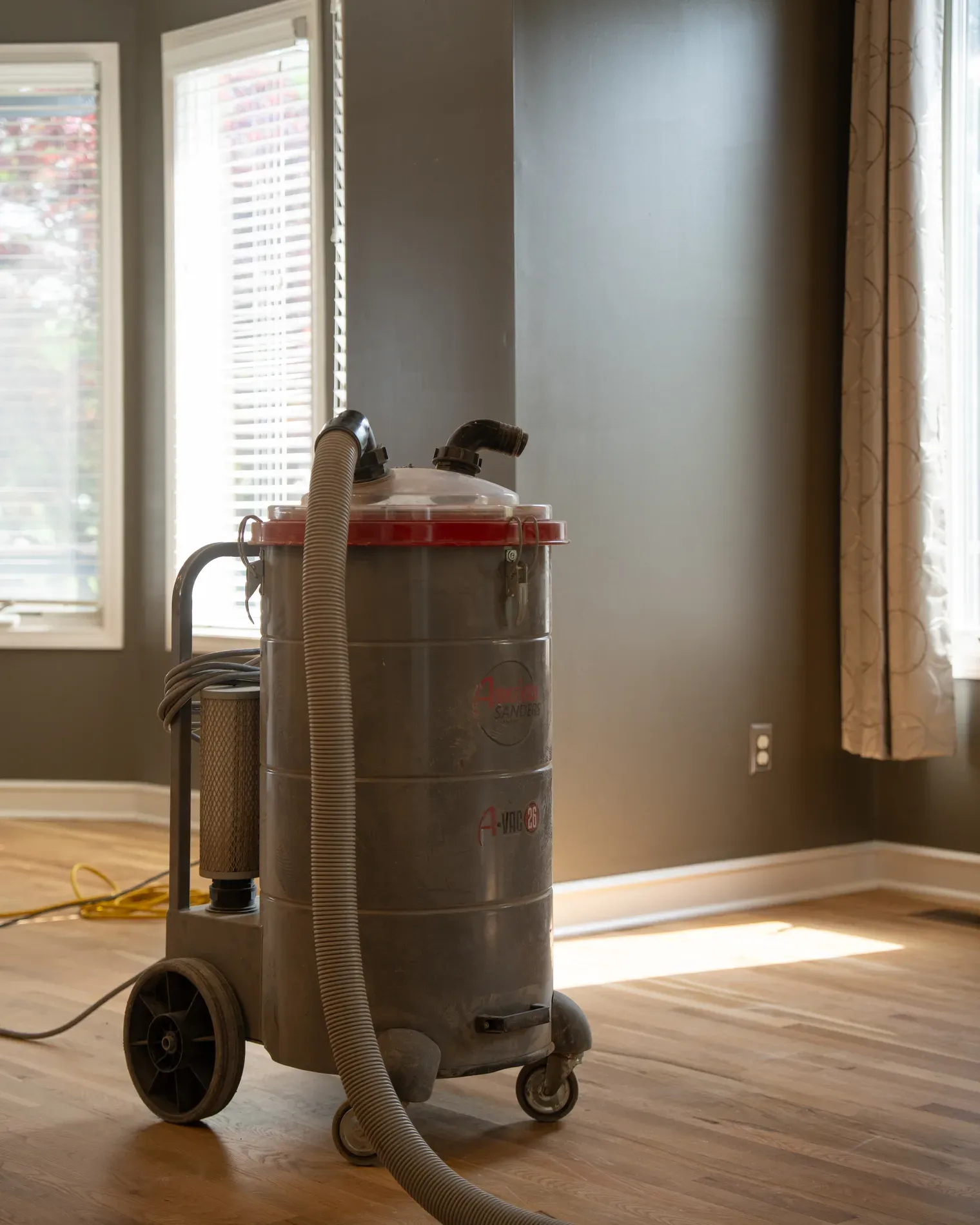
Most of these homes are on the smaller side and most people stay in them during the refinish. That is workable, and it is why we run dustless sanding on every job. The practical constraint is that a whole-house refinish means every room with oak is out of use at once for several days. If you are staying, plan on the kitchen and a bathroom being your world for a bit.
Where We Work
We refinish, repair and install hardwood across Northeast Johnson County, including Prairie Village, Fairway, Westwood, Roeland Park and the surrounding streets, and we treat it as one area. It sits between Mission Hills and Overland Park, and the same crew that handles refinishing in Leawood handles it here. For the architect-designed homes just to the east, see restoring original floors in Mission Hills. For the newer houses further south, see our guide to Overland Park, Leawood and Olathe. If you have a floor under carpet and you want to know what it is worth doing with, get a free estimate. We will pull a corner with you and give you a straight answer.
Get a Free Estimate
Have a floor you want looked at? We give honest, no-pressure estimates across the Kansas City metro.