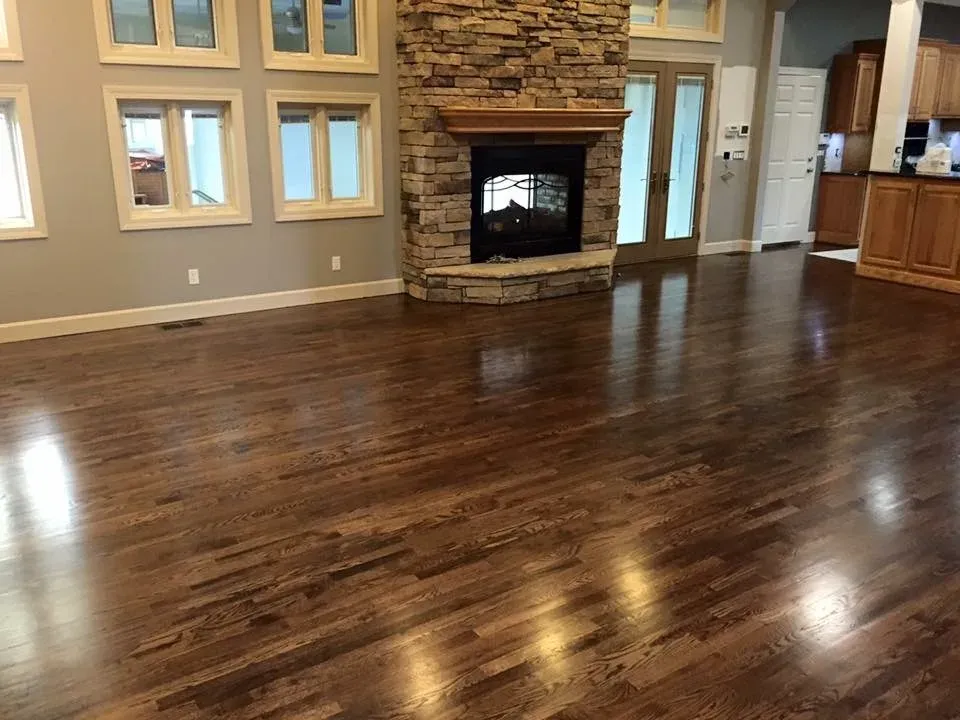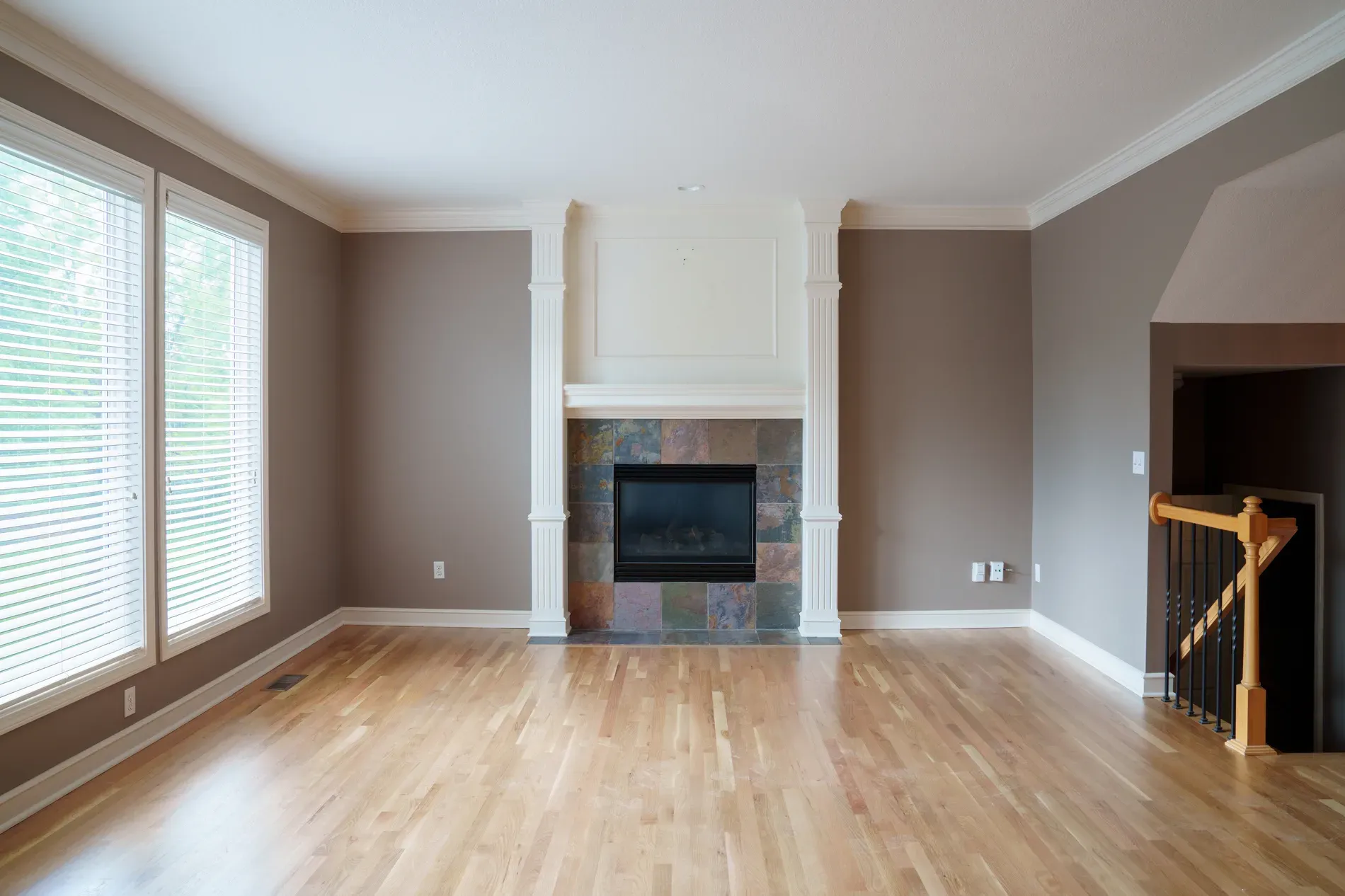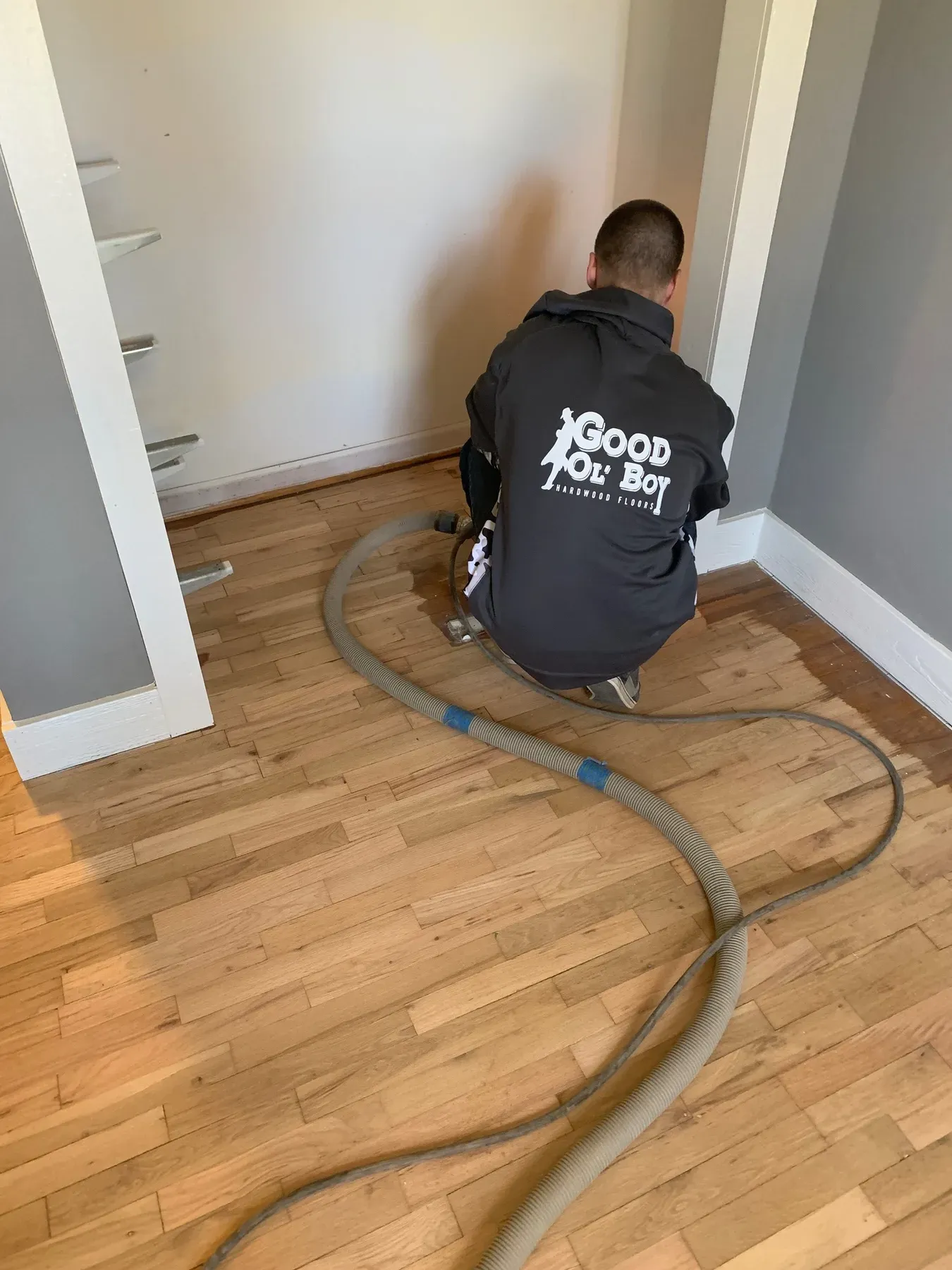
Of every decision in a floor project, stain color is the one homeowners lose the most sleep over. It is also the one most often made badly, because people choose from a tiny sample in a store instead of on their own sanded floor in their own light. This is a practical guide to wood floor staining in Kansas City, and how to land on a color you will still be happy with years from now.
Your Wood Decides the Color as Much as the Stain Does
The single biggest thing people miss is that stain does not sit on top of wood like paint. It soaks in, and every species drinks it differently. The same can of stain applied to red oak, white oak, hickory, and maple gives you four different floors.
- Red oak has warm pink and red undertones that push through most stains. Cool grays and greiges fight that undertone, which is why a gray that looked right on a sample can turn muddy or purple on red oak.
- White oak runs more neutral and slightly brown, so it takes cool and modern tones far more cleanly. If you want a true gray or a soft natural look, white oak is the friendlier canvas. Our oak floors page covers the differences in more detail.
- Hickory has dramatic natural color variation from board to board. Stain tends to amplify that contrast rather than even it out, so lighter finishes usually suit it better. See hickory floors.
- Maple is dense and tight-grained, which means it resists stain and can blotch. It often looks best with a clear or very light finish.
Before you fall in love with a color, find out what species you have. We identify it on the first walkthrough, and it immediately narrows the realistic options.
Never Choose a Color From a Store Sample
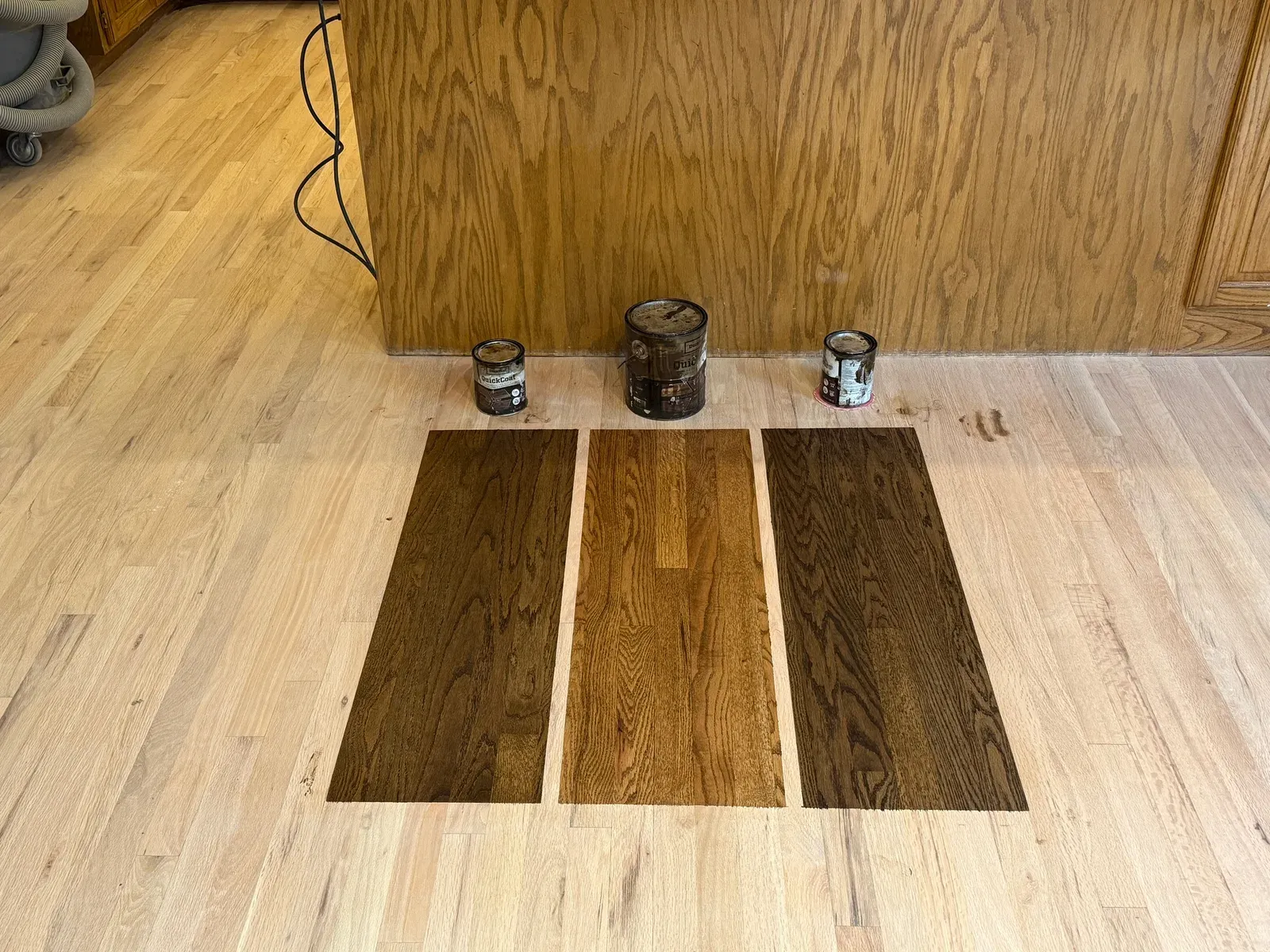
A stain chip in a showroom tells you almost nothing. It is a different wood, a different light, and a different scale than your room. The only reliable way to choose is to test the actual stain on your actual sanded floor.
That is why we put down sample squares directly on the sanded floor before we commit to anything. You get to stand in the room, look at the color next to your cabinets, your trim, and your furniture, and see it at different times of day. Kansas City light changes a lot between a gray January afternoon and a bright July morning, and a stain that looks warm and rich in one can read orange or flat in the other.
Live with the samples for a day if you want. Nobody should be rushed into a color that is going to be underfoot for a decade.
The Colors That Age Well
Floor color trends move, but floors do not get replaced on a trend cycle. A few honest observations about what tends to hold up:
- Mid-tone browns are the safest long-term choice. They hide dust and scratches better than either extreme and rarely look dated.
- Natural and clear finishes have quietly become the most durable choice aesthetically. Letting the wood look like wood does not go out of style, and it shows wear the least because there is no stain layer to scratch through to.
- Very dark floors look striking in photos and are the hardest to live with. Dark stain shows every speck of dust, every footprint, and every scratch, because a scratch exposes light wood underneath a dark surface. If you have kids, dogs, or a busy entry, know what you are signing up for.
- Gray and greige can look great on white oak and can look wrong on red oak. Species matters more here than with any other color family.
Staining Is Part of Refinishing, Not a Separate Trick
Stain only goes onto bare, freshly sanded wood. You cannot stain over an existing finish and get a lasting result. That means changing your floor color always involves a full sand and refinish underneath it. If you are weighing a color change, read our hardwood floor refinishing page so you understand the whole job, and our wood staining page for the color stage specifically.
The sanding quality directly controls how the stain looks. If the floor is not sanded evenly through the grits, stain lands unevenly and you get blotches and swirl marks that no finish coat will hide. Good color starts with good sanding.
Matching Stain Across Rooms and Repairs
If you are adding wood to an existing floor, or repairing a damaged section, matching the color is its own skill. New boards are younger wood and take stain differently than boards that have been in the house for thirty years. The honest answer is that a perfect invisible match is not always possible, but a very good blend usually is, especially if the repair is done before the whole floor is sanded and stained as one surface. Our hardwood floor repair page explains how we handle blending.
Get Color Right the First Time
Worth knowing before you plan a color change: only a site-finished floor can be stained in place. Prefinished or site-finished covers why, and what each one means for the floor long term.
Restaining a floor because you did not like the color means sanding it again, and every sanding uses up wood you cannot get back. It is worth spending an extra day on samples to avoid that. We stain floors across the metro, from Kansas City to Overland Park and Leawood. Get a free estimate and we will identify your species, put real samples on your floor, and let you choose in your own light.
Get a Free Estimate
Have a floor you want looked at? We give honest, no-pressure estimates across the Kansas City metro.