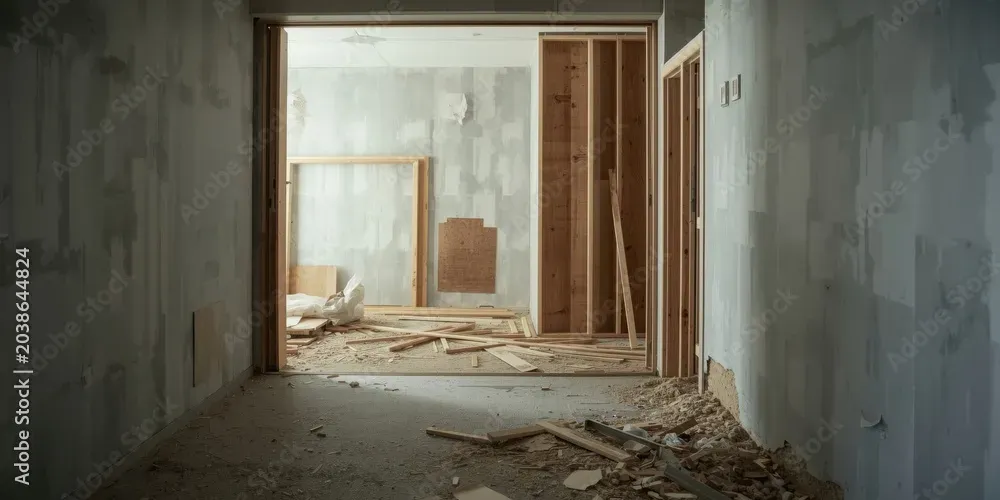
Every new floor starts with taking out an old one, and the difference between the easiest teardown and the hardest is enormous. Carpet in a bedroom is an afternoon. Ceramic tile bedded in mortar over a wire lath is a genuinely difficult job that produces more dust and debris than most people have ever seen indoors.
Knowing which one you have before you commit is worth doing. Here is the ladder, easiest first.
Carpet and Pad
The straightforward one. Carpet is cut into strips, rolled and carried out. The pad underneath comes up with it, usually held by staples that all have to be pulled. Tack strip around the perimeter is pried off, and the nail heads left behind get removed.
The staples are the tedious part and they matter, because any staple left proud will telegraph through a new floor or damage what goes over it.
Carpet over a wood subfloor is also where we find original hardwood in older Kansas City homes. It is worth pulling a corner before you assume you need a new floor at all. We cover what that wood typically looks like in restoring old and damaged hardwood floors, and a fair number of those floors clean up into something better than anything you would buy. If that room sits next to hardwood elsewhere in the house, the two can usually be joined into one floor, as covered in matching new hardwood to an existing floor.
Floating Floors: Laminate and Click Vinyl
Almost as easy. These are not fastened to the subfloor at all, so they come up as planks by unclicking or prying a starting row and working across. The underlayment lifts out behind them.
Fast, low dust, minimal subfloor impact. If someone quotes a floating floor removal like a demolition job, ask why.
Glue-Down Vinyl and Sheet Goods
Where it starts getting real. The plank or sheet itself comes up readily enough. The adhesive underneath is the job.
Older adhesives are the problem: black cutback under sheet vinyl, or the residue left when vinyl composition tile is lifted. It has to be scraped, and it does not want to go. Whether the subfloor ends up flat enough for the next floor depends on how completely the residue comes off.
Which brings up the part that has to be said plainly.
The Asbestos Question in Older Homes
Kansas City has a lot of pre-1980s housing, and vinyl flooring materials from that era can contain asbestos. The two to know about are nine by nine inch vinyl floor tiles and the black cutback adhesive used under sheet vinyl.
Intact and undisturbed, these materials are generally not considered a hazard. The risk comes from disturbing them, and grinding, sanding or aggressive scraping is exactly the kind of disturbance that creates it.
If your house is old enough and the flooring fits the description, get it tested before anyone starts. Testing is inexpensive relative to the alternative, and if it comes back positive the work belongs with a licensed abatement contractor rather than a flooring crew. We will not grind an unknown adhesive in an older home, and no reputable contractor should.
Ceramic and Stone Tile
The hardest common removal and the one most underestimated.
Tile set in thinset over cement board means breaking the tile out, then removing the board, then getting the fasteners out and the residue off. Tile set in a traditional mortar bed over wire lath, which turns up in older bathrooms and entries here, is heavier and harder still.
Three things surprise people:
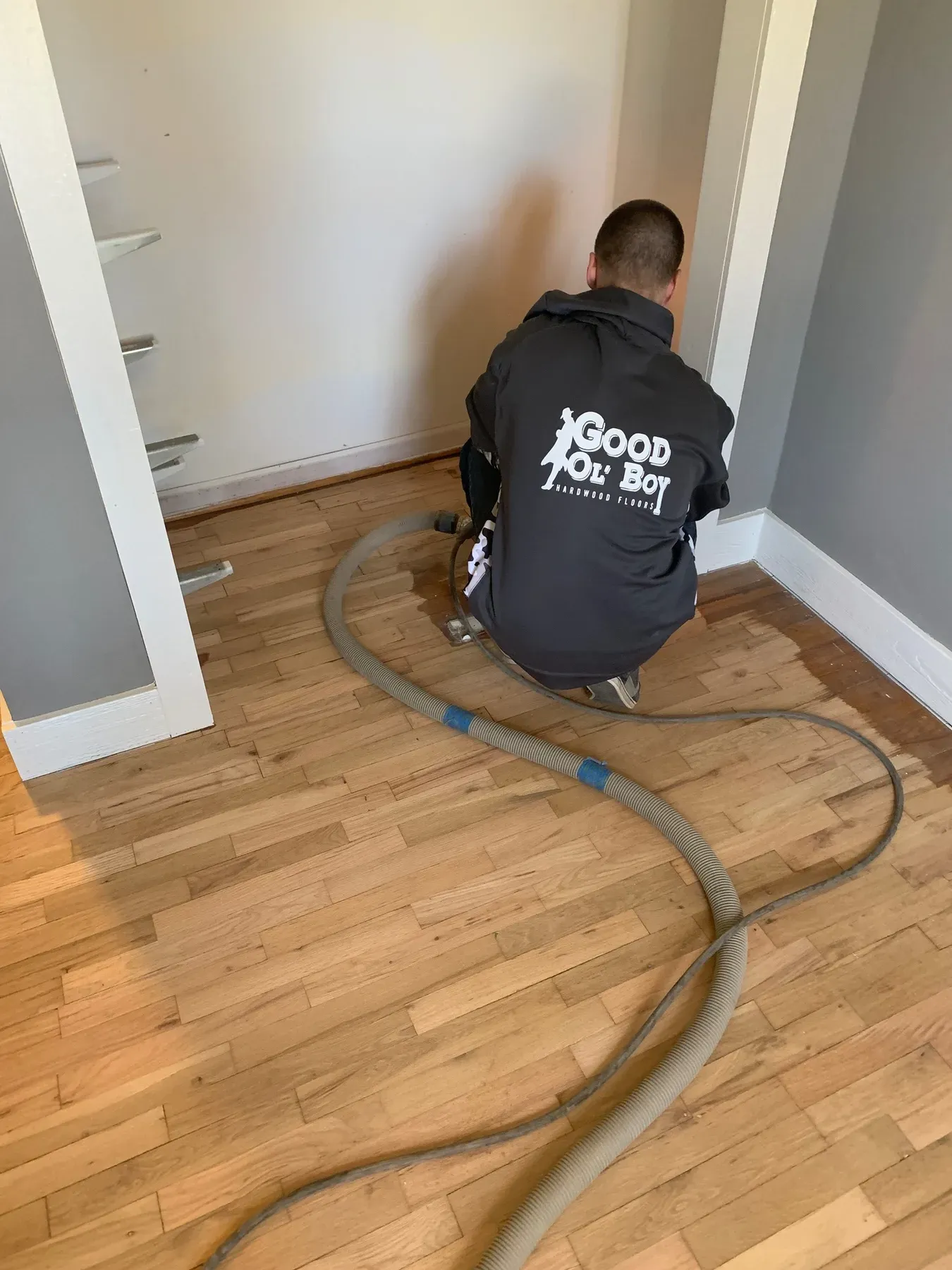
- Dust. Breaking tile and scraping thinset produces fine silica dust throughout the house unless it is contained. We run the same containment and vacuum equipment on demolition that we do on sanding.
- Weight. Tile and mortar debris is dense. A modest bathroom fills a container faster and heavier than a whole room of carpet.
- Subfloor damage. Getting tile off wood subfloor without gouging it takes care, and a chewed-up subfloor becomes a repair line item before the new floor can go down.
Existing Hardwood
Nailed hardwood comes up board by board, and the goal is to do it without destroying the subfloor underneath. Every nail left behind has to be pulled or set.
The first question, though, is whether it should come out at all. A worn hardwood floor is usually a candidate for sanding rather than removal, and sanding is both cheaper and better. Our post on refinishing versus replacing covers how to tell, and the short version is that a lot of floors we are asked to tear out do not need to be.
Glued engineered hardwood over a slab is a different matter and behaves like glue-down vinyl, with the adhesive as the real work.
The Subfloor Is the Actual Deliverable
This is the part that separates a removal from a demolition.
Ripping a floor out is not hard. Handing over a subfloor that is clean, flat, sound, fastened down and ready for the next floor is the job you are actually paying for, because everything about the new floor depends on it. Adhesive ridges, proud staples, loose panels, gouges and squeaks all have to be dealt with before anything goes on top.
Removal is also when the surprises appear: water damage under a bathroom floor, a soft spot near a dishwasher, joists that have moved. Better found now than after new flooring is on top of it. Our water damage service covers the worst of what we find.
Should You Do It Yourself?
Carpet and floating floors, genuinely yes, if you have somewhere to put the debris and patience for staples. It is the most accessible money to save on a flooring project.
Glued vinyl, tile and anything in a pre-1980s house, we would not. The dust, the disposal weight, the risk to the subfloor and the asbestos question all point the other way, and a subfloor damaged during a DIY teardown costs more to put right than the removal would have.
What it costs is a separate question and depends mostly on which rung of the ladder you are on. We broke that down in what it costs to tear out old flooring in Kansas City.
Our removal and demolition service covers the whole ladder, and we quote removal and the new floor together so there is no gap between two contractors pointing at each other. If you are in Overland Park, Leawood, Kansas City or anywhere else we serve, a free estimate starts with us looking at what is actually down there.
Get a Free Estimate
Have a floor you want looked at? We give honest, no-pressure estimates across the Kansas City metro.