When floors look rough, the first question is almost always the same: can this be saved, or does it all need to come out? The answer decides everything about the cost and the mess. Here is an honest look at when to refinish or replace hardwood floors, so you can make the call with your eyes open.
Refinishing Wins More Often Than People Think
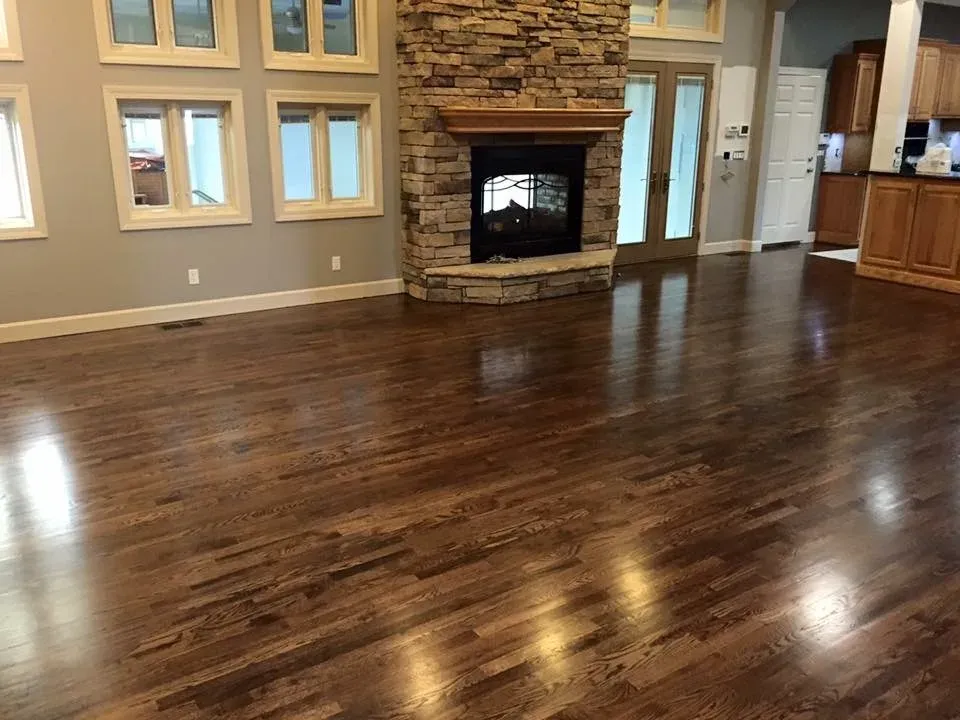
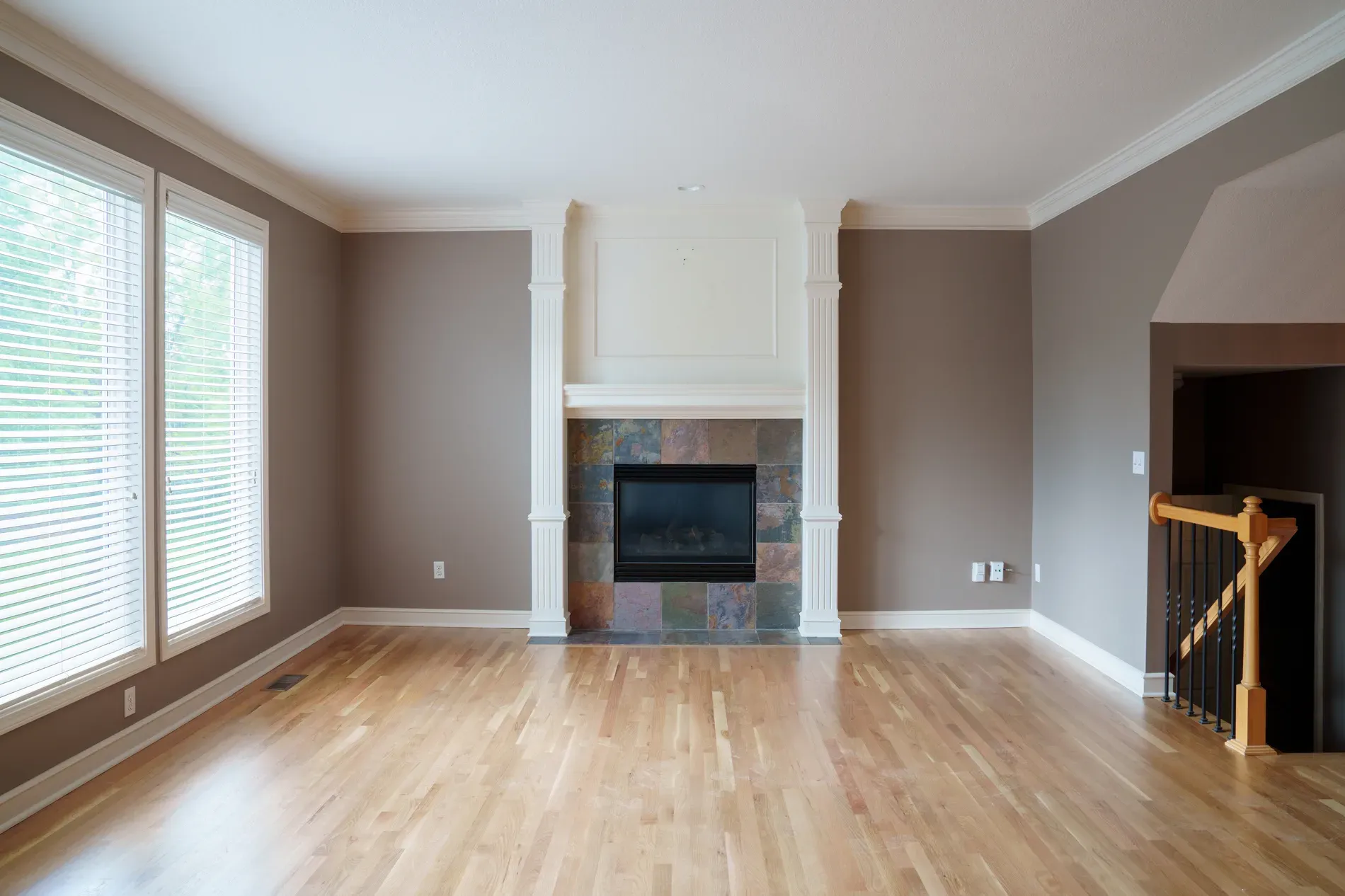
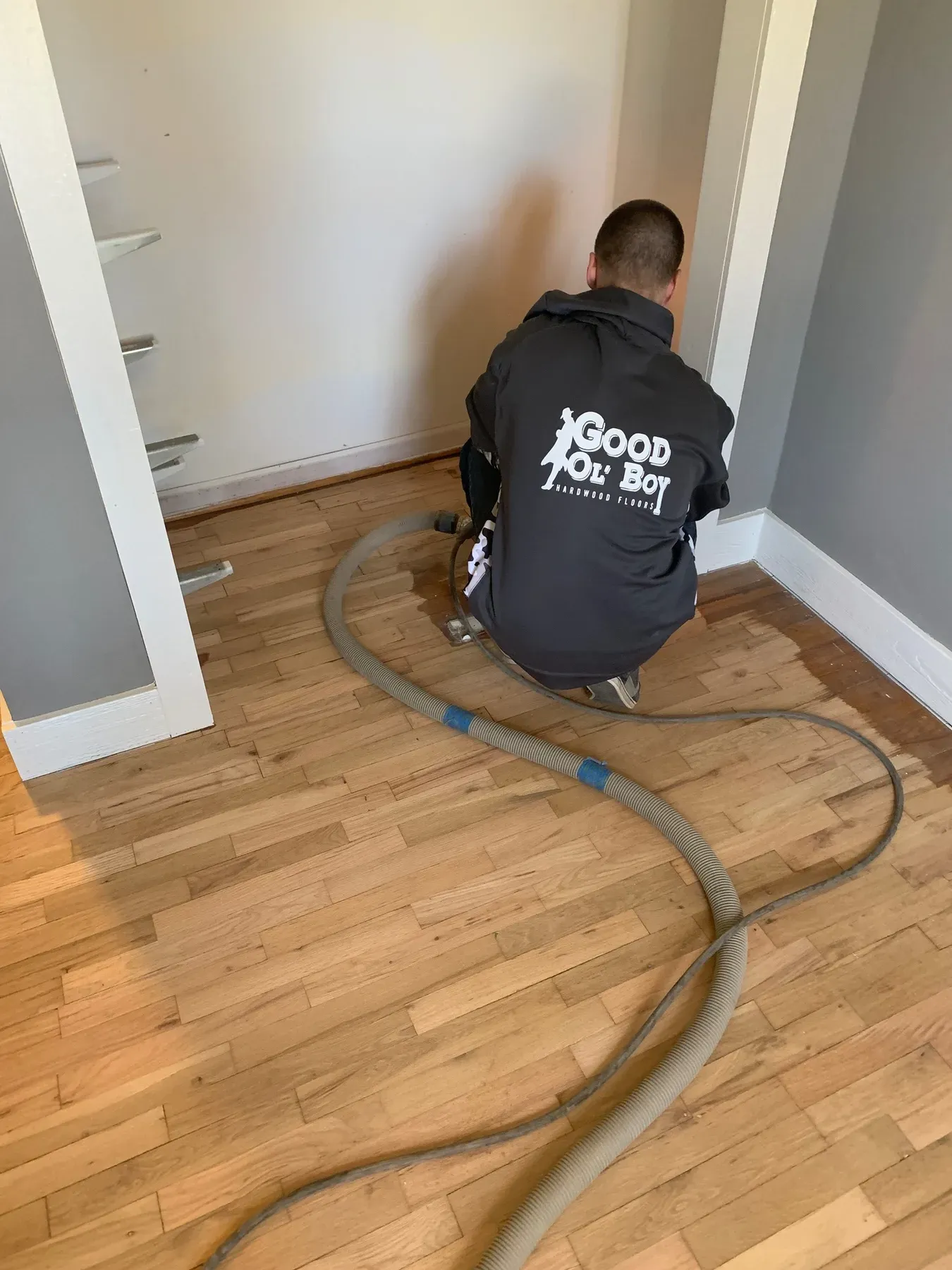
The default assumption is that a beat-up floor needs replacing. Usually it does not. If the wood is solid hardwood and there is still enough thickness to sand, refinishing brings it back for a fraction of the cost of replacement and keeps the character you already own. Scratches, dullness, surface stains, gray patches, and worn finish are all cosmetic problems that live in the top layer, which is exactly what sanding removes. Our hardwood floor refinishing service exists because most tired floors are refinishing candidates, not teardowns.
Signs You Can Refinish
- The finish is worn, dull, or scratched, but the boards are intact.
- There are surface stains, gray edges, or light water marks.
- You want to change the color of the floor.
- The floor is solid hardwood with plenty of wood above the tongue-and-groove.
- A few boards are damaged but the rest is sound, which we handle with board repairs before refinishing.
Signs You May Need to Replace
- The floor has been refinished so many times there is little wood left above the tongue. Sand it again and you risk exposing the joints.
- Boards are actually rotted, not just stained, from long-term water exposure.
- It is engineered flooring with a very thin real-wood wear layer that cannot take a sand.
- There is widespread structural damage, movement, or subfloor failure underneath.
- You are changing the layout, room use, or species in a way a refinish cannot deliver.
Even then, replacement is often partial rather than total. A single water-damaged room can be replaced and blended into refinished floors elsewhere, which is far less costly than starting over everywhere.
Solid vs Engineered Changes the Answer
This is the detail that trips people up. Solid hardwood is wood all the way through, so it can be sanded and refinished several times. Engineered flooring is a real-wood layer over a stable core, and how many times it can be refinished, if at all, depends entirely on how thick that top layer is. A thick engineered floor may refinish once or twice. A thin one may not survive a single sanding. If you are not sure which you have, we can tell by looking at an edge or a floor register.
The Cost Trade-Off
Refinishing is consistently the lower-cost path when the floor qualifies, because you are reusing the wood and only paying for labor and finish rather than new material, removal, disposal, and installation. Replacement costs more and takes longer, but it is the right spend when the existing floor genuinely has nothing left to give or no longer fits how you want to live. The mistake to avoid is spending replacement money on a floor that only needed refinishing, or repeatedly refinishing a floor that is truly out of wood. Both waste money in opposite directions.
How to Decide Without Guessing
You cannot reliably tell from across the room. Board thickness, how much wood is left, whether damage is surface or structural, and solid-versus-engineered all take a close look to judge. That is the whole point of an in-home assessment: we measure, check the actual boards, and give you a straight recommendation, even when the honest answer is the cheaper one. If we think refinishing will serve you, we will say so, and if a floor is genuinely done, we will tell you that too.
Not sure which camp your floor falls in? Get a free estimate and we will give you an honest verdict on whether to refinish or replace.
Get a Free Estimate
Have a floor you want looked at? We give honest, no-pressure estimates across the Kansas City metro.