A wood floor in a business has two jobs a house floor does not. It has to survive far more traffic, much of it in street shoes carrying grit straight in from the sidewalk, and it has to be done without closing the business for longer than necessary. Both shape every decision on a commercial job, from the finish to the order the rooms are done in.
This is how commercial hardwood flooring in Kansas City works, whether it is a new floor in a buildout or an old storefront floor being brought back.
Old Storefront Floors Are Often Worth Saving
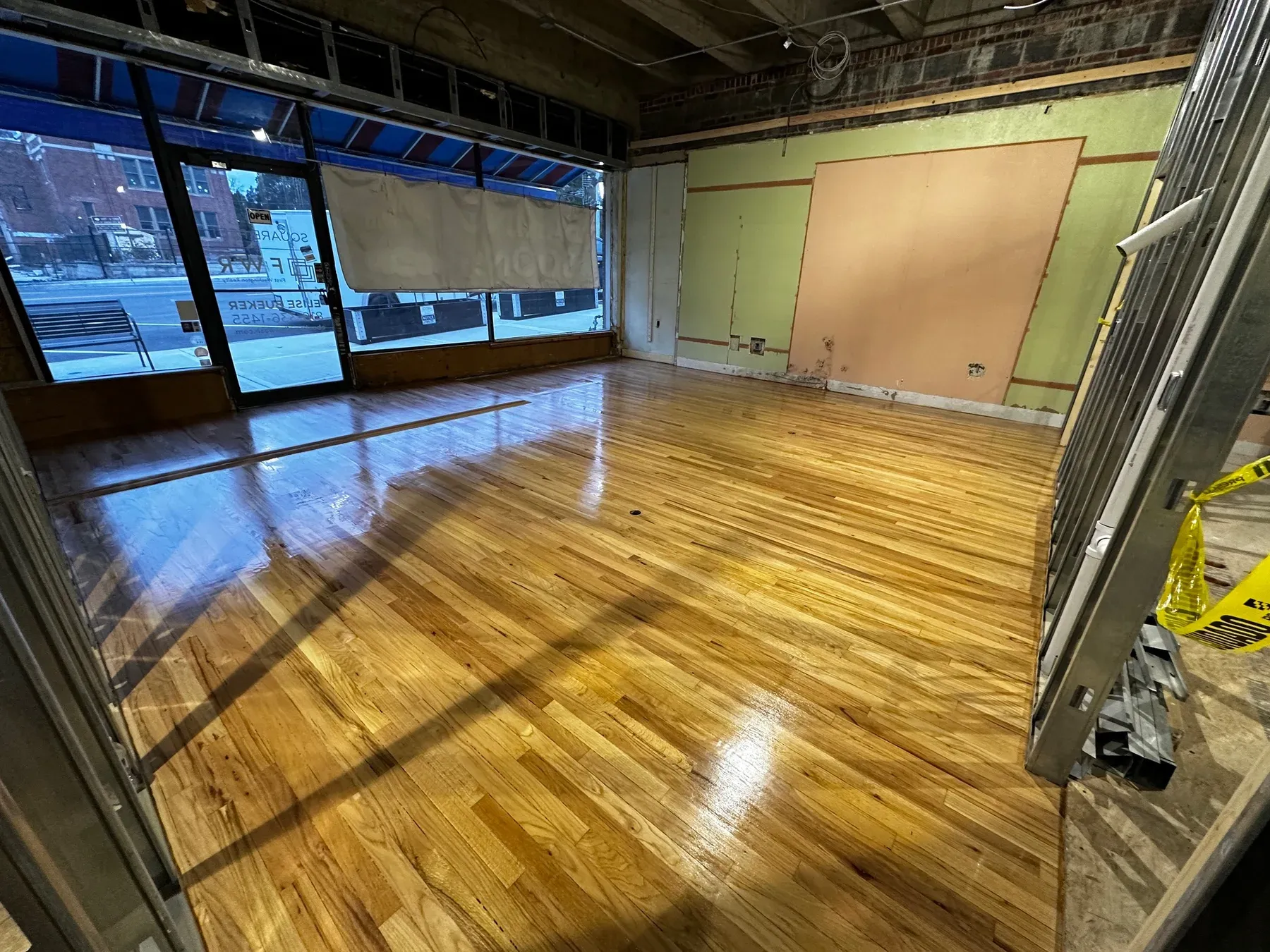
The metro's older commercial strips, the brick storefronts along neighborhood main streets and in the older town centers, often have original oak or maple under carpet, vinyl or layers of old finish. When a space is gutted for a new tenant, that floor is frequently the best-looking thing in the building once it is sanded. The storefront in the photo at the top of this page is an example: plain strip oak, sanded and finished during the buildout while the walls were still open.
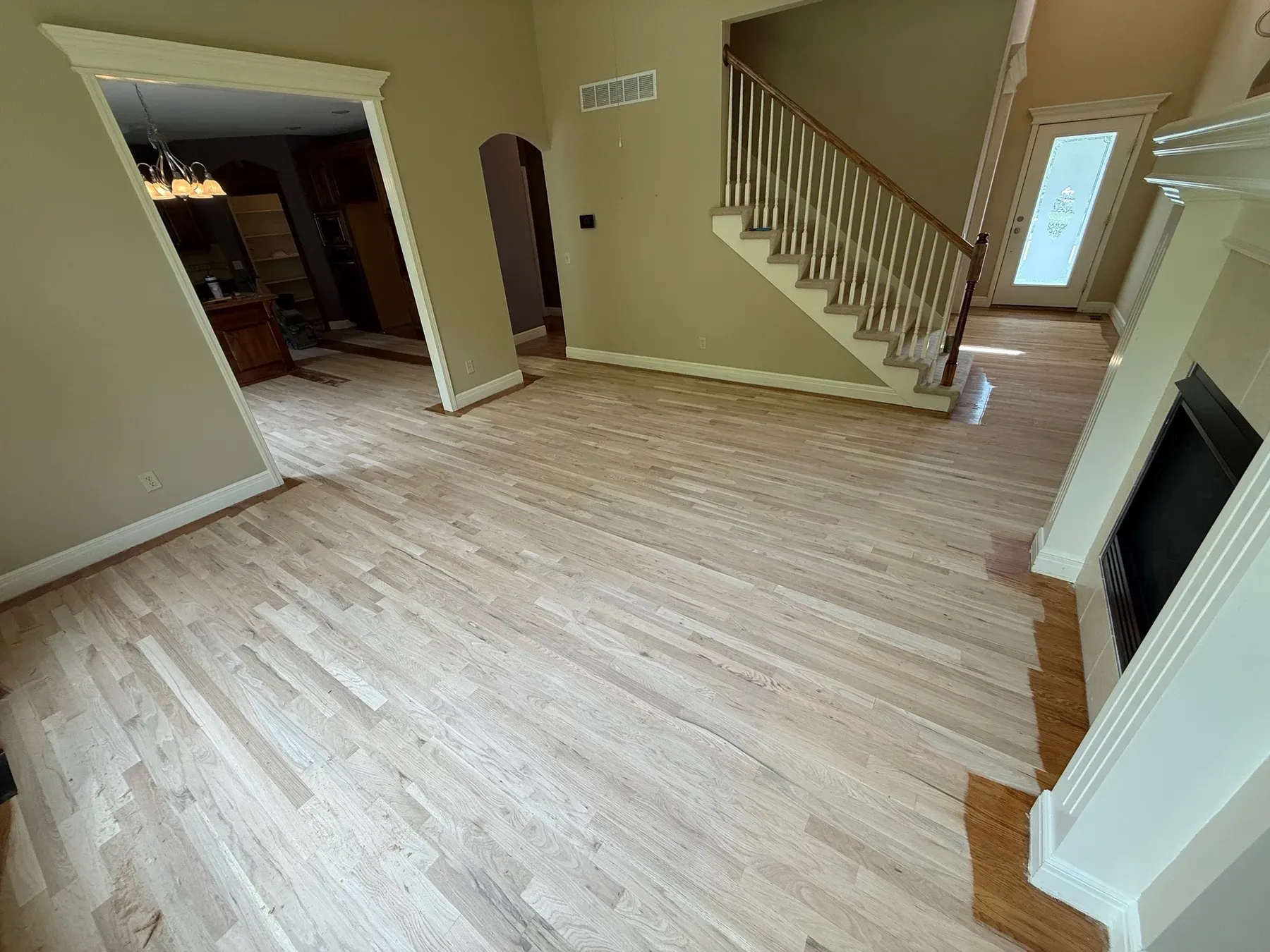
Old commercial floors bring the same issues as old house floors, only bigger: holes where fixtures and counters were bolted down, patches where walls moved, stains from decades of use, and boards worn thin at the entrance. Those get repaired before sanding, often with salvaged boards from areas that will be covered. Restoring old and damaged hardwood floors covers the process.
Timing matters on a buildout. The floor is best sanded after the messy trades are finished and before final paint and fixtures, and it should be protected once it is done. Getting the floor into the construction schedule early saves damage and rework later.
The Finish Does the Heavy Lifting
The wood takes the dents. The finish takes the wear. In commercial spaces we generally use commercial-grade two-component water-based finishes, which are mixed with a hardener right before application and cure to a much tougher film than the single-component products sold at retail. They dry fast, stay clear and carry little odor, all of which matter when a business needs to reopen. Water-based or oil-based polyurethane compares the finish families in more detail.
Sheen is a practical decision, too. Gloss shows every scuff and scratch under bright retail lighting. Satin and matte hide wear far better, which is why most commercial floors end up there.
Working Around Your Hours
Downtime is the real cost of a commercial floor, so the schedule gets planned first:
- Nights and weekends. A lot of commercial work happens after closing, so the space is ready when the doors open.
- Sections. Large spaces can be done in phases, keeping part of the business running while the rest is worked on, with clear paths for staff and customers.
- Cure time. A finish can be dry enough for light foot traffic well before it is cured enough for furniture, rolling carts and full traffic. The plan has to cover both, and putting fixtures back too soon is the most common way a new commercial finish gets damaged.
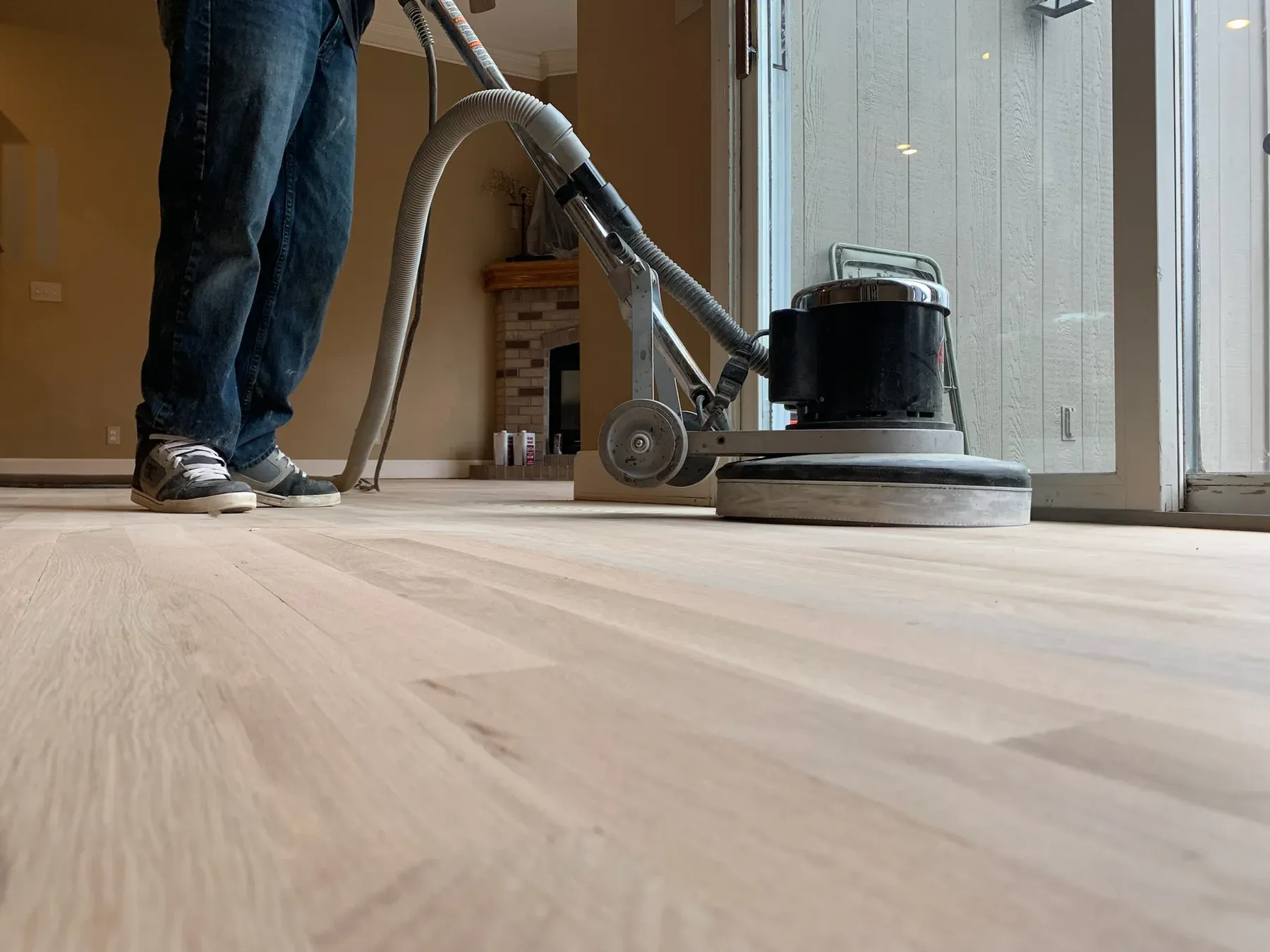
- Dust and odor. Our dustless refinishing system collects dust at the machine, and water-based finishes keep odor down, which matters in restaurants, shared buildings and offices beside occupied space.
Choosing Wood for a New Commercial Floor
For a new install, the choice follows the use:
- Oak is the default for good reason: hard, stable, easy to repair and easy to match years later. White oak suits the clean look many offices and shops want.
- Hickory is harder still and hides wear well, but it moves more with humidity and its color is busy. Our hickory flooring guide covers the trade-offs.
- Engineered flooring is often the answer over concrete, which is common in commercial buildings, after the slab has been tested for moisture.
- Site-finished floors can be sanded and recoated in place when they wear, which suits commercial use well. Prefinished or site-finished lays out the comparison.
Gym floors and dance floors are specialized systems of their own, built for impact and performance rather than looks alone. If that is your project, say so at the start so the right system is specified.
Restaurants and Kitchens
Wood in a dining room works well. Wood in a commercial kitchen does not, because standing water, grease and constant mopping will beat any wood floor. The usual answer is wood in the dining room and a commercial kitchen floor behind the line, with a clean transition between them. Near service stations, bars and entrances, mats and a disciplined cleaning routine keep water off the wood.
Keeping It Looking Good
A commercial floor lasts longest when the finish never wears through to bare wood. That comes down to a few habits:
- Entry mats long enough to catch grit before it reaches the wood. Grit is what grinds finish away.
- Felt pads and good casters on chairs, tables and anything that rolls.
- Proper cleaning with a cleaner made for finished wood floors, not wet mopping and not oil soaps that leave residue. Cleaning hardwood floors covers what to use.
- Scheduled recoats. A screen and recoat adds fresh finish over the old one without sanding to bare wood, and it can often be done in an overnight window. Done before the finish wears through, it keeps the floor out of the full-refinish cycle for years.
Traffic patterns tell you when. The entrance, the register and the main aisles wear first. When those areas start to look dull and gray while the corners still look fine, it is time to recoat.
Getting It Done
We install, refinish and restore wood floors for offices, retail shops, restaurants and other businesses across the metro, including commercial hardwood flooring in Kansas City, Overland Park and North Kansas City. Our commercial hardwood flooring page covers the service, and hardwood floor refinishing covers the refinishing process itself. Get a free estimate and tell us your hours, and we will plan the work around them.
Get a Free Estimate
Have a floor you want looked at? We give honest, no-pressure estimates across the Kansas City metro.