One of the most useful things a homeowner can learn is the difference between refinishing a floor and recoating it. Mixing them up leads people to either sand too often, which wastes wood, or wait too long, which turns an easy job into an expensive one. Here is a practical guide to how often to refinish hardwood floors, and why recoating is the step most people skip.
Refinish vs Recoat: Two Different Jobs
A full refinish sands the floor down to bare wood, removing the finish and a thin layer of the wood itself, then rebuilds the color and finish from scratch. It is the deep reset, and because it removes wood, a floor can only take so many over its life.
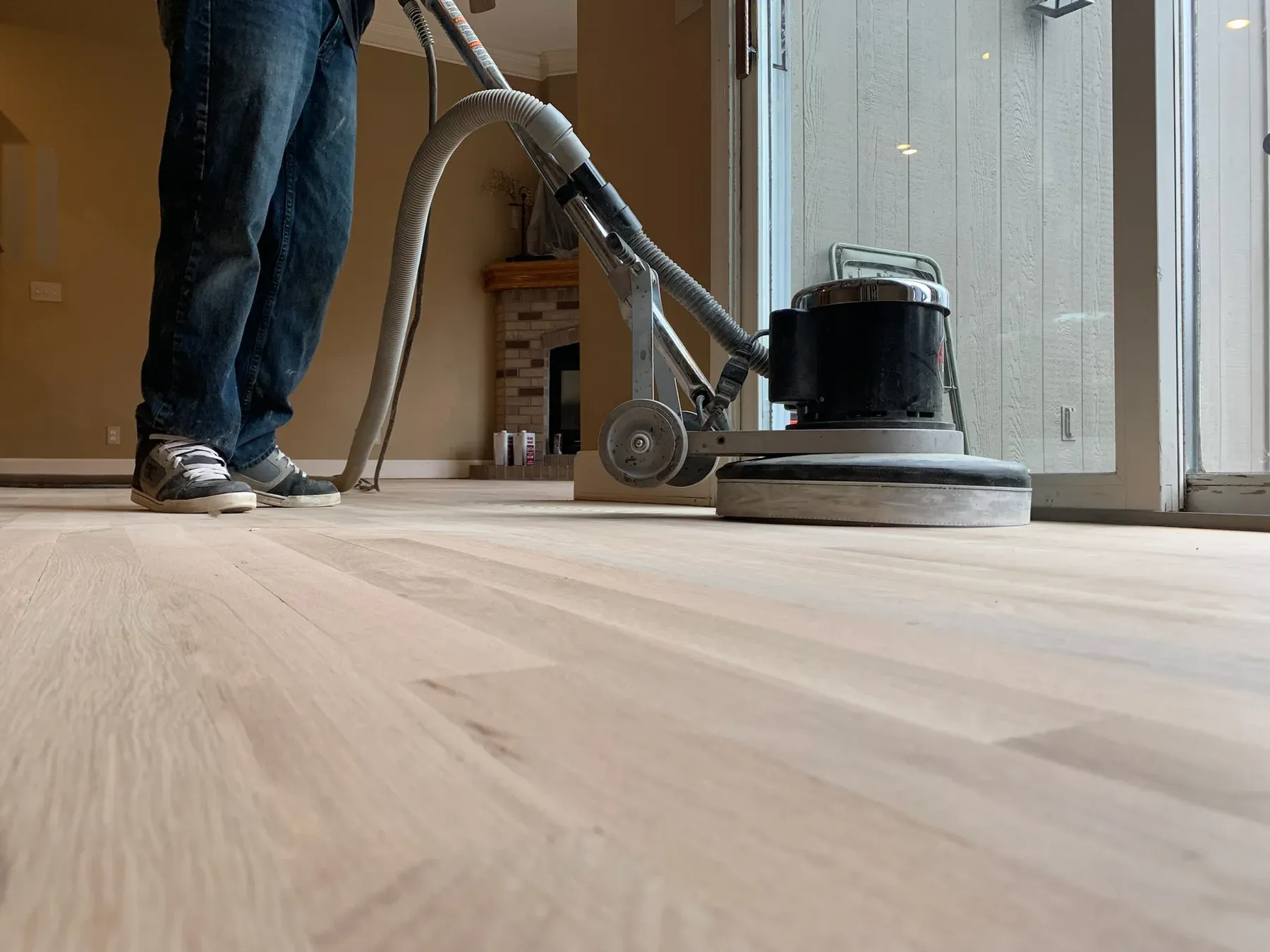
A recoat, sometimes called a screen-and-recoat or a buff-and-coat, is much gentler. We lightly abrade the existing finish so a new coat bonds, then lay a fresh protective layer on top. No stain, no sanding to bare wood, no removing the wood itself. Our hardwood floor recoating service is built around exactly this, and it is the cheapest way to keep a floor looking new.
The Recoat Is What Extends the Floor
Here is the part that saves people money. The finish is a sacrificial layer that protects the wood. If you recoat before the finish wears through to the bare wood, you keep resetting that protective layer without ever sanding. A floor that gets recoated on a sensible cycle can go a very long time before it ever needs a full sanding. The floors that wear out fast are the ones that never get recoated, so the finish wears through, the bare wood gets dirty and scratched, and now the only fix is a full refinish.
How Often to Recoat
There is no single number, because it depends on traffic. A busy household with kids, pets, and a main entry over the floor wears the finish far faster than a formal room nobody walks through. Rather than watch a calendar, watch the finish. The right time to recoat is when the finish looks dull or lightly scuffed but before it has worn through to bare wood in the traffic paths. High-traffic areas like kitchens, hallways, and entries reach that point first.
How Often to Fully Refinish
A full refinish is a much less frequent event. You reach for it when a recoat can no longer fix the problem: the finish has worn through to bare wood, there are deep scratches or dents that reach into the wood, gray or water-stained boards, or you want to change the color. Because sanding removes wood, and a floor only has so much wood to give, full refinishing should be the exception spread across many years, not a routine. The whole strategy is to lean on recoating so that full sanding comes around as rarely as possible. If you are weighing the two, our guide on hardwood floor refinishing lays out what a full refinish involves.
Signs It Is Time for Each
- Recoat when: the finish looks dull, hazy, or lightly scuffed, water no longer beads and instead soaks in slowly, or the sheen is uneven in traffic paths but the wood itself is not exposed.
- Full refinish when: bare wood is showing through, there are deep scratches or dents into the wood, gray or black stained boards, cupping, or you want a new color.
A quick water test helps: put a few drops of water on a worn spot. If it beads, the finish is still protecting the wood. If it soaks in or darkens the wood, the finish is compromised and it is time to act, ideally with a recoat before it gets worse.
Timing It Right in Kansas City
What the recoat itself involves, which floors qualify and the contamination problems that ruin one are covered in screen and recoat versus a full refinish. How you clean the floor between times decides how long each cycle lasts, and our cleaning guide covers that.
Our seasonal humidity swings are hard on finishes, so staying ahead of wear matters here. The homeowners who spend the least on their floors over the long run are the ones who recoat on time and refinish rarely. If you are not sure which stage your floor is at, get a free estimate and we will tell you honestly whether you need a quick recoat or a full refinish, or whether the floor can simply be left alone for now.
Get a Free Estimate
Have a floor you want looked at? We give honest, no-pressure estimates across the Kansas City metro.