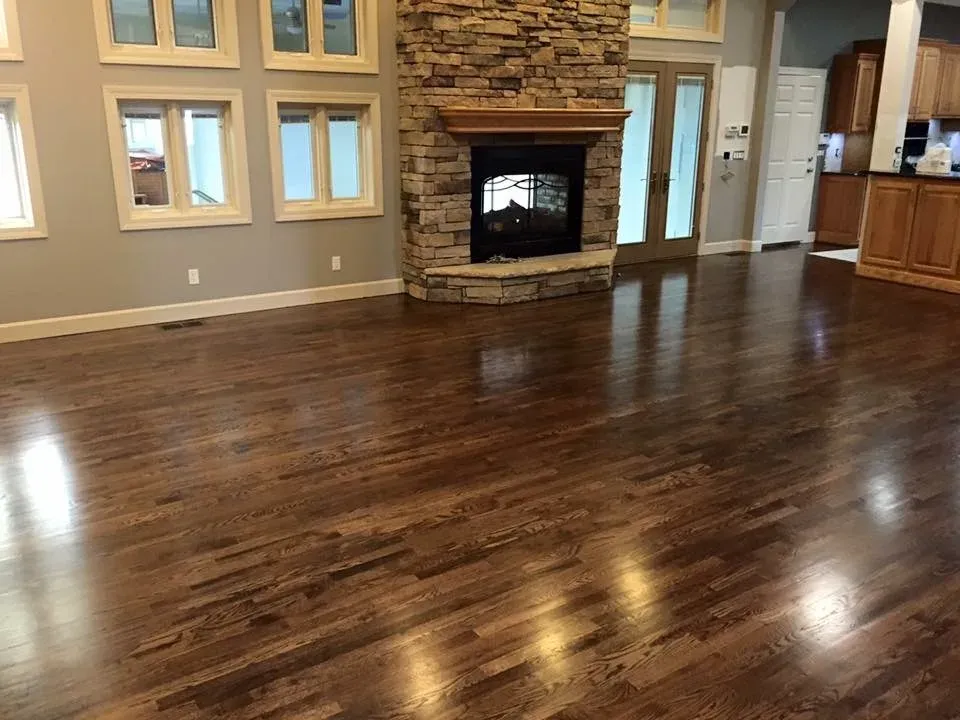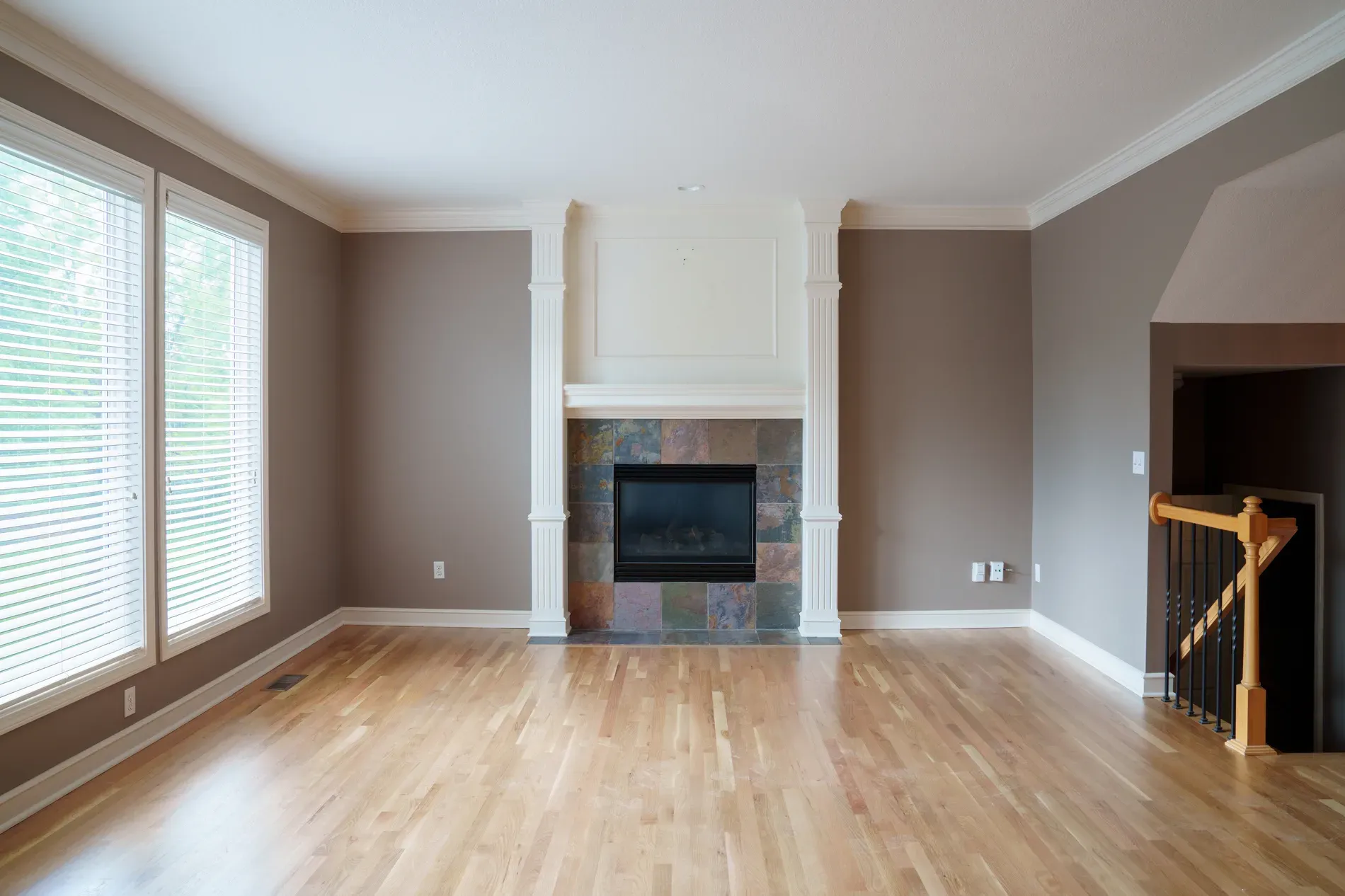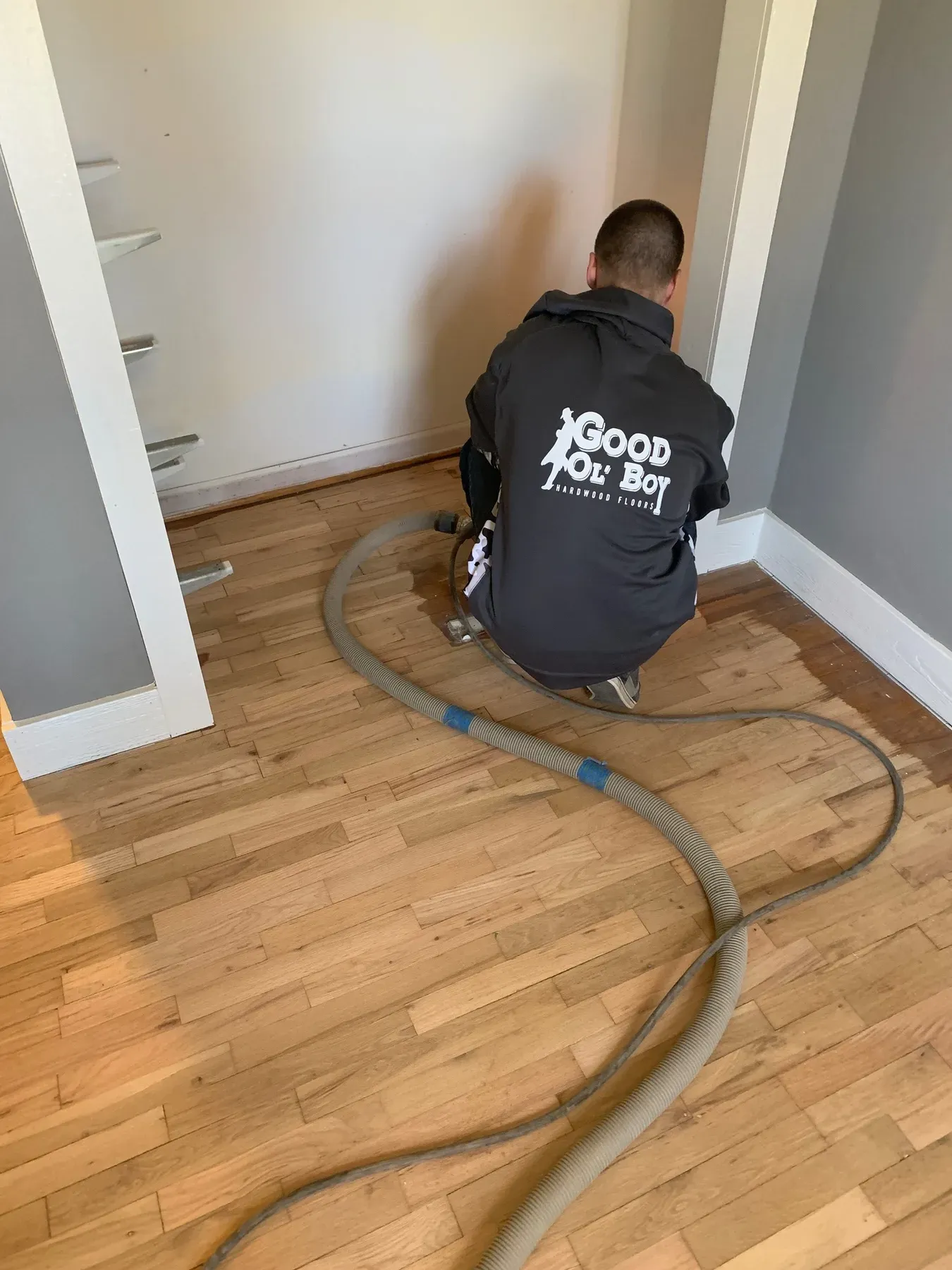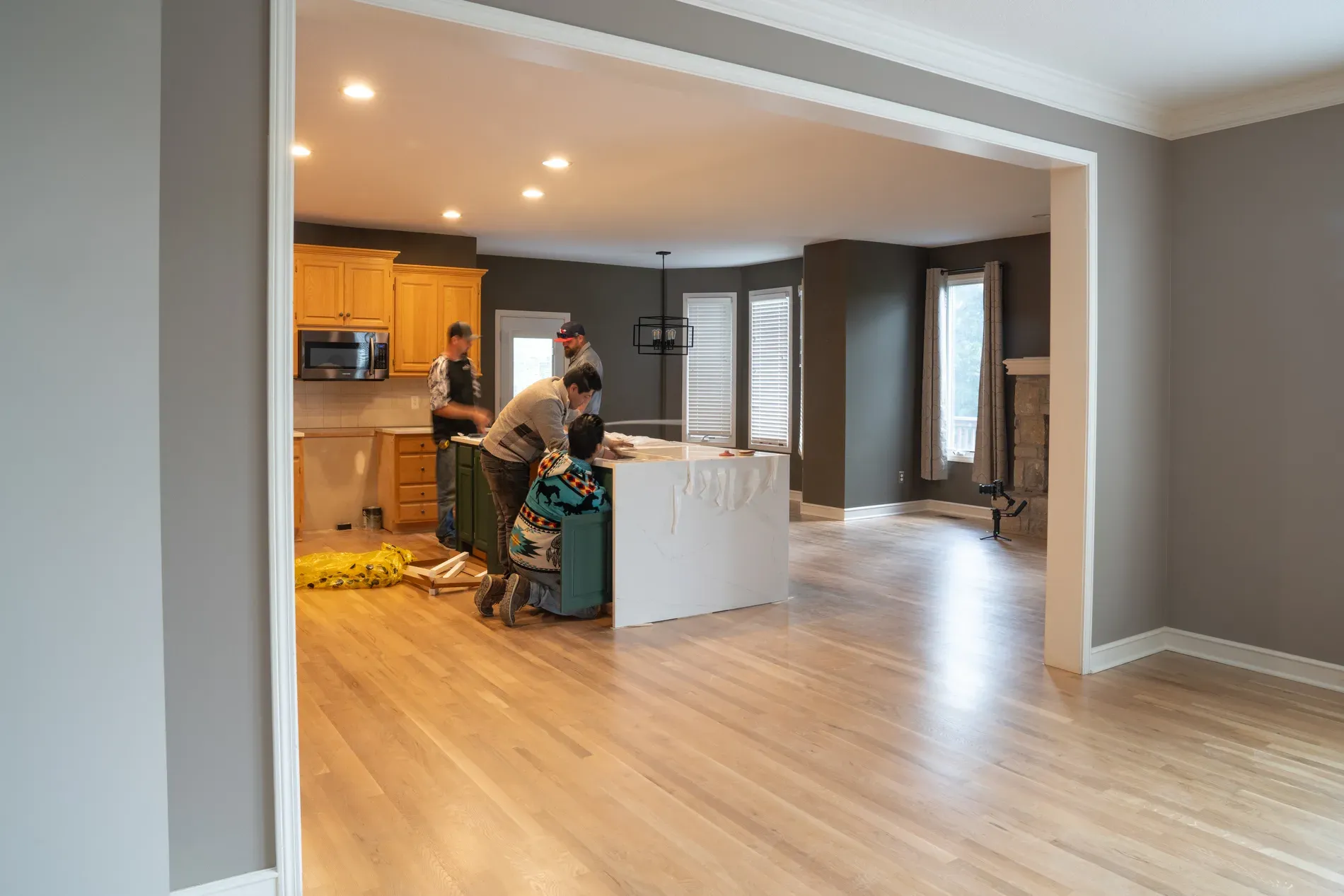
A hardwood floor installed properly will outlast almost everything else in the house. Installed badly, it gaps in winter, cups in summer, squeaks underfoot, and there is no finish coat that fixes any of it. This guide covers what actually goes into hardwood floor installation in Kansas City, and what to ask about before the first board goes down.
Solid or Engineered?
This is the first fork in the road, and the right answer depends on where the floor is going.
Solid hardwood is one piece of wood all the way through. Its great advantage is that it can be sanded and refinished many times over its life, which is why hundred-year-old floors in older Kansas City homes are still going. It also moves more with humidity, so it is best over wood subfloors at or above grade.
Engineered hardwood is a real wood wear layer over a dimensionally stable plywood core. It handles moisture and humidity swings better, which makes it the safer pick over concrete slabs and in basements. The catch is the wear layer: a thick one can be refinished once or twice, a thin one cannot be refinished at all. If a salesperson cannot tell you the wear layer thickness, treat that as a warning.
The Subfloor Is the Whole Job
Most installation problems that show up a year later were subfloor problems on day one. Before any wood goes down, the subfloor needs to be checked for three things:
- Flat. Dips and humps telegraph straight through to the finished floor, causing hollow spots, movement, and squeaks. High spots get sanded down and low spots get filled before installation, not after.
- Dry. Moisture content in the subfloor has to be within range of the wood being installed. Laying wood over a subfloor that is too wet is the leading cause of cupping months down the road. This matters especially over crawl spaces and slabs.
- Sound. Loose panels, damaged sections, and inadequate fastening all need to be fixed first. A squeak in the subfloor becomes a permanent squeak in your new floor.
If existing flooring has to come out first, that is its own stage. Our floor removal and demolition page covers how we handle tear-out and haul-away without wrecking the subfloor underneath.
Acclimation Is Not Optional in Kansas City
Wood is hygroscopic, meaning it takes on and gives off moisture with the air around it. Kansas City swings from humid summers to dry, heated winters, and wood responds to that by expanding and contracting across its width.
Acclimation means letting the flooring sit inside the home, in the rooms where it will be installed, until its moisture content balances with the house. Skipping this step is how you end up with gaps between every board the first winter, or a buckled floor the first humid summer. The house should be at normal living temperature and humidity during acclimation, not empty and unconditioned, or you are acclimating the wood to conditions that will never exist again.
This is the step rushed installers skip because it costs days and no customer can see it. It is also the step that determines whether your floor still looks tight in five years.
How the Floor Gets Fastened
There are three common methods, and the subfloor usually picks it for you:
- Nail or staple down is the standard for solid hardwood over a wood subfloor. Fasteners drive through the tongue at an angle so they stay hidden.
- Glue down is used for engineered wood over concrete, and gives a very solid feel underfoot with no hollow sound.
- Floating means the boards lock to each other and rest on an underlayment rather than fastening to the subfloor. It works for certain engineered products and is the most forgiving over uneven or moisture-prone slabs.
Layout Decisions That Are Hard to Undo
Direction matters more than people expect. As a general rule, running boards perpendicular to the floor joists adds structural stability, and running them along the length of a room or toward the main light source makes the space feel longer. Board width changes the character of a room too: wide planks read modern and show off grain, narrow strips look traditional and are more forgiving of humidity movement.
Transitions between rooms, thresholds at doorways, and how the floor meets stairs all get planned before installation starts. If your project includes stairs, our hardwood stairs page explains how treads and risers get integrated so the whole thing reads as one floor.
Prefinished or Site-Finished?
Prefinished boards arrive already stained and sealed from the factory. Installation is faster and there is no sanding dust or finish smell in the house. The tradeoff is micro-bevels between boards where dirt collects, and a color you have to pick from what exists.
Site-finished means raw wood is installed, then sanded, stained, and finished in place. It takes longer and creates dust, though our dustless system captures most of it. What you get is a perfectly flat surface with no bevels, and any color you want, mixed and tested on your actual floor.
A Realistic Timeline
Homeowners consistently underestimate this. A full installation is not a weekend. There is acclimation time before anything is installed, then tear-out and subfloor prep, then the installation itself, and if the floor is site-finished, sanding, staining, and multiple finish coats with drying time between each. Then the finish needs to cure before heavy furniture and rugs go back.
We give you the actual schedule up front rather than an optimistic one, because planning around a real timeline is easier than being surprised by it.
Installing Across the Metro
Two choices made before installation day shape the result more than anything else: solid or engineered, and prefinished or site-finished. If you are considering a pattern, herringbone or chevron covers what those involve.
We install hardwood throughout the Kansas City area, including Overland Park, Leawood, Lee's Summit, and Olathe. Full details are on our hardwood floor installation page. When you are ready, get a free estimate and we will measure, check the subfloor, and give you a straight answer on species, method, and schedule.
Get a Free Estimate
Have a floor you want looked at? We give honest, no-pressure estimates across the Kansas City metro.