Stairs are the first thing people see when they walk into most homes, and they take more abuse per square foot than any floor in the house. They are also the part of a wood project most often done poorly, because stair work is carpentry rather than flooring. Here is what to know about hardwood stairs in Kansas City, whether you are covering carpet or restoring a staircase you already have.
Why Stairs Cost More Than Floors
Homeowners are often surprised that a staircase can cost as much as a room of flooring despite being a fraction of the square footage. The reason is that stairs are not measured in square feet, they are measured in pieces, and every piece is custom.
Each tread has to be cut to fit its own opening, because stairs in real houses are rarely identical to one another, particularly in older homes. Treads have to be notched around skirt boards, fitted around balusters, and given a finished nosing on the front edge. There is no rolling a machine across it. It is individual measuring, cutting, fitting, and fastening, one step at a time, and then finishing every exposed surface including the vertical risers.
Replacing Carpeted Stairs With Wood
This is the most common request we get, and it changes the feel of an entryway more than almost any other single project. The process runs like this:
- Pull the carpet and padding along with every staple and tack strip. This is tedious and it matters, because a single missed staple telegraphs through a finished tread.
- Inspect what is underneath. Stairs built to be carpeted were often made from construction-grade lumber that was never meant to be seen, and the treads may be too shallow, unfinished, or squeaky. This is the moment you find out whether you are refinishing existing treads or installing new ones over the existing structure.
- Fix squeaks and structure while everything is exposed. This is the only easy opportunity you will get.
- Install treads and risers. Each is cut to its own opening. Risers are typically painted and treads stained, though matching both to the floor is also common.
- Sand and finish. Stairs get sanded and finished like floors, but by hand and in far tighter quarters.
Details are on our hardwood stairs page.
Matching Stairs to Your Floors
The most common mistake is treating the staircase as a separate project from the floors. When stairs and floors are finished at different times with different stain batches, the mismatch is obvious precisely because they meet at the landing where everyone looks.
If you are refinishing floors and redoing stairs, do them together. Same stain, same finish, same crew, same week. If the stairs have to happen separately, we take the color from the existing floor and test samples against it rather than working from a number in a catalog. Our wood staining page covers how we handle color matching.
One nuance worth knowing: treads are usually a different thickness and often a slightly different cut of wood than floor boards, so they can take stain a little differently even when the species matches. Testing on the actual tread material is the only way to be sure.
Refinishing an Existing Staircase
If you already have wood stairs that have gone dull, worn through in the middle of each tread, or been painted over, refinishing is usually straightforward. The wear pattern on stairs is very concentrated: the center of each tread and the nosing take nearly all the traffic while the edges stay pristine. That means sanding has to even out a floor that is worn in stripes.
Nosings deserve special attention. The front edge of a tread is the most worn and the most structurally important part of the step, and a rounded, worn nosing is both a look problem and a safety one. Badly worn nosings can often be repaired or replaced individually rather than replacing the whole tread.
Railings, Balusters, and Newel Posts
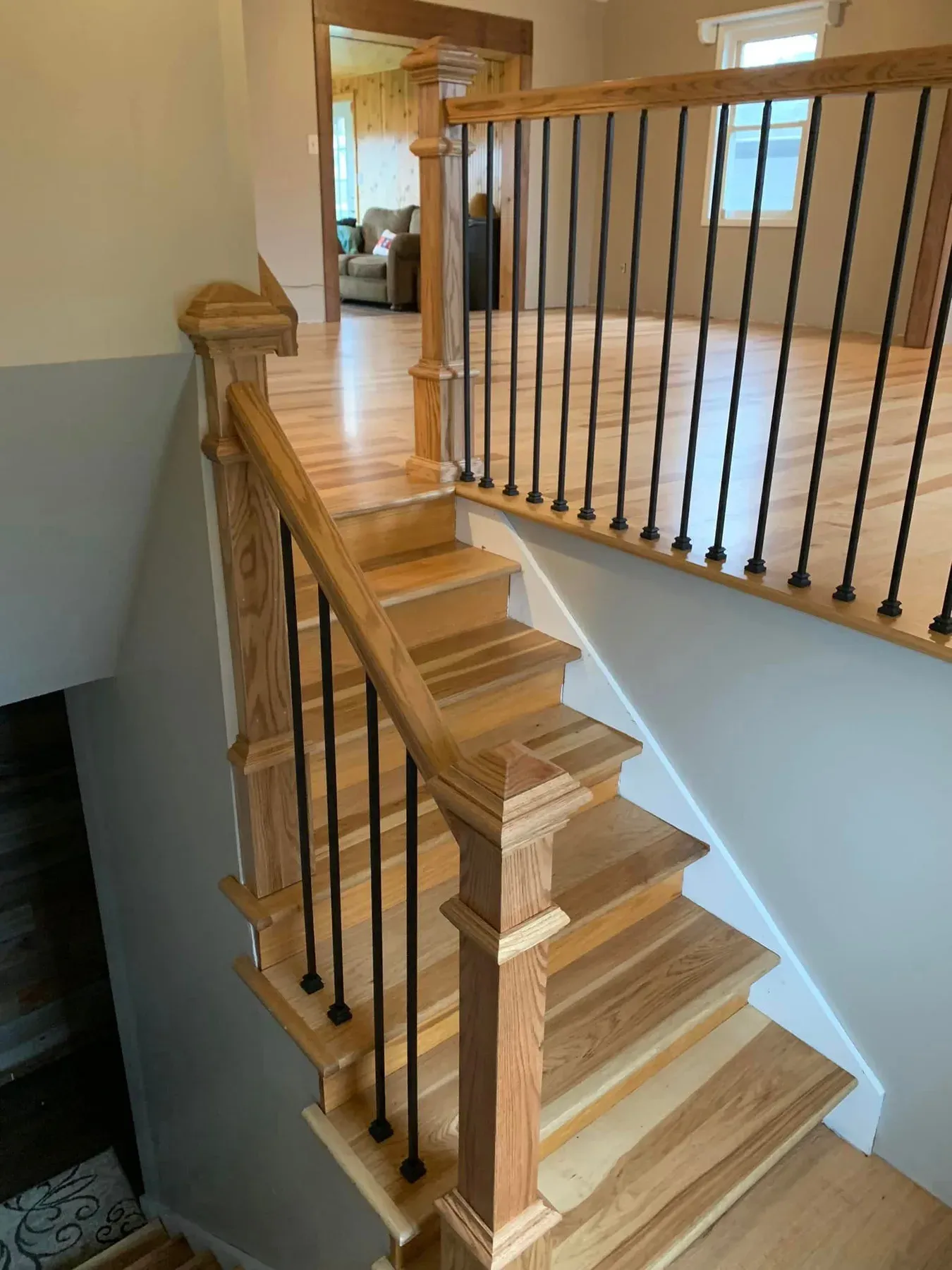
Stair work often expands once the treads are exposed, because the railing system is right there. Refinishing a handrail to match new treads, swapping wood balusters for iron, or rebuilding a newel post are all common additions. Our custom staircases and handrails page covers the fabrication side of this, including full custom builds, and swapping wood spindles for iron balusters walks through a railing update step by step.
Iron balusters in particular are a popular update in Kansas City homes, and they are usually installed into existing treads without rebuilding the staircase, which makes them a high-impact change for relatively contained work.
Living Around the Work
The practical question everyone asks is how to get up and down while stairs are being finished. If the house has a second staircase, it is simple. If not, the work gets sequenced so the stairs remain passable, often by finishing alternating treads so there is always a usable path, at the cost of a longer schedule. We plan this with you in advance rather than surprising you on day one.
Stair Work Across the Metro
We build, install, and refinish staircases throughout the area, including Leawood, Overland Park, Mission Hills, and Kansas City. If your project also includes floors, our refinishing and installation pages cover that side. Get a free estimate and we will look at your staircase and tell you whether you are refinishing, re-treading, or rebuilding.
Get a Free Estimate
Have a floor you want looked at? We give honest, no-pressure estimates across the Kansas City metro.