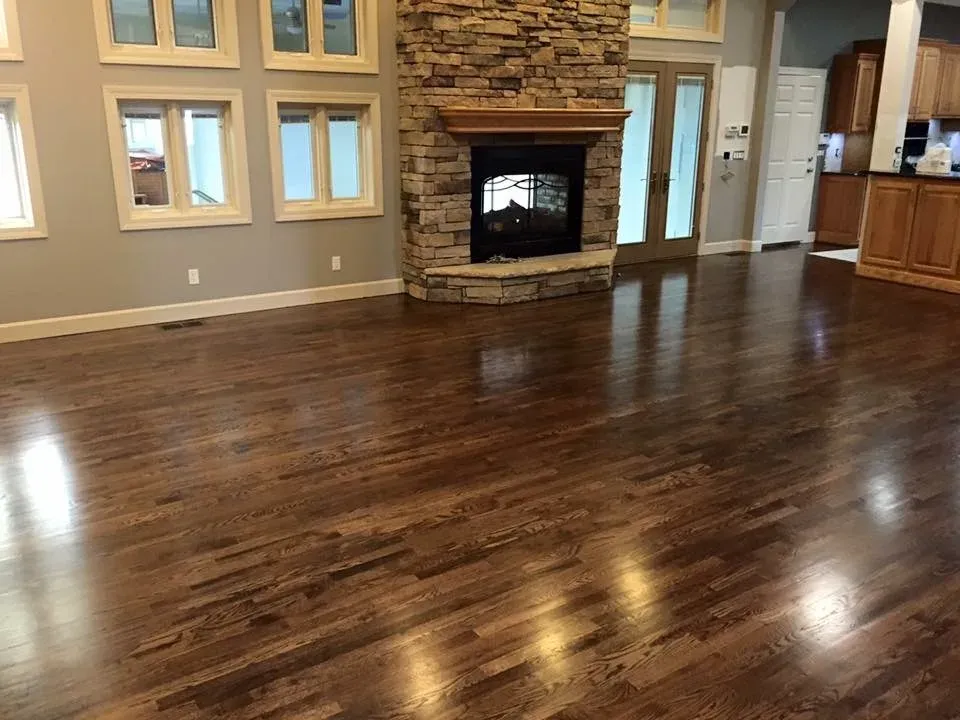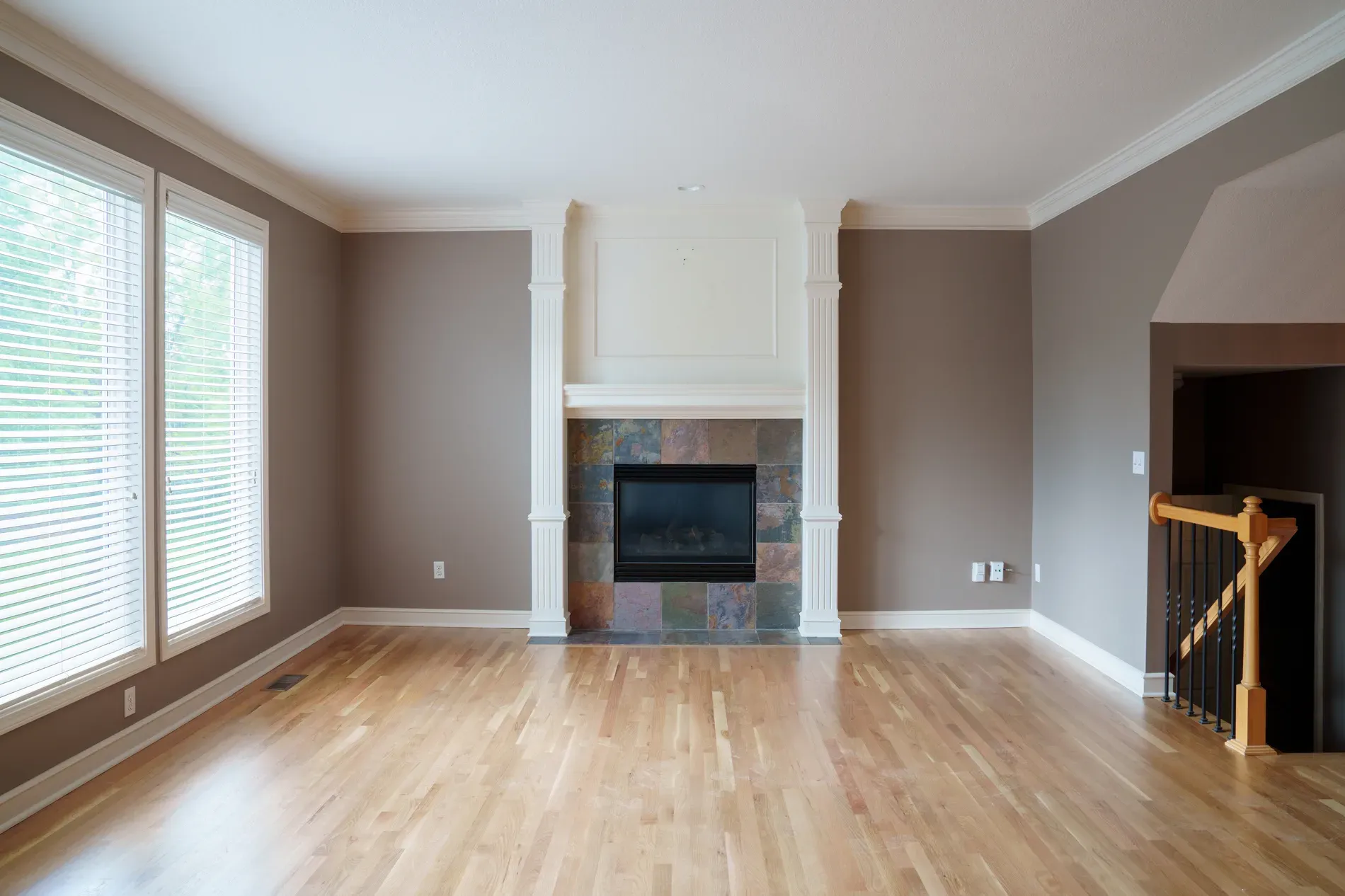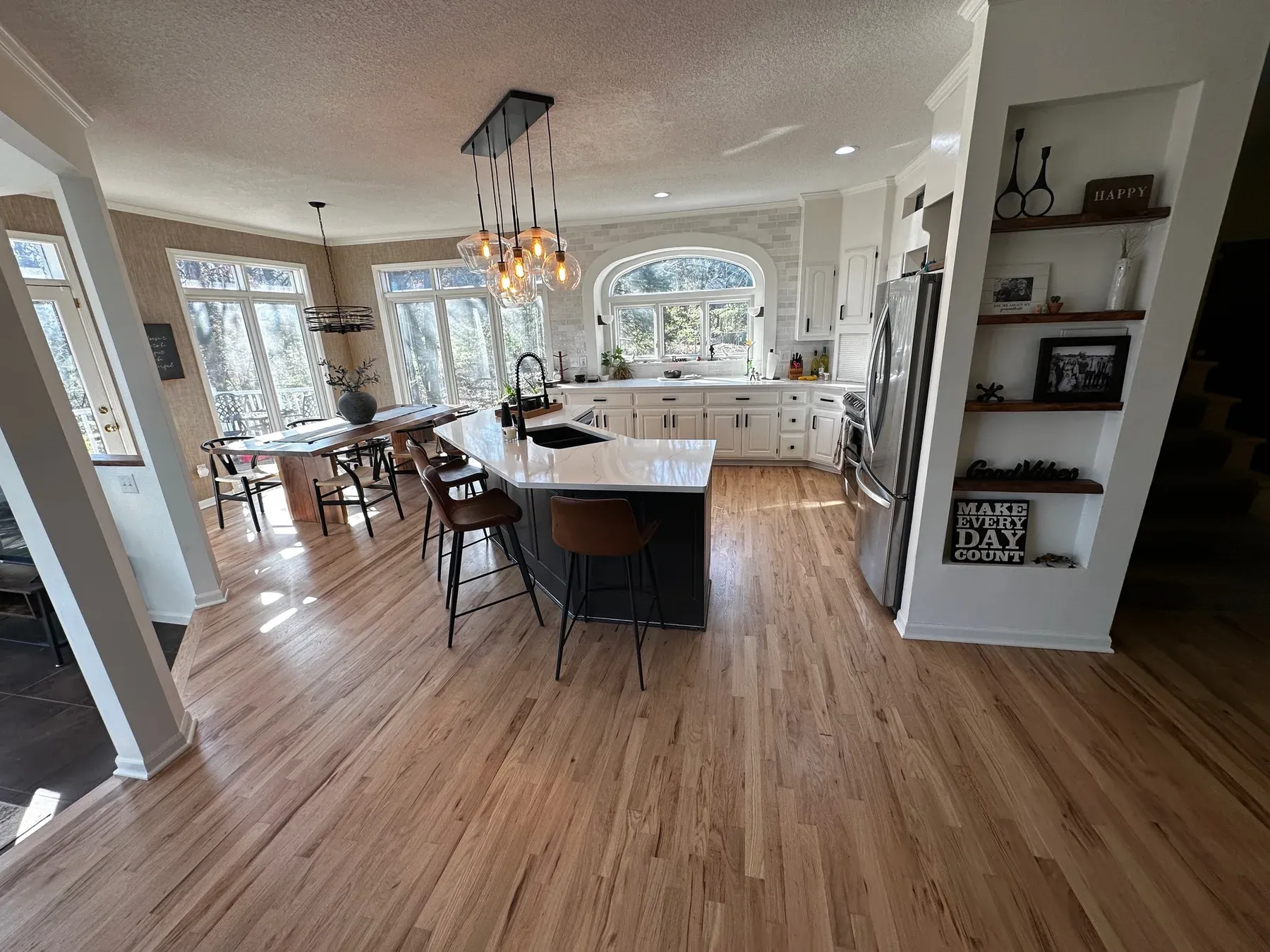
For years the standard advice was to keep hardwood out of kitchens. That advice was formed when finishes were softer and less water resistant than what is available now, and it has not entirely kept up.
Wood in a kitchen is a perfectly reasonable choice today, and it is the choice most people want, because a floor that runs continuously from the living room through the kitchen makes an open plan feel like one space rather than three. Here is what actually determines whether it works.
The Risk Is Not Spills
People worry about the wrong thing. A glass of water knocked over and wiped up within a few minutes does nothing to a properly finished hardwood floor. Modern finishes handle that easily.
What damages kitchen wood is slow water that nobody notices. A dishwasher seal that seeps a little each cycle. A refrigerator line weeping behind the unit. A sink base with a drip that runs down the back of the cabinet. In every one of those cases the water is out of sight for weeks or months, and by the time the floor tells you, the damage is done.
This is worth knowing because it changes what you actually do about it. The useful habits are checking under the sink occasionally and pulling the refrigerator out once a year, not panicking about spills.
The Finish Matters More Than the Wood
In a kitchen, the protective finish is what stands between the water and the wood, so it is the specification worth spending on.
An extra coat is genuinely worth it here even if you would not bother in a bedroom. It is a modest cost during the job and it is the difference between a floor that shrugs off a decade of kitchen life and one that starts looking tired at year four.
Sheen is worth thinking about too. Higher gloss shows every smear and footprint, and a kitchen floor gets both constantly. A satin or matte finish hides daily life far better and is easier to live with, which is why most of the kitchens we finish in Kansas City end up there.
Species and Grain
Harder species resist denting from dropped pans, which is a real kitchen hazard. White oak and hickory both do well.
The less obvious factor is grain pattern. Busier, more varied grain hides small scratches and dents remarkably well, while a very uniform floor shows every mark because there is nothing to distract the eye. If the kitchen is the busiest room in your house, choosing a floor with some natural character in it is a practical decision rather than only an aesthetic one.
What About the Sink Area
The area in front of the sink and dishwasher takes more water than anywhere else in the house. A rug or runner there is worth it, and it does not have to be ugly.
One caution: a rubber backed mat left permanently in one place on a wood floor can trap moisture and mark the finish underneath. A rug that gets lifted and washed is better than a mat that lives there for five years.
Refinishing Later
One argument for wood in a kitchen that rarely gets made: it can be brought back. A tile floor that dates badly has to be broken out. A vinyl floor that wears has to be replaced. A hardwood floor that has taken ten years of kitchen life can be sanded and refinished, and it comes back looking new.
That is the case for wood in the busiest room in the house. It is the only floor covering that gets a second life rather than a replacement. Our refinishing service handles exactly this, and where a kitchen floor has had a leak, our water damage repair page covers what can be saved.
Planning a Kitchen Floor
Kitchens are also where cleaning habits do the most damage, because that is the room people mop most. Our guide to cleaning hardwood floors covers what to use and what to keep away from a wood floor.
If the kitchen is being remodeled at the same time, the order matters, and it is worth raising early. We will walk the space, talk through finish and sheen for how you actually use the room, and price it as part of a free estimate. Our installation page covers new floors, whether continuous with the rest of the house or specific to the kitchen.
Get a Free Estimate
Have a floor you want looked at? We give honest, no-pressure estimates across the Kansas City metro.